

Maddy summaryHR 1831 would award Billie Jean King a Congressional Gold Medal to honor her lifelong advocacy for equal rights in sports and society. The bill directs the Secretary of the Treasury to strike the medal and have it presented by congressional leaders, recognizing her pivotal role in advancing women's equality through tennis (including founding the Women’s Tennis Association and securing equal prize money) and her broader impact on society through initiatives like Title IX advocacy.
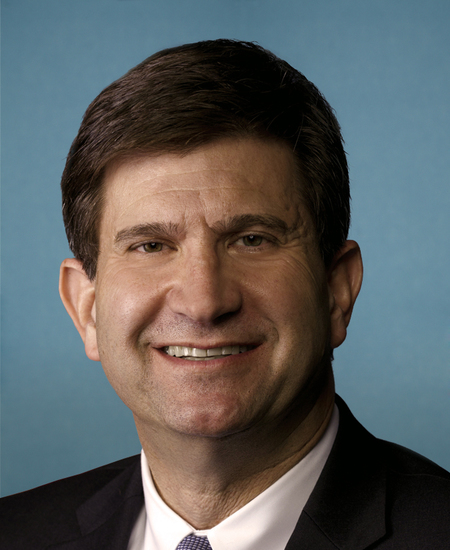
Rep. Bradley Scott Schneider
Sponsored bills
Maddy summaryThis bill changes how U.S. foreign aid is provided to international health organizations. It prevents U.S. agencies from denying aid to foreign non-governmental organizations (NGOs) solely because they offer health services (like counseling or referrals) using their own funds, as long as those services follow local laws. It also stops applying stricter rules about how foreign NGOs can use their own funds for advocacy compared to U.S. NGOs receiving similar aid. The bill directly affects foreign health-focused NGOs that rely on U.S. foreign assistance funding.
Historic Tax Credit Growth and Opportunity Act of 2023 This bill increases the rehabilitation tax credit and modifies certain requirements for the credit. The bill increases the rate of the credit for qualified rehabilitation expenditures in taxable years beginning after December 31, 2020, and before January 1, 2028, after which the rate reverts to 20%. The bill increases the rate of the credit to 30% for certain small projects whose qualified rehabilitation expenditures do not exceed $2.5 million. The bill also expands the types of buildings eligible for rehabilitation by decreasing the rehabilitation threshold from 100% to 50% of project expenses. It also eliminates the basis adjustment requirement for the credit and modifies rules relating to tax-exempt use property eligible for the credit.
Maddy summaryHR 1777 establishes a $50 million annual fund (2024-2028) for collaborative defense research between the U.S. and Israel in emerging technologies like artificial intelligence, cybersecurity, directed energy, and automation. The bill directly supports U.S. and Israeli military forces by enabling joint development of new warfare capabilities to address current and future defense challenges. Key provisions include authorizing $50 million per year for collaborative projects, building on existing U.S.-Israel defense partnerships like counter-tunnel and counter-drone systems. This funding aims to strengthen bilateral defense innovation without altering existing military aid structures.
Maddy summaryHCONRES 28 is a symbolic resolution expressing Congress's view that tax-exempt fraternal benefit societies - organizations providing life, health, and accident benefits to members - have long delivered critical community support. It states these societies, with about 7 million members nationwide, generate significant annual value through charitable work and volunteer activities (estimated at over $3.8 billion yearly). The resolution affirms that their tax-exempt status under Section 501(c)(8) of the tax code is essential for sustaining their volunteer-driven model and relieving pressure on government safety programs. As a non-binding expression of congressional sentiment, it does not alter existing laws or create new obligations.
Maddy summaryThe Office of Gun Violence Prevention Act of 2023 establishes a new office within the Department of Justice to coordinate federal efforts on gun violence prevention. The office, led by a Director appointed by the Attorney General, will evaluate existing programs, identify data gaps, and make evidence-based policy recommendations to Congress and the President. It will work with an advisory council including DOJ officials and external members like gun violence survivors, community service providers, and public health experts. The office must produce an annual report to Congress on gun violence trends and policy recommendations, and the bill authorizes funding to support these activities.
Maddy summaryHR 1723, the Abortion is Health Care Everywhere Act of 2023, amends the Foreign Assistance Act to remove restrictions on using U.S. foreign aid funds for abortion services. It explicitly allows U.S. foreign assistance programs to fund comprehensive reproductive health care, including abortion services, training, and equipment. This change directly affects U.S. international health programs and recipient countries, enabling them to integrate safe abortion care into broader reproductive health services. The bill aims to align U.S. policy with global health guidelines by making abortion services a standard part of reproductive health care funded through foreign assistance.
Maddy summaryHR 1680, the Black Sea Security Act of 2023, mandates the U.S. government to develop a coordinated strategy for security and economic engagement with Black Sea states (Turkey, Romania, Bulgaria, Moldova, Ukraine, and Georgia). The bill requires an interagency strategy within 180 days, focusing on enhancing security cooperation with NATO, bolstering economic ties, supporting democratic resilience, and improving regional connectivity. Key mechanisms include assessing military presence options, diversifying energy partnerships, countering economic coercion from Russia and China, and strengthening infrastructure through initiatives like the Three Seas Initiative. The strategy aims to deepen U.S. engagement without creating new funding or altering existing authorities for affected countries.
Maddy summaryHR 1503, the Prescription Information Modernization Act of 2023, allows drug manufacturers to provide FDA-approved prescribing information exclusively via digital means (like email or online portals) to doctors and pharmacists, while requiring them to still offer paper copies upon request at no extra cost. The bill directly affects drug manufacturers and distributors, who must implement this change by 2025 (or when regulations take effect), and ensures prescribers and dispensers can choose their preferred format. Key provisions include mandating manufacturers to honor paper requests promptly without additional fees and requiring the Health Secretary to issue implementing regulations within one year. The law aims to modernize how medical information is shared while maintaining accessibility for healthcare providers.
Maddy summaryThe Dental and Optometric Care Access Act of 2023 (DOC Access Act) requires health insurance plans covering dental and vision care to allow providers (like dentists and optometrists) to charge patients the usual and customary rate for uncovered services, with a specific rule limiting dental cleanings to the network fee even if it exceeds annual coverage limits. It prohibits plans from restricting providers' choices of laboratories or suppliers for patient care. This law directly affects dental and vision care providers and the health insurance plans that offer these services. The bill establishes concrete billing and coverage standards to improve access to necessary dental and vision care.