

Maddy summaryHR 200, the Forest Information Reform Act (FIR Act), removes a requirement for federal agencies to restart environmental consultations under the Endangered Species Act (ESA) for approved land management plans. Specifically, it amends the Forest and Rangeland Renewable Resources Planning Act and the Federal Land Policy and Management Act to state that the Forest Service and Bureau of Land Management (BLM) do not need to reinitiate ESA consultations when a species is listed, critical habitat is designated, or new species information becomes available after a plan's approval, amendment, or revision. This change directly affects how these agencies manage federal lands, streamlining their planning process by preventing repeated ESA consultations on existing plans. The bill makes a concrete procedural change to existing law without altering ESA protections or species conservation requirements.
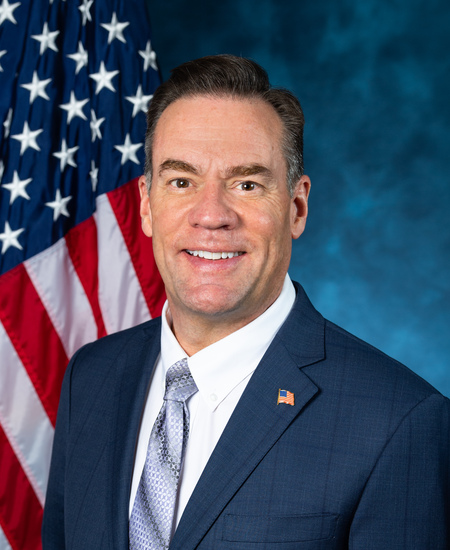
Rep. Russ Fulcher
Sponsored bills
Maddy summaryHR 9516, the Military Families National Parks Access Enhancement Act, amends the Federal Lands Recreation Enhancement Act to expand eligibility for free lifetime national park passes to include immediate family members (such as spouses, children, or parents) of service members who died in the line of duty and whose death qualifies for a death gratuity under federal law. This change directly affects military families who have lost a loved one in active service, providing them with lifelong access to national parks at no cost. The Secretary of the Interior will determine who qualifies as immediate family under this provision. The bill creates a specific policy change by adding this group to the existing list of pass recipients.
Maddy summaryThe MAPWaters Act requires federal agencies managing public waters (like the National Park Service, Bureau of Land Management, and Forest Service) to create standardized, digital maps and databases about water access rules. It mandates publishing online details on seasonal closures, equipment restrictions (e.g., motorized boats), fishing zones, boat ramp locations, and navigation data within 4 years. This directly helps recreational users - such as boaters, anglers, and hikers - by making complex access rules easier to find and understand. The bill does not change existing fishing or waterway regulations but requires agencies to update data regularly and allow public feedback on the information.
Maddy summaryThe Save Our Sequoias Act establishes a coordinated approach to protect giant sequoia groves in California from wildfires, insects, and drought. It creates a Giant Sequoia Lands Coalition including federal agencies, state governments, and the Tule River Indian Tribe to assess grove health, develop protection projects, and recommend forest management activities. The bill streamlines implementation of certain projects through categorical exclusion from environmental reviews, authorizes $10-40 million annually for conservation efforts, and establishes a fund for philanthropic support of sequoia protection.
Maddy summaryThe FOCA Act of 2023 requires federal agencies to stop mandating or banning contractor agreements with labor organizations (like union contracts) in construction project bids and contracts. It directly affects federal contractors, subcontractors, and agencies managing construction projects funded by the government. The bill prohibits favoring or penalizing contractors based on their labor affiliation status, aiming to promote fair competition and reduce costs. It also mandates updates to federal contracting rules within 60 days of enactment to implement these changes.
Maddy summaryThe Pharmacists Fight Back Act (HR 9096) sets new rules for Pharmacy Benefits Managers (PBMs) working with federal health care programs like Medicare Part D and Medicaid. It requires PBMs to reimburse in-network pharmacies at a rate covering the drug's actual cost plus a small fee (capped at $25), and to reduce patient cost-sharing by at least 80% of rebates received from drug manufacturers. The bill bans PBMs from steering patients to specific pharmacies, charging patients more than pharmacies are paid, or using rebates to lower pharmacy payments after claims are processed. It also mandates public reporting of drug pricing data to improve transparency, ensuring patients and pharmacies receive fairer treatment under federal health programs.
Maddy summary# Summary of Proposed Legislation This document outlines a comprehensive U.S. legislative proposal with several key components: 1. **Research Restrictions**: - Requires certification from Federal research grant recipients that they are not Chinese citizens or participants in Chinese talent programs - Prohibits employment of Chinese nationals in federally funded research - Requires institutions receiving Federal assistance to agree not to knowingly employ individuals participating in Chinese talent programs 2. **Foreign Gifts and Contracts Disclosure**: - Mandates disclosure of foreign gifts/contracts over $50,000 to universities - Requires public reporting of restricted/conditional gifts/contracts - Creates a searchable public database of foreign gifts to universities - Requires institutions to maintain policies regarding foreign gifts to faculty and staff 3. **Investment Restrictions**: - Restricts tax-exempt organizations from holding investments in "disqualified Chinese companies" (defined as corporations incorporated in China or with significant Chinese government ownership) - Requires annual reporting on such investments - Allows limited waivers with public disclosure 4. **Taiwan Policy**: - Prohibits U.S. government from recognizing PRC claims to sovereignty over Taiwan without Taiwan's consent - Requires U.S. government to treat Taiwan's democratically elected government as the legitimate representative of the people of Taiwan - Requires a strategy to protect U.S. businesses from Chinese coercion efforts 5. **Additional Provisions**: - Requires participants in Chinese talent programs to register as agents of the Chinese government - Amends economic espionage laws to include education and research - Mandates disclosure of certain funds received by visa holders The legislation represents a significant effort to limit Chinese influence in U.S. academic institutions, research, and business sectors while establishing a more robust policy framework regarding Taiwan.
Maddy summaryHR 6344, the Simon Crosier Act, requires Medicare and Medicaid providers to establish written policies for do-not-resuscitate (DNR) orders involving unemancipated minors (under 18 without legal independence). It mandates that providers must inform at least one parent or legal guardian in person or by phone (with 72 hours of effort) before considering a DNR, allow parents/guardians to refuse consent, and prohibit overriding parental objections to life-sustaining treatment. The bill also requires providers to continue life-sustaining care for 15 days if a parent requests a transfer and explicitly prohibits using disability as the sole basis for DNR decisions. These requirements apply to all Medicare/Medicaid-covered facilities and directly affect minors, their parents, and healthcare providers.
Maddy summaryHR 4961 requires U.S. Customs and Border Protection (CBP) to maintain the operating hours at all U.S. ports of entry along the U.S.-Canada border at or above the levels in effect before the COVID-19 pandemic's public health emergency declaration. This directly affects CBP operations and travelers, commercial truckers, and businesses relying on cross-border trade through these ports. The key provision mandates CBP to ensure hours equal to or greater than pre-pandemic schedules without requiring new approvals. The bill creates a concrete policy change by legally binding CBP to specific operational hours, avoiding any reduction below the 2019 baseline.
Maddy summaryHR 589, the MAHSA Act, imposes U.S. sanctions on Iran's Supreme Leader, President, and affiliated entities responsible for human rights abuses and terrorism. It targets the Supreme Leader's Office, the President's cabinet, security forces involved in the crackdown following Mahsa Amini's death, and entities financing abuses. The bill requires the President to annually determine and apply existing sanctions - like property blocking and visa bans - against these individuals and entities. This directly affects Iran's top leadership and security apparatus, aiming to hold them accountable for abuses including the Morality Police's role in Amini's detention and the subsequent violent suppression of protests.