

Maddy summaryThe Spectrum Pipeline Act of 2025 requires the federal government to reallocate at least 2,500 megahertz of spectrum (between 1.3 and 13.2 gigahertz) from federal use to commercial and unlicensed purposes. It mandates that 1,250 megahertz be identified for commercial use within two years of enactment and auctioned within three years, with the remaining spectrum identified by five years and auctioned by six years. The bill also requires the FCC to make 125 megahertz available for unlicensed use (like Wi-Fi) within two years and any remaining spectrum for licensed or unlicensed use within eight years. This process will require federal agencies to relocate from the reallocated spectrum and enable commercial companies to bid for spectrum to provide mobile broadband services.
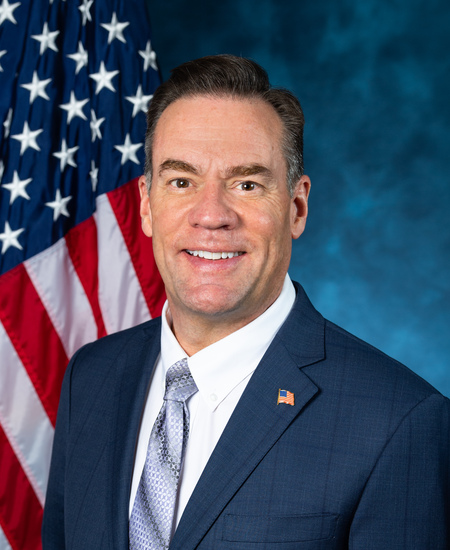
Rep. Russ Fulcher
Sponsored bills
Maddy summaryHR 682, the Heartbeat Protection Act of 2025, prohibits physicians from performing abortions without first checking for a detectable fetal heartbeat according to standard medical practice and informing the patient of the results. It directly affects physicians and clinics performing abortions, requiring them to document heartbeat checks and comply with strict exceptions for life-threatening conditions, rape (with 48-hour documentation of counseling/treatment), or incest involving minors (with proof of prior report to authorities). Violations could result in fines or up to five years in prison, though the bill explicitly states it does not create or recognize a right to abortion. The law adds detailed documentation requirements for exceptions and mandates retention of medical records per federal health privacy rules.
Maddy summaryHR 626, the Northwest Energy Security Act, requires federal agencies managing the Federal Columbia River Power System (FCRPS) to operate dams according to the 2020 environmental review (Supplemental Opinion). It allows limited amendments to this operating plan only if agencies determine changes are needed for public safety, grid reliability, or if outdated requirements are no longer valid. The bill explicitly prohibits any new restrictions on hydroelectric generation or navigation on the Snake River without specific new federal law. This directly affects the Secretaries of the Interior, Energy, and Army (through their agencies) in managing FCRPS operations.
Maddy summaryHJRES 26 is a congressional resolution seeking to block a new Environmental Protection Agency (EPA) rule that set stricter greenhouse gas emission standards for heavy-duty vehicles like trucks and buses. If passed, it would prevent the rule - published in April 2024 - from taking effect, directly affecting vehicle manufacturers required to meet the new standards. The bill uses the Congressional Review Act process to formally disapprove the EPA rule, which would nullify its requirements without altering the underlying regulations.
Maddy summaryHJRES 28 proposes a constitutional amendment to permanently fix the number of justices on the U.S. Supreme Court at nine. This would require ratification by 38 state legislatures (three-fourths of states) within seven years to become part of the Constitution. The amendment directly affects the structure of the Supreme Court, which has had nine justices since 1869 but could otherwise be altered by future congressional action. It does not change current court operations or create new laws, but instead seeks to make the nine-justice composition a permanent constitutional requirement.
Maddy summaryHR 613, the ATF Transparency Act, requires the Bureau of Alcohol, Tobacco, Firearms, and Explosives (ATF) to improve transparency and speed for firearm transfer and manufacturing applications. It mandates that applicants denied a transfer due to background check issues receive their NICS transaction number, can appeal denials through a formal process, and may submit information to prevent future errors - plus, successful appellants get reimbursed for reasonable attorney fees. The bill also sets a strict 90-day deadline for ATF to approve or deny applications; if not decided within that time, the application is automatically approved. This directly affects individuals and businesses seeking to legally transfer or manufacture firearms who face delays or denials under current background check procedures.
Maddy summaryHR 627 requires states receiving Medicaid funds for family planning services to submit standardized abortion data to the CDC annually, covering 10 specific variables like maternal age, gestational age, race, procedure type, and whether the child survived. States must report by December 31 of the previous year, with delayed submissions allowing retroactive payments but false reporting risking one year of lost Medicaid funding. This creates a uniform national system to replace inconsistent state reporting, aiming to fill gaps where some states currently report no data. The bill directly affects states administering Medicaid family planning programs, linking their funding eligibility to data submission.
Maddy summaryHR 634, the Ninth Circuit Court of Appeals Judgeship and Reorganization Act of 2025, splits the current Ninth Circuit Court of Appeals into two separate circuits: the restructured Ninth Circuit (covering California, Guam, Hawaii, and the Northern Mariana Islands) and a new Twelfth Circuit (covering Alaska, Arizona, Idaho, Montana, Nevada, Oregon, and Washington). The bill adds 2 new judges for the restructured Ninth Circuit and 3 new judges for the Twelfth Circuit, with appointments requiring Senate confirmation after January 2025. It establishes transition rules for existing judges, ensuring current judges in specific states are reassigned to the new circuits based on their duty stations, and ensures ongoing cases are handled without disruption. This reorganization directly affects federal appellate judges and the administrative structure of the U.S. Court of Appeals system.
Maddy summaryHR 7 prohibits federal funds from being used for abortions or health insurance plans covering abortion, with exceptions for pregnancies resulting from rape, incest, or when a woman's life is endangered. It blocks federal premium tax credits under the Affordable Care Act for health plans covering abortion (except in specified cases) and requires clear disclosure of abortion coverage and related surcharges in plan materials. The bill allows individuals or employers to purchase separate abortion coverage using non-federal funds, such as out-of-pocket payments, without affecting federal subsidies. It directly affects federal health programs, ACA marketplace plans, and health insurance issuers offering coverage that includes abortion services.
Maddy summaryThe ALIGN Act (HR 574) allows businesses to immediately deduct the full cost of certain qualifying equipment and property (like machinery or tools) instead of spreading the deduction over several years. This permanent tax change directly affects businesses that invest in eligible property placed in service after September 2017. The key provision eliminates the previous depreciation rules for these assets, providing an immediate tax benefit to encourage capital investment. It does not change tax rates or apply to all business expenses, only specific types of equipment meeting the defined criteria.