

Maddy summaryHR 899 would end the U.S. Department of Education by December 31, 2026, terminating its federal agency status. This bill directly affects all federal education programs and operations currently managed by the Department, such as student aid and school funding. The key mechanism is a fixed termination date, requiring the transfer of the Department's responsibilities to other federal agencies without specifying new administrative structures. The bill focuses solely on ending the agency's existence, not altering education policy or funding mechanisms.
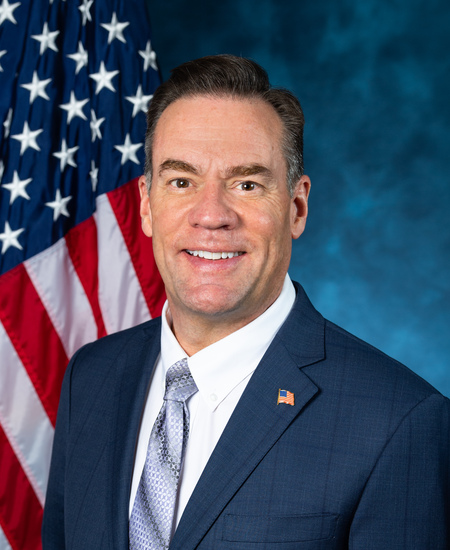
Rep. Russ Fulcher
Sponsored bills
Drug Cartel Terrorist Designation Act This bill directs the Department of State to designate four specified drug cartels as foreign terrorist organizations. (Among other things, such a designation allows the Department of the Treasury to require U.S. financial institutions to block transactions involving the organization.) The four specified cartels in the bill are the Gulf Cartel, the Cartel Del Noreste, the Cartel de Sinaloa, and the Cartel de Jalisco Nueva Generacion. The bill also requires the State Department to submit a detailed report on those four cartels and any other cartels it may identify. Based on this report, the State Department must designate as a foreign terrorist organization any such identified cartel (or faction thereof) that meets certain criteria for designation as a foreign terrorist organization. The bill specifies that it may not be construed to expand eligibility for asylum.
Maddy summaryHR 810, the Personalized Care Act of 2025, expands Health Savings Account (HSA) eligibility and benefits. It broadens who qualifies for HSAs to include individuals covered by more health plans (like Medicaid, Medicare, TRICARE) and health care sharing ministries (section 2). The bill also increases annual HSA contribution limits (to $10,800 for individuals and $29,500 for families) and reduces penalties for non-qualified distributions (section 3, section 7). Additionally, it allows periodic fees paid to physicians for defined medical services and health care sharing ministry fees to be treated as deductible medical expenses (sections 5, 8-9). These changes apply to taxable years beginning after December 31, 2024.
Maddy summaryThe MAILS Act requires the Postal Service to establish a formal process within 90 days for local governments to request new post offices. It mandates that for temporary relocations of post office services lasting more than two days (including for holidays or events), the Postal Service must collect community input, provide written notice to local elected officials 30 days in advance, and hold a public presentation. For relocations exceeding 180 days, the Postal Service must submit reports to Congress and local representatives detailing communication compliance and reasons for extensions. These provisions directly affect local communities, elected officials, and the Postal Service by increasing transparency in decisions about post office operations.
Life at Conception Act This bill declares that the right to life guaranteed by the Constitution is vested in each human being at all stages of life, including the moment of fertilization, cloning, or other moment at which an individual comes into being. Nothing in this bill shall be construed to authorize the prosecution of any woman for the death of her unborn child.
Maddy summaryHR 21, the Born-Alive Abortion Survivors Protection Act, requires medical staff at abortion facilities to provide the same immediate care and hospital admission to any infant born alive during an abortion as they would for any newborn. It mandates reporting failures to provide this care to law enforcement and imposes penalties of up to 5 years in prison for violations, with harsher penalties for intentional killing. The bill also allows women who undergo abortions to sue for civil damages, including triple the abortion cost, and provides for attorney fees. It defines "abortion" to exclude procedures performed after viability to preserve a live birth. This law directly affects healthcare providers at abortion facilities and creates new federal legal obligations for them.
Maddy summaryHRES 57 is a symbolic resolution recognizing natural gas as an affordable and "green" energy source. It states that U.S. natural gas production benefits the economy and environment, citing reduced emissions data and LNG export statistics. The resolution does not change laws or funding but formally declares support for expanding domestic natural gas production and infrastructure. It specifically references opposing methane emission fees and aligns with EU energy policies that classify natural gas as "green." This resolution has no binding effect on policy or regulation.
Maddy summaryHR 685, the SAVE Moms and Babies Act of 2025, prohibits the FDA from approving new abortion drugs or allowing investigational use of existing ones. It restricts existing abortion drugs to in-person administration by certified healthcare providers in clinics or hospitals (not pharmacies), limits use to pregnancies under 70 days gestation, and requires providers to certify they can handle complications like severe bleeding or ectopic pregnancies. The bill mandates reporting of adverse events (such as hospitalizations or infections) to the FDA without patient identifiers and defines "abortion drug" broadly as any drug intended to terminate pregnancy, excluding specific medical exceptions. This directly affects FDA approval processes, healthcare providers prescribing these drugs, and drug manufacturers.
Maddy summaryHR 645, the National Constitutional Carry Act, would prevent all U.S. states and localities from requiring permits or imposing penalties for carrying firearms in public. It directly affects eligible U.S. citizens (including non-residents) who legally possess firearms under state and federal law, removing current permit requirements for public carry. The bill’s key provision amends federal law to invalidate any state or local law that criminalizes or discourages public firearm carry, except where private property owners clearly prohibit firearms or security screening occurs. This would override existing state permit laws, making permitless carry legal across all states and territories for qualified individuals.
Maddy summaryHR 703, the Main Street Tax Certainty Act, makes a key tax deduction permanent for small business owners. It removes the temporary sunset provision (subsection (i)) from Section 199A of the tax code, ensuring the qualified business income deduction remains available for eligible small businesses. This change directly affects pass-through business owners (like S-corps, partnerships, and sole proprietorships) who currently qualify for this deduction. The permanent change takes effect for tax years starting after December 31, 2025.