

Maddy summaryHR 5728, the Government Shutdown Impact Report Act of 2023, requires the Congressional Budget Office (CBO) to issue daily reports during government shutdowns. The CBO must submit reports within 24 hours of each shutdown day, detailing specific economic impacts like lost GDP, unprovided Small Business Administration assistance, lost park revenue, and tourism revenue declines. These reports will provide Congress with real-time data on the costs of shutdowns to taxpayers and the economy. The bill directly affects how Congress receives information about shutdown consequences, mandating standardized, frequent reporting on economic and service disruptions.
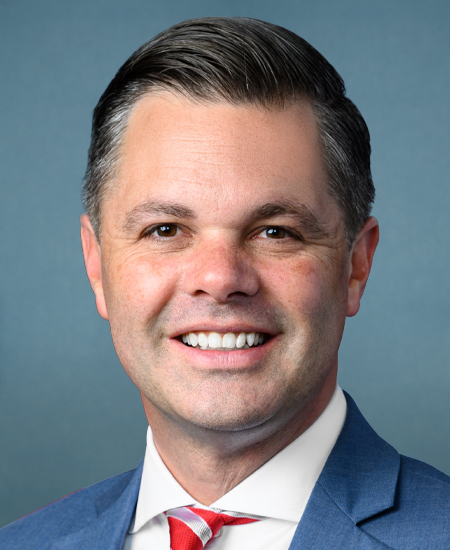
Rep. Zachary Nunn
Sponsored bills
Maddy summaryThe Jimmy Deal Trafficking Survivors Assistance Act of 2023 requires the Transportation Security Administration (TSA) to establish a Trafficking Survivor Point of Contact (TSPoC) at each airport where TSA conducts passenger screening. The TSPoC, a designated TSA employee trained in trauma-informed care, assists non-profit service providers helping human trafficking survivors with air travel arrangements, including identity verification, security screening support, and safe handoffs at destination airports. Service providers must meet specific eligibility criteria, such as providing 30 days' notice and confirming they are actively assisting a survivor while arranging travel and complying with airline policies for minors. The TSPoC ensures survivors receive trauma-informed support throughout the travel process, from security screening to being met by a designated representative at their destination.
Rural Microentrepreneur Assistance Act of 2023 This bill reauthorizes through FY2028 and revises the Rural Microentrepreneur Assistance Program (RMAP). This Department of Agriculture program provides loans to eligible microenterprise development organizations to capitalize revolving loan funds that provide loans to qualified rural microenterprises. The bill increases the amount a rural microenterprise may borrow to up to $75,000 (from up to $50,000). The bill also increases the maximum allowable federal cost share to 100% (from 75%). The bill further specifies that a RMAP project loan may not be used to cover more than 50% of any demolition, construction, or related costs of real estate improvements.
This bill amends the Emergency Watershed Protection (EWP) Program to allow the Department of Agriculture (USDA) to provide for certain restoration activities. The EWP Program offers technical and financial assistance, including the purchase of floodplain easements, to safeguard people and property from floods, drought, fires, windstorms, and other natural disasters that impair a watershed. Under the bill, USDA may allow restoration above pre-disaster conditions if that restoration is in the best interest of the long-term health and protection of the watershed.
Maddy summaryHR 5250, the Flooding Prevention, Assessment, and Restoration Act of 2023, requires the U.S. Department of Agriculture to conduct a national study on flood risks to agricultural lands within two years, analyzing economic losses, downstream effects, and existing flood data. It amends the Emergency Watershed Program to allow federal restoration projects that exceed immediate needs for long-term watershed health and adjusts funding for watershed rehabilitation projects, providing up to 65% federal cost coverage (up to 90% for "limited resource areas") for structural repairs near or past their lifespan. The bill directly affects farmers, agricultural producers, and local watershed management groups by mandating a comprehensive flood risk assessment and modifying federal support for flood prevention infrastructure. Key provisions include requiring detailed reports on flood impacts to crops/livestock and establishing new funding tiers for rehabilitation projects.
Maddy summaryHR 5172 would lower the experience requirement for farmers and ranchers seeking direct loans under the federal farm real estate program. It changes the rule so applicants now need only 1 year of farm management experience (or equivalent education/experience approved by the Secretary), down from the previous 3-year requirement. The bill also shortens the required experience period from 3 years to 6 months for certain loan types. This directly affects new or smaller-scale agricultural operators who previously faced higher barriers to qualifying for these loans. The change aims to make the program more accessible to beginning farmers.
Maddy summaryHRES 720 designates the week of September 24-30, 2023 (and annually thereafter) as "Gold Star Families Remembrance Week" to honor families who have lost loved ones in military service. It specifically recognizes the sacrifices of families of fallen service members and veterans, and encourages Americans to observe the week through community service and celebrating the lives of those who died protecting the nation. This resolution is procedural and symbolic, with no new funding, regulations, or policy changes - only a formal designation to honor these families. It directly affects Gold Star families (those with members who died in military service) and the broader public through its call for observance.
Maddy summaryHR 5632, the Thwarting Regional Adversary Investments Now Act (TRAIN Act), requires USAID to provide training to government officials in nonadversarial countries in South and Central Asia. The training helps these countries assess risks - like debt sustainability and security concerns - from investments by "foreign adversaries" (defined as governments engaging in harmful conduct toward U.S. security). Key provisions include annual reports to Congress on the training provided and analysis of agreements between these countries and foreign adversaries. The bill aims to strengthen partner nations' capacity to evaluate foreign investments without directly restricting those investments.
Maddy summaryHCONRES 66 is a symbolic congressional resolution expressing support for Ukraine and outlining a policy approach to Russia's invasion. It calls for using reparations from Russia (specifically seized Russian assets abroad) to fund Ukraine's recovery and reconstruction, while explicitly stating that U.S. taxpayers should not bear this financial burden. The resolution directs the President to work with international partners to establish a mechanism for assessing war damages and securing reparations, and to coordinate transparent management of these funds for Ukraine's rebuilding. It does not allocate funds or create new legal obligations, but instead sets forth a policy position for the executive branch to pursue. This resolution focuses on international coordination and financial accountability, not on new U.S. spending.
Maddy summaryThis bill raises the mandatory minimum prison sentence for trafficking minors under 18 from the previous term to **not less than 25 years or life imprisonment** under federal law (18 U.S.C. § 1591). It directly affects individuals convicted of trafficking children, increasing penalties for this specific offense. The key mechanism is amending the existing sentencing provision to eliminate lower minimums and mandate these severe penalties. The bill focuses solely on strengthening criminal penalties for child trafficking, with no new funding or program requirements.