

Maddy summaryHR 1147, the Whole Milk for Healthy Kids Act of 2023, allows schools participating in the National School Lunch Program to offer whole milk as an option during lunch. It amends the school lunch law to explicitly permit schools to serve flavored and unflavored whole milk alongside reduced-fat, low-fat, and fat-free milk choices for students. The bill also requires the Secretary of Agriculture to adjust meal regulations to account for saturated fat from whole milk, ensuring it doesn't count against meal fat limits. This change directly affects participating schools and the students who receive school lunches, expanding their milk beverage options.
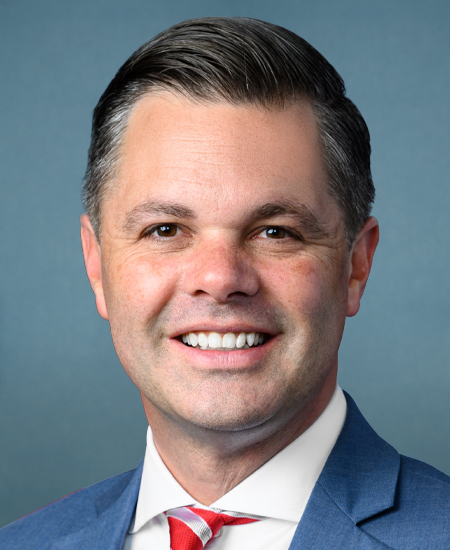
Rep. Zachary Nunn
Sponsored bills
Maddy summaryThe 988 Lifeline Location Improvement Act of 2023 establishes a federal advisory committee to study how location information is transmitted for 988 calls. The committee, composed of representatives from telecom providers, mental health organizations, crisis centers, and government agencies, will examine privacy concerns, technical standards, and funding needs for improving location data accuracy during 988 Suicide and Crisis Lifeline calls. It must submit a report within one year to Congress and the FCC with recommendations for potential policy changes. This bill does not enact new requirements but directs a study to address challenges in connecting callers to local crisis services. The committee will terminate 30 days after submitting its report.
Maddy summaryThe Menopause Research and Equity Act of 2023 requires the National Institutes of Health (NIH) to evaluate existing and ongoing research on menopause, perimenopause, and mid-life women’s health, identifying gaps in knowledge and funding over the past five years. The NIH must then develop a strategic plan with health professionals (including specialists like gynecologists and endocrinologists) to address these gaps and guide future research on treatments for menopause symptoms. The bill also mandates new NIH research on causes, symptoms, and treatments for menopause-related health issues, including a study on hormonal treatments. All activities must be funded using existing NIH resources, with no new appropriations authorized. This aims to improve scientific understanding of women’s mid-life health needs.
Maddy summaryThe ACCESS Act of 2023 amends the Securities Act of 1933 to raise the threshold for requiring a public accountant review of crowdfunding offerings from $100,000 to $250,000. This directly affects small businesses and startups using crowdfunding, as they can now raise up to $250,000 without needing the costly review, reducing administrative burdens. The bill also includes technical corrections to update references in the law to align with the new threshold. The change aims to lower barriers for small business fundraising through crowdfunding.
Maddy summaryThis bill creates new rules for auditing firms used by U.S. companies. It defines a "compromised auditor" as an accounting branch or subsidiary controlled by a country identified as a U.S. national security threat (like those named in the Director of National Intelligence's annual report). The law prohibits trading in securities of U.S. companies headquartered in such "countries of concern" if they use a compromised auditor for their financial audits. This directly affects publicly traded companies that rely on auditing firms tied to designated threat countries.
Maddy summaryHR 6416, the "Russian War Crimes in Ukraine Tax Act," imposes a 100% tax on interest and dividends earned from frozen Russian and Belarusian sovereign assets held abroad. This tax revenue is directed into a new Ukraine Reconstruction Trust Fund, which must be used for Ukraine's reconstruction, humanitarian aid, economic development, and transparent governance. The bill requires U.S. financial institutions to withhold this tax from qualifying income and overrides international treaty obligations to ensure implementation. It also mandates annual reports on fund usage to Congress, specifying that all revenues from the tax must support Ukraine's recovery efforts as defined in the legislation.
Maddy summaryThis bill modifies reporting requirements for small businesses under beneficial ownership rules. It sets a strict 90-day deadline for small businesses to submit ownership information (replacing flexible "timely" or 1-year deadlines) and prohibits the Financial Crimes Enforcement Network (FinCEN) from allowing companies to skip reporting if they cannot obtain required information. The key provision mandates that small businesses must file the report within 90 days of incorporation or when ownership changes, rather than having extended or flexible timelines. This directly affects small businesses required to disclose ownership details to prevent illicit financial activity.
Maddy summaryThis bill reauthorizes and extends funding for programs addressing substance use disorders and opioid addiction, including residential treatment for pregnant and postpartum women, first responder training, and community recovery initiatives. It increases funding levels for these programs, adds xylazine to Schedule III of controlled substances, and requires a study on remote monitoring for patients prescribed opioids. The bill also expands Medicaid coverage requirements for medication-assisted treatment and mandates reporting on mental health condition data alongside substance use disorder data, directly affecting individuals with substance use disorders, healthcare providers, and state and tribal governments.
Maddy summaryHR 3063, the Retirement Fairness for Charities and Educational Institutions Act of 2023, modifies securities laws to clarify exemptions for certain retirement plans. It expands the definition of exempt retirement plans under the Investment Company Act, Securities Act of 1933, and Securities Exchange Act of 1934 to include 403(b) plans used by charities and educational institutions. These plans must meet specific conditions, such as being subject to ERISA or having employers act as fiduciaries for investment choices. The bill directly affects eligible organizations by reducing regulatory barriers for offering retirement benefits to their employees. This change simplifies compliance without altering the core structure of retirement plans.
Maddy summaryThe Innovative FEED Act of 2023 defines and regulates "zootechnical animal food substances" - substances added to animal feed to affect digestion, reduce foodborne pathogens, or alter gut microbiome without providing nutrition. It requires these substances to be approved as food additives by the FDA under existing rules, with specific data on intended effects and mandatory labeling stating "Not for use in the diagnosis, cure, mitigation, treatment, or prevention of disease in animals." The bill excludes drugs, hormones, ionophores, and other substances from this category. This directly affects animal feed manufacturers, the FDA’s regulatory process, and the labeling requirements for these products.