

Maddy summaryThe Recruiting Families Using Data Act of 2023 requires states to develop annual "family partnership plans" to improve recruitment and retention of foster and adoptive families. These plans must include input from foster/adoptive families, youth with foster care experience, and community providers, and detail how states will use data to address racial disparities, reduce group care placements, and match families to children’s needs. States must annually report on foster family demographics, underutilized placements, challenges faced by caregivers, and progress toward increasing kinship and culturally matched placements. The bill applies to all states receiving federal foster care funding under the Social Security Act, mandating these updates in their annual federal child welfare reports to Congress starting in 2025.
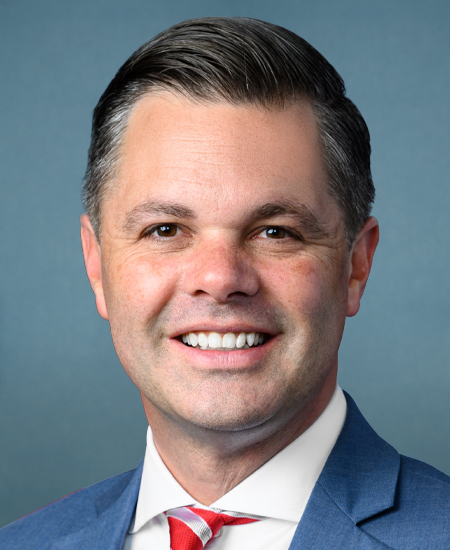
Rep. Zachary Nunn
Sponsored bills
Maddy summaryThe Death Tax Repeal Act would eliminate the federal estate tax and generation-skipping transfer tax for estates of people who die on or after the bill's enactment date, and for generation-skipping transfers made after that date. It would also establish a new $10 million lifetime gift tax exemption (adjusted annually for inflation) and replace the existing gift tax rate schedule with a revised structure. These changes would primarily affect high-net-worth individuals and their heirs, as the estate tax and gift tax typically apply to large estates or gifts exceeding the new exemption threshold. The bill's provisions would take effect on the date of enactment, with transitional rules for the year the bill is signed into law.
Business of Insurance Regulatory Reform Act of 2024 This bill limits the authority of the Consumer Financial Protection Bureau over entities that are regulated by a state insurance regulator. Specifically, the bureau is prohibited from pursuing enforcement against any person regulated by a state insurance regulator and offers a consumer financial product or service, to the extent that the person is engaged in the business of insurance. If a person engaged in the business of insurance is regulated by a state insurance regulator but is otherwise subject to the bureau's enforcement authority, the bureau must construe its authority narrowly.
Maddy summaryHR 6370, the OFAC Licensure for Investigators Act, creates a 5-year pilot program allowing private sector firms to obtain licenses from the Office of Foreign Assets Control (OFAC) for conducting small financial transactions during investigations. This directly affects private firms engaged in investigative work who need to make minimal transactions without triggering standard sanctions restrictions. The bill requires OFAC to establish the program within one year, mandate monthly activity reports from participating firms, and coordinate with the Financial Crimes Enforcement Network (FinCEN). The program terminates automatically after five years, with no changes to existing OFAC licensing rules for non-pilot activities.
Maddy summaryThis bill directs the U.S. Treasury Secretary to instruct American representatives at international financial institutions (like the World Bank) to actively support projects that help countries reduce dependence on Russian fertilizer and grain. It requires these institutions to prioritize initiatives strengthening global grain supply chains and attracting private investment in alternative agricultural sources. The law includes a waiver option for the Treasury to bypass these requirements if deemed necessary for U.S. national interests, and it automatically expires after five years unless the President formally requests an extension to Congress. The bill primarily affects how U.S. funds and influence are used within international financial institutions to reshape global agricultural trade patterns.
Maddy summaryHR 6980, the DOCTORS Act, reallocates unused J-1 visa waivers that states did not use for foreign medical graduates. Each state must report unused waivers by September 30 annually, and the State Department will redistribute them equally over three years for the next fiscal year. Ten percent of redistributed waivers must support doctors working in facilities serving medically underserved communities. This directly affects state agencies managing visa waivers and impacts foreign doctors seeking permanent U.S. residency after training.
Maddy summaryHR 6936, the Federal Artificial Intelligence Risk Management Act of 2024, requires U.S. federal agencies to adopt the National Institute of Standards and Technology's (NIST) AI Risk Management Framework (AI RMF) for all agency use and procurement of artificial intelligence systems. It mandates agencies to integrate the framework into AI development, procurement, and use within 180 days of Office of Management and Budget (OMB) guidance, including requiring AI vendors to attest to meeting specific risk standards before contracts are awarded. The bill also directs NIST to develop voluntary testing standards for AI systems, establishes a federal AI workforce initiative to support agencies, and requires annual reports to Congress on implementation progress. This applies exclusively to federal agencies - not private companies or the public - and focuses on managing AI risks to people and the environment through standardized practices.
Maddy summaryThis bill requires the U.S. Attorney General to review all Department of Justice programs supporting victims of domestic violence, sexual assault, dating violence, or stalking - including those under the Violence Against Women Act and Victims of Crime Act - within one year of enactment. The review must assess these programs and produce a report with specific recommendations to improve victim protection (especially in rural areas), create pathways out of abusive environments, and strengthen long-term support. The report must be published and shared with state agencies and eligible organizations to increase public awareness of available assistance. The bill directly affects DOJ grant programs and aims to enhance support systems for victims, without specifying new funding or altering existing laws.
Maddy summaryHR 6524, the Federal Cybersecurity Workforce Expansion Act, creates a new federal apprenticeship program to address the cybersecurity workforce shortage by training individuals for cybersecurity roles within federal agencies. The program partners with community colleges, career and technical schools, and other educational institutions to provide training aligned with federal cybersecurity needs. It also establishes a pilot program specifically for veterans and military members transitioning to civilian life, offering cybersecurity training with portable credentials that can be used across the job market. The bill requires coordination with multiple federal agencies and includes reporting requirements to assess program effectiveness and track participant employment outcomes.
Maddy summaryHR 4765, the Exposing China’s Support for the Taliban Act, requires the U.S. Treasury Department to study China’s financial ties to the Taliban in Afghanistan. The bill mandates a report within one year to Congress assessing Chinese companies’ involvement in money laundering, drug trafficking, and other illicit activities supporting Taliban financing. This study will also evaluate how these activities conflict with U.S. national security interests and suggest policy improvements to disrupt such networks. The bill itself does not impose new restrictions but directs a formal review of China’s financial role in Afghanistan.