

Maddy summaryHR 8992, the Stop Fentanyl at the Border Act, allocates $5.8 billion in federal funding to enhance border security efforts focused on intercepting fentanyl and other illegal drugs. The bill provides $3.4 billion for U.S. Customs and Border Protection (CBP) staffing, including hiring bonuses, mental health support, and processing coordinators, and $1.09 billion for advanced scanning technology and drug interdiction capabilities at land borders. Additional funds target disrupting fentanyl trafficking networks ($223 million for ICE), outbound firearm/currency inspections ($285 million), and law enforcement coordination (DEA, DOJ, U.S. Marshals). These provisions directly affect CBP officers, ICE agents, and border ports of entry by expanding personnel, technology, and interdiction strategies. The bill requires annual reports to Congress on the effectiveness of new staffing, scanning systems, and outbound inspection programs.
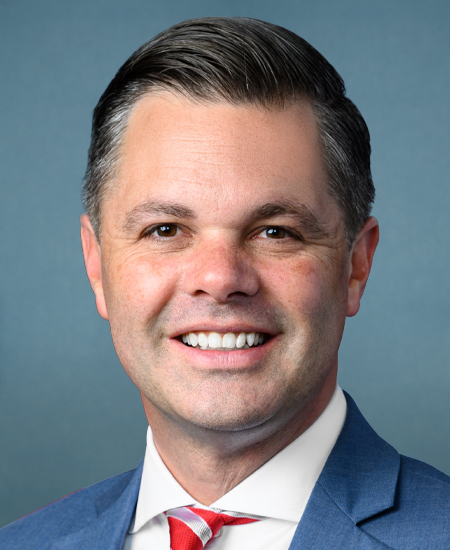
Rep. Zachary Nunn
Sponsored bills
Maddy summaryThe INFANT Tax Credit Act creates two new tax credits to support domestic infant formula manufacturing in the U.S. It offers a 25% tax credit for businesses investing in new or upgraded manufacturing facilities (for companies with annual revenue under $750 million) and a $1.50 per pound credit for each pound of infant formula manufactured and sold domestically (for companies with revenue under $500 million). The bill requires the Secretary of Agriculture to submit annual reports to Congress on facility numbers, barriers to accessing rural development funding, and community impacts. These provisions directly affect U.S. infant formula manufacturers meeting revenue thresholds, aiming to boost domestic production capacity.
Maddy summaryThis bill requires online platforms and internet service providers (like social media companies and messaging services) to report certain drug-related crimes to the Drug Enforcement Administration (DEA). Providers must submit reports if they have actual knowledge or a reasonable belief about fentanyl/methamphetamine sales, counterfeit prescription drugs, or illegal online pharmacies, including account details and location information. The law includes penalties for non-compliance ($190,000 for first violation) and requires the DEA to publish annual reports on the number of reports received and their outcomes. It exempts broadband internet providers and text messaging services from these requirements and includes privacy protections to prevent providers from being required to monitor content. The law aims to help law enforcement combat illegal drug trafficking by creating a structured reporting mechanism for online platforms.
Maddy summaryHJRES 171 is a joint resolution seeking congressional disapproval of a proposed rule by the Department of Health and Human Services (HHS) regarding the Unaccompanied Children Program. The rule, published in the Federal Register on April 30, 2024, aimed to update regulations governing the placement, care, and services for unaccompanied alien children (children entering the U.S. without a parent or guardian). This resolution would block the rule from taking effect, preserving existing regulations under the current program framework. It uses a standard congressional disapproval process under Title 5 of the U.S. Code to halt the rule without altering the program’s underlying policy.
Maddy summaryHR 8847, the "Confronting CCP Human Rights Abusers Act," requires the U.S. Commerce Department to add China's Ministry of Public Security's Institute of Forensic Science (including its aliases) to the Commerce Department's sanctions list within 60 days of the bill's enactment. The law directly affects this Chinese entity by restricting its access to U.S. technology and exports through sanctions. A waiver is permitted if the President certifies the institute is not involved in human rights abuses against Uyghurs and other minorities in Xinjiang, submitting this certification to Congress within 60 days. The bill's key mechanism is the mandatory inclusion on the sanctions list, with the waiver option tied to human rights certification.
Maddy summaryThe HEART Act of 2024 (HR 8846) creates a tax exclusion for individuals receiving compensation from federally declared disasters caused by severe storms, straight-line winds, or tornadoes. It excludes from gross income any "qualified" relief payment received after December 31, 2023, for losses like property damage, additional living expenses, or lost wages not covered by insurance. The bill specifically prevents double tax benefits by disallowing deductions or basis increases for expenses already covered by this excluded payment. It directly affects individuals who received disaster relief payments for qualifying weather events after 2023.
Maddy summaryHR 8824, the U.S.-European Nuclear Energy Cooperation Act of 2024, requires the U.S. State Department to develop a strategy within 120 days to strengthen cooperation with European nations on nuclear energy and reduce reliance on Russian nuclear technology. The strategy must analyze reactor types, fuel cycles, and U.S. funding to replace Russian supply chains in uranium mining, enrichment, and reactor construction by 2030. It directly affects European countries (including Ukraine, Czech Republic, and others) dependent on Russian-designed nuclear plants and fuel, aiming to counter Russian influence following Russia’s invasion of Ukraine and occupation of the Zaporizhzhia plant. The bill authorizes $30 million annually (2025-2029) for U.S. engagement to support European nuclear capacity building and counter Russian disinformation in the sector.
Maddy summaryHR 8821, the HOPE with Fertility Services Act, requires group health plans and health insurance issuers that cover obstetrical services to provide comprehensive coverage for infertility treatments and fertility preservation when medical treatments (like cancer therapy) cause or risk iatrogenic infertility. It defines infertility broadly and mandates coverage for procedures like IVF, egg freezing, and ovulation induction, while allowing standard cost-sharing but prohibiting insurers from discouraging or penalizing these services. Insurers must annually submit analyses of their coverage rules for these treatments to the Secretary of Labor for 5 years after enactment, with potential civil penalties for noncompliance. The law applies to all applicable plans starting January 1, 2026.
Maddy summaryThe AI LEAD Act establishes a federal oversight structure for artificial intelligence, requiring all major agencies to appoint a Chief Artificial Intelligence Officer (CAIO) within 45 days of enactment. These officers must ensure AI systems are developed responsibly - protecting privacy, civil rights, and security - while agencies create AI strategies covering ethics, risk management, and workforce training. The bill also mandates a Chief AI Officers Council to coordinate agency efforts, review deployed AI for harm, and advise on best practices. Agencies must publish AI use cases and report annually to Congress, with a Government Accountability Office (GAO) report due within two years assessing implementation and impacts.
Maddy summaryHR 8770, the Cybersecurity Clinics Grant Program Act, establishes a federal grant program to fund cybersecurity education at eligible institutions including junior/community colleges, HBCUs, HSIs, and other minority-serving colleges. The program requires grantees to develop hands-on workshops for students and communities, create practical cybersecurity curricula, and build student career pathways into the cybersecurity workforce. It directly supports under-resourced organizations like small businesses, local governments, and critical infrastructure providers by helping them improve their cyber defenses. The grant program will be administered by CISA and FEMA, with annual reports tracking fund use and graduate workforce placements.