

Maddy summaryHR 2969 establishes a 4-year working group with Treasury, law enforcement agencies (like FBI and DHS), and industry representatives (fintech, blockchain, and financial institutions) to study how terrorists and criminals use digital financial technologies like cryptocurrencies. The group must research illicit financial activities, develop regulatory proposals to improve anti-money laundering efforts, and submit annual reports to Congress, including a final report before termination. It also requires a presidential report within 180 days detailing digital asset risks and a congressional briefing after two years. The bill defines key terms such as "digital asset" and "blockchain intelligence company" to guide this work.
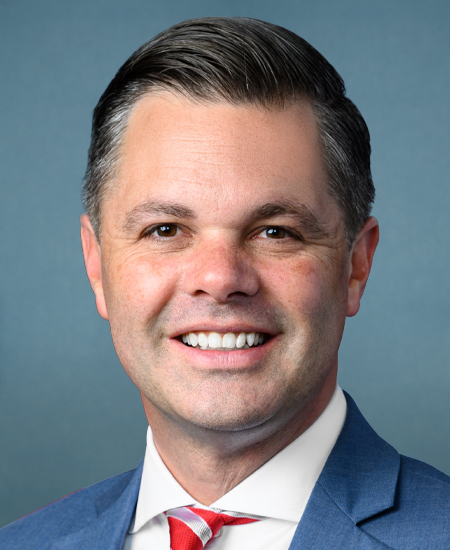
Rep. Zachary Nunn
Sponsored bills
Maddy summaryThis is a commemorative resolution (HRES 1369) honoring Corey Comperatore, a volunteer firefighter, U.S. Army Reserves veteran, and community leader from Sarver, Pennsylvania, who died on July 13, 2024. The resolution formally mourns his passing and celebrates his life, noting he left behind his wife, Helen, and two daughters, Allyson and Kaylee. It recognizes his service to the Buffalo Township Volunteer Fire Department, his military service, and his role as a devoted member of Cabot Methodist Church. As a ceremonial resolution, it has no policy impact or direct effect on legislation or constituents beyond this formal acknowledgment.
Maddy summaryThe Storm Recovery and Community Restoration Act provides tax relief to Iowa residents in specific disaster-affected areas following storms and flooding. It allows penalty-free withdrawals of up to $100,000 from retirement accounts for individuals living in designated counties (e.g., Polk, Shelby, Clay, or Sioux) who suffered economic loss, with the option to repay within three years to avoid taxes. The bill also increases retirement loan limits to $100,000 and delays loan repayments for one year for affected residents. Additionally, it temporarily suspends limits on deducting cash charitable contributions to Iowa disaster relief efforts between April 24 and December 31, 2024.
Maddy summaryThe Child Care Workforce and Facilities Act of 2024 provides $100 million in federal funding (2024-2030) to address shortages of quality, affordable child care in underserved areas, known as "child care deserts." It offers competitive grants to states and tribal entities for two key purposes: (1) supporting workforce development through training and career pathways for child care providers (including stackable credentials and affordability assistance), and (2) funding construction, expansion, or renovation of child care facilities in these areas. The grants require states to coordinate with existing workforce programs and prioritize nontraditional hours, affordability, and provider retention. This legislation directly affects eligible child care providers and families in communities lacking sufficient early childhood care options, supplementing rather than replacing existing federal funding streams.
Maddy summaryHR 9071, the UAS Threat Disclosure Act, requires the Director of National Intelligence to declassify all pre-May 2024 security assessments about drones made by or controlled by Chinese entities within 90 days. It directs the declassified information - including security reports and agency actions - to be published online and submitted to Congress. The bill specifically targets "covered unmanned aircraft systems," defined as drones produced or influenced by China’s government or Communist Party. This makes security findings about Chinese-linked drone threats publicly accessible, while allowing national security exemptions. The law affects public transparency regarding Chinese drone security risks but does not alter drone regulations or impose new restrictions.
Maddy summaryThis bill expands the U.S. Secret Service's authority to investigate cybercrime-related money laundering by adding Section 1960 (money laundering) to its jurisdiction and updating definitions for financial institutions. It requires financial institutions to report suspicious activity for 10 years (up from 5) under FinCEN rules and increases the number of international financial institutions targeted for cooperation from 5 to 10. The law directly affects financial institutions, law enforcement agencies, and international financial bodies by modifying reporting timelines, investigative powers, and cross-border collaboration requirements. These changes aim to strengthen efforts against cybercrime money laundering through updated legal frameworks and extended oversight periods.
Maddy summaryThe HEALTH for MOM Act of 2024 gives states the option to create Medicaid programs that provide coordinated care for pregnant and postpartum women through "maternity health homes." These are teams of healthcare providers (like doctors, nurses, and social workers) that develop personalized care plans covering prenatal, delivery, postpartum, mental health, and social support services. States can design payment models for these programs, with a 15% federal funding boost for the first four years, and must track outcomes like reduced hospital stays and maternal health data. The program applies to Medicaid-eligible pregnant women (excluding those with limited pregnancy-only coverage) and requires states to collect data on care access and outcomes without mandating enrollment for women or participation for providers.
Maddy summaryHR 4581, the Maternal and Child Health Stillbirth Prevention Act of 2024, amends Title V of the Social Security Act to explicitly allow federal funds to support stillbirth prevention efforts. The bill directs states receiving Title V maternal and child health funds to use these resources for evidence-based programs and research aimed at reducing stillbirths, including tracking fetal movements, screening for growth issues, smoking cessation, and community support. It directly affects state maternal health programs by clarifying that existing funding can now cover specific stillbirth prevention activities previously not explicitly permitted. The law changes how Title V funds may be spent, adding clear provisions for research and programs targeting stillbirth reduction. This is a policy change that updates funding guidelines without creating new programs or mandates.
Maddy summaryThis bill transfers specific federal lands in Iowa and Nebraska from the Army Corps of Engineers to the Bureau of Indian Affairs, then places those lands into trust for the Winnebago Tribe of Nebraska. The lands, described in detail as Tracts 119, 210, and 113, are declared part of the tribe's historic 1865 reservation under the same terms as the original treaty. The bill explicitly prohibits Class II and Class III gaming on these lands under the Indian Gaming Regulatory Act.
Maddy summaryHR 9018, the "Stop Crimes Against Children Act," amends existing law to require federal agencies to develop specific plans for coordinating with nonprofits and universities focused on preventing child crimes. It mandates coordination with organizations supporting child victims and higher education institutions researching child crime prevention, study, and response strategies. The bill also requires formal recommendations for federal, state, local, and tribal law enforcement on best practices for preventing, identifying, and responding to crimes against children, including physical abuse, sexual abuse, abduction, exploitation, and trafficking. This legislation directly affects federal agencies, law enforcement bodies, and the organizations they partner with, aiming to strengthen coordinated responses through evidence-based approaches.