

Maddy summaryHR 9278 extends the deadline for small businesses to file beneficial ownership information with FinCEN. It amends U.S. Code Section 5336 to give small business concerns (as defined in the Small Business Act) until December 31, 2025, to submit required ownership details. This change applies directly to small businesses already subject to the reporting rules under the Corporate Transparency Act. The bill provides a one-year extension from the original deadline, allowing these businesses additional time to comply with the filing requirement.
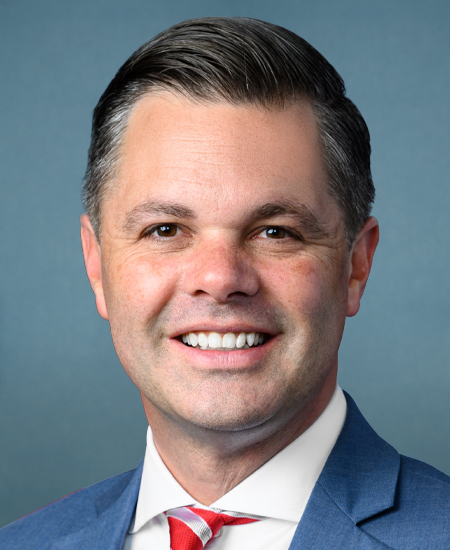
Rep. Zachary Nunn
Sponsored bills
Maddy summaryHR 9270, the Cyber Ready Workforce Act, creates a grant program to expand cybersecurity apprenticeships by funding workforce intermediaries (like training organizations and partnerships with businesses or schools). These grants require 85% of funds to cover program development, employer partnerships, and support services (like career counseling and childcare assistance) for apprentices. The bill mandates that apprenticeship programs include specific industry certifications (e.g., CompTIA Security+, CISSP) and focus on filling cybersecurity job shortages, particularly benefiting underrepresented groups like women, minorities, veterans, and youth. It directly affects cybersecurity employers, training providers, and potential apprentices seeking certified careers in fields like security analysis or cloud architecture.
Maddy summaryHR 9274, the SHAWL Act, establishes two new Smithsonian museums: the National Museum of the American Latino and the American Women’s History Museum. It authorizes both museums to be located within the National Mall’s "Reserve" area, overriding prior restrictions, and requires federal agencies managing potential sites to transfer jurisdiction to the Smithsonian after notifying congressional committees. The bill mandates that both museums accurately represent diverse cultures, histories, and viewpoints within Latino and women’s communities through exhibits and programs, requiring input from a broad range of community experts. It also requires the Smithsonian to submit biennial reports to Congress detailing compliance with these representation requirements.
Maddy summaryHJRES 127 is a congressional disapproval resolution targeting a Securities and Exchange Commission (SEC) rule requiring public companies to standardize climate-related financial disclosures. It seeks to block the SEC’s March 2024 rule (89 Fed. Reg. 21668), which would mandate consistent reporting on climate risks for investors. If passed, this resolution would prevent the SEC rule from taking effect, directly affecting publicly traded companies required to comply with the proposed disclosure standards. The bill uses a specific congressional process under Title 5, U.S. Code, to nullify the rule without creating new regulations.
Maddy summaryHJRES 122 is a resolution seeking to block a rule by the Consumer Financial Protection Bureau (CFPB) that would have regulated credit card penalty fees. The rule, published on March 15, 2024, aimed to limit how credit card companies charge fees for late payments or other violations. If approved, this resolution would disapprove the rule under a specific legal process, preventing it from taking effect. This directly affects credit card issuers (banks and financial institutions) by allowing them to continue current fee practices without the proposed restrictions.
Maddy summaryThe Intimate Privacy Protection Act amends Section 230 of the Communications Act to require online platforms to implement specific safeguards against cyberstalking, intimate privacy violations, and digital forgeries. Platforms must establish processes to prevent these harms, allow clear reporting, investigate claims, and remove verified violations within 24 hours - including non-consensual intimate images or deepfakes designed to cause harm. The bill directly affects major social media and content-sharing platforms hosting user-generated content, mandating these measures for content posted after enactment. It directs the FTC to create implementing regulations within 180 days and explicitly states the changes do not infringe on First Amendment rights.
Maddy summaryHR 9206, the Bunker Buster Act of 2024, authorizes the U.S. President to assist Israel in preparing for potential Iranian nuclear threats. It requires a joint U.S.-Israel study on military needs to counter Iranian nuclear capabilities, including infrastructure for bunker-busting munitions (like the Massive Ordnance Penetrator, or MOP). The bill then permits specific actions - such as building runways for MOP-capable aircraft, storing munitions in Israel, or transferring them under strict conditions - if Iran violates nuclear safeguards and U.S. security interests are at stake. It explicitly states this does not authorize military force against Iran.
Maddy summaryThis bill reauthorizes the Debbie Smith DNA Backlog Grant Program, which provides federal funding to state and local law enforcement agencies to reduce backlogs in processing DNA evidence from crime scenes. It extends the program's funding period from fiscal years 2024 through 2029 (previously ending in 2024). The bill also updates audit requirements to ensure grant funds are used properly through 2029. This directly affects law enforcement agencies that receive these grants to accelerate DNA analysis for criminal investigations.
Maddy summaryThis bill provides financial aid for higher education to public safety officers and their children. Eligible officers (with at least 8 years of service who commit to 4 more years) or their children under age 27 can receive payments based on VA benefit formulas. Aid covers up to 45 months of full-time study, prioritizes applicants with financial need through a sliding scale, and allows officers to transfer eligibility to children. The program aims to support recruitment and retention in law enforcement by easing education costs.
Maddy summaryHR 9176, the LIONs Act of 2024, increases the maximum loan amount available through the Small Business Administration's 7(a) loan program. It amends the Small Business Act to raise the cap from $3.75 million (or $5 million if exceeding) to $7.5 million (or $10 million if exceeding) for eligible small business loans. This change directly affects small businesses seeking SBA 7(a) loans by allowing them to access larger funding for operations, equipment, or expansion. The key mechanism is updating the statutory loan limit to support more significant business financing needs within the existing program framework.