

Maddy summaryHR 5012 (SHINE for Autumn Act of 2023) authorizes federal funding to improve stillbirth research and data collection. It provides $5 million annually for states to collect standardized stillbirth data (including risk factors) while protecting privacy, $1 million annually for developing public educational materials and data collection guidelines, and $3 million annually for medical fellowships training pathologists in perinatal autopsy and stillbirth research. The bill directly affects state health departments, medical professionals (like obstetricians and pathologists), and families who experience stillbirth by improving data quality for future research. It requires federal reports on guidelines and program effectiveness within five years but does not provide direct medical care or financial assistance to families.
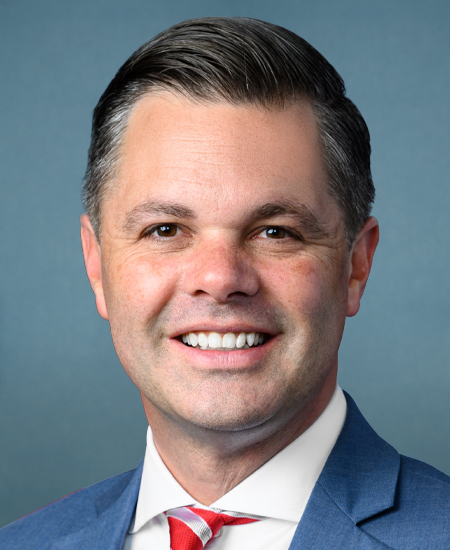
Rep. Zachary Nunn
Sponsored bills
Maddy summaryThis bill directs the Department of Homeland Security to strengthen partnerships with law enforcement in Mexico, Central America, and South America to address human smuggling and trafficking. Key provisions include creating cross-border investigative teams to disrupt trafficking operations, expanding training for foreign law enforcement, and supporting investigations targeting smugglers who threaten border security - particularly those exploiting children and families. It also mandates targeted public information campaigns in high-migration regions to counter misinformation from criminal groups and inform migrants about travel risks. These efforts directly affect U.S. border security operations, foreign law enforcement partners, and migrant populations in affected countries.
Maddy summaryHR 537 authorizes a Congressional Gold Medal to honor 60 diplomats who saved Jewish lives during the Holocaust by issuing visas and passports against their governments' orders, risking expulsion and personal danger. The medal will be presented to the next of kin of these diplomats, alongside representatives from their home countries, and permanently displayed at the United States Holocaust Memorial Museum. The bill also permits the sale of bronze duplicates to cover production costs, with proceeds going to the U.S. Mint. This legislation recognizes the diplomats' humanitarian actions without creating new government programs or altering existing laws.
Maddy summaryHRES 965 is a non-binding resolution calling for the immediate release of Ryan Corbett, a U.S. citizen wrongfully detained by the Taliban in Afghanistan since August 2022. It directly affects Corbett (held in poor conditions without charges) and other Americans detained by the Taliban. The resolution demands the Taliban release Corbett unconditionally, urges respect for his human rights, commends Qatar’s role as U.S. protecting power, and condemns the Taliban’s practice of detaining U.S. citizens. It does not create new law but formally expresses congressional support for Corbett and other wrongfully detained Americans.
Maddy summaryHRES 1265 is a symbolic resolution designating May 2024 as "Renewable Fuels Month" to recognize renewable fuels' role in reducing carbon emissions, lowering consumer fuel prices, supporting rural economies, and decreasing reliance on foreign energy sources. It highlights that renewable fuels like ethanol and biodiesel contribute to U.S. energy independence (displacing 525 million barrels of crude oil in 2023), support over 72,000 direct jobs in ethanol production, and reduce emissions by 44-52% compared to gasoline. The resolution does not create new laws or funding but formally acknowledges these benefits through congressional recognition. It is non-binding and focuses solely on raising awareness of the renewable fuels industry's economic and environmental contributions.
Maddy summaryHR 8636, the Foreign Investment Transparency and Accountability Act, requires federal agencies to formally request the Committee on Foreign Investment in the United States (CFIUS) to review specific foreign transactions and to certify those transactions meet national security criteria. If CFIUS decides not to review a transaction, it must issue a public notice explaining why, including whether the transaction qualified as a "covered transaction" under current law and any legislative recommendations to expand review requirements. The notice must also include a classified annex with sensitive details like party names, while specifying the relevant congressional committees (House Financial Services and Appropriations subcommittees, and Senate Banking and Appropriations subcommittees). This bill does not change investment restrictions but improves transparency in the review process for foreign acquisitions affecting national security.
Maddy summaryThis resolution (HRES 1272) calls on the Biden Administration to seek symbolic censure of Iran at the International Atomic Energy Agency (IAEA) for violating nuclear nonproliferation agreements and to refer Iran's case to the United Nations Security Council. It urges diplomatic action to prevent Iran from acquiring nuclear weapons, citing Iran's enrichment of uranium to 60% purity, obstruction of IAEA inspections, and development of advanced centrifuges. The resolution does not create new law but formally requests specific international diplomatic steps from the U.S. government.
Maddy summaryHR 5403, the CBDC Anti-Surveillance State Act, prohibits the Federal Reserve from issuing or facilitating central bank digital currency (CBDC) directly or indirectly to individuals through financial institutions. It specifically bans Federal Reserve banks from offering digital products to individuals, maintaining individual accounts, or using CBDC for monetary policy implementation. The bill also clarifies that its restrictions do not apply to existing physical cash or private, permissionless digital payment systems. This bill directly affects the Federal Reserve's ability to develop or deploy a government-run digital dollar. The law aims to prevent the Federal Reserve from creating a digital currency that could enable transaction tracking or government oversight of personal financial activity.
Maddy summaryThe SCREENS for Cancer Act of 2024 reauthorizes and expands the National Breast and Cervical Cancer Early Detection Program (NBCCEDP), which provides free screenings and care coordination to low-income, uninsured, or underinsured women. It increases annual funding from $275 million (2024) to $500 million (2028) and explicitly adds "prevention" to the program’s mission, requiring it to reduce racial and ethnic disparities in cancer outcomes. The bill mandates the program to address barriers like social determinants of health and implement evidence-based strategies to boost screenings, particularly for underserved communities disproportionately affected by pandemic-related screening declines. This directly benefits millions of women, especially Black, Hispanic, and Asian women, who face higher cancer death rates and reduced access to care.
Maddy summaryHRES 1255 is a non-binding House resolution introduced on May 23, 2024, that calls on all Americans to observe Memorial Day 2024 as a day of remembrance for military personnel who died in service. The resolution specifically honors "the men and women of the Armed Forces who have died in the pursuit of freedom and peace" and urges the public to demonstrate appreciation for their sacrifices. It does not create new laws or policies but serves as a symbolic expression of national gratitude, emphasizing respect for those who died while defending democratic values. The resolution was co-sponsored by multiple House members and aligns with the traditional observance of Memorial Day.