

Maddy summaryThis bill expands transportation assistance for rural veterans by updating a Department of Veterans Affairs grant program. It allows grants to be awarded to county veterans service organizations and tribal organizations, in addition to existing recipients, and increases the maximum grant amount to $80,000 for organizations needing to purchase ADA-compliant vehicles. The bill defines "rural" using the USDA's Rural-Urban Commuting Areas (RUCA) system and removes fixed annual funding limits, allowing for flexible budgeting. It directly affects rural veterans who need transportation to healthcare facilities and the organizations that provide this service.
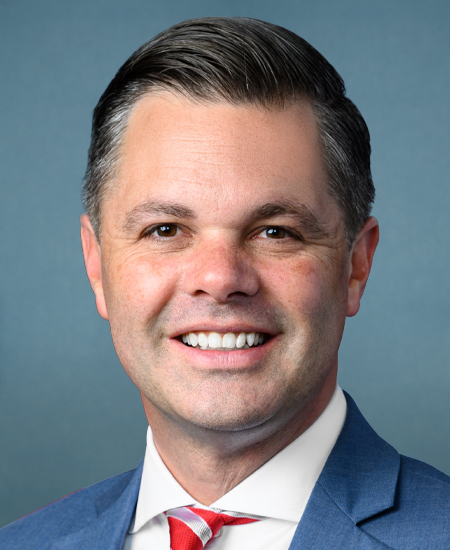
Rep. Zachary Nunn
Sponsored bills
Maddy summaryThe PHIT Act of 2025 allows taxpayers to deduct certain fitness-related expenses as medical costs on their federal tax returns. It directly affects individuals and families who pay for qualifying physical activity programs, such as gym memberships, fitness classes, or approved equipment. Key provisions include setting annual limits ($1,000 per person or $2,000 for joint returns), defining eligible fitness facilities (excluding golf courses or private clubs), and specifying that equipment must be used exclusively for physical activity. The bill amends the Internal Revenue Code to treat these expenses as deductible medical costs, effective for taxable years after its enactment.
Maddy summaryHR 2381, the SCREENS for Cancer Act of 2025, reauthorizes and updates the National Breast and Cervical Cancer Early Detection Program (NBCCEDP). It directly affects low-income, uninsured, or underinsured women across all 50 states, territories, and tribal communities by expanding access to breast and cervical cancer screenings, diagnostic services, and patient navigation support. Key provisions include updating program language to emphasize prevention alongside detection and control, adding specific strategies to reduce disparities, and appropriating $235 million annually for fiscal years 2026-2030. The bill also requires a GAO study by 2027 to assess program eligibility, service trends, and barriers to screening access.
Maddy summaryHR 2391 creates a new $7,500 federal tax credit for eligible commercial truck drivers in 2025, increasing to $10,000 for new drivers. To qualify, drivers must hold a Class A commercial driver’s license, operate qualifying tractor-trailers, earn under $135,000 annually (for joint filers), and drive at least 1,900 hours yearly (or average 40 hours weekly). Special rules apply for apprenticeship program participants and drivers with fewer than 1,420 hours. The credit expires after 2026 and adjusts annually for inflation starting in 2026.
Maddy summaryThis bill designates Uyghurs and other Muslim minority group members from Xinjiang who have experienced or fear persecution for peaceful political, religious, or cultural expression as "persons of special humanitarian concern" for refugee resettlement. It provides for Priority 2 processing under the refugee system, waives the presumption that applicants are immigrants, and excludes them from numerical visa limits. The bill requires regular reporting on refugee applications from Xinjiang, including wait times and denial reasons, and encourages other countries to make similar accommodations for Xinjiang refugees. The provisions apply to individuals who fled Xinjiang due to detention, forced labor, family separation, or other human rights abuses documented in the bill's findings. The bill would expire 10 years after enactment.
Maddy summaryThe Unity through Service Act of 2025 establishes an Interagency Council on Service (Section 2) composed of senior federal officials from departments including Defense, State, Labor, and Education. The Council advises the President on coordinating military, national, and public service recruitment strategies, developing joint marketing initiatives, and assessing service program impacts (Section 2(c)). It requires annual reports to Congress on service strategies, a joint report on integrating military and national service recruitment within four years (Section 5), and a study on advertising effectiveness and vaccine requirements' impact on retention (Section 6). The bill directly affects federal agencies managing military, Peace Corps, and national service programs by mandating cross-agency coordination and reporting, without authorizing new funding (Sections 8-9).
Maddy summaryThis bill gives the Treasury Secretary authority to identify foreign financial institutions or transactions as primary money laundering concerns for fentanyl trafficking, requiring U.S. domestic financial institutions to implement specific anti-money laundering measures. It mandates updated advisories for banks to identify Chinese professional money laundering schemes facilitating fentanyl trafficking, incorporating three existing financial crime advisories. The bill also requires the Financial Crimes Enforcement Network to issue guidance for reporting suspicious transactions linked to transnational criminal organizations trafficking narcotics. These provisions directly affect U.S. banks and financial agencies by imposing new reporting obligations and compliance requirements related to fentanyl-related money laundering.
Ensuring Continuity in Veterans Health Act This bill requires the consideration of continuity of care when determining whether care through the Veterans Community Care Program is in the best medical interest of a veteran.
Investing in Rural America Act of 2025 This bill allows Farm Credit System (FCS) institutions to make and participate in loans and commitments (and extend other technical and financial assistance) for essential community facility projects as part of the Department of Agriculture's Community Facilities Direct Loan & Grant Program. This program provides funding to develop essential community facilities in rural areas. The FCS financing and technical assistance may be provided in order to make capital available to develop, build, maintain, improve, or provide related equipment or other support for essential community facilities in rural communities (e.g., certain facilities that provide healthcare, community support, public safety, educational, or utility services). Under the bill, the financing provided by an FCS institution may not exceed 15% of the total of all outstanding loans of the institution. Further, an FCS institution must (1) offer at least one non-FCS lending institution an interest in the financing under reasonable terms and conditions acceptable to the borrower, and (2) report the offer to the Farm Credit Administration (FCA). The FCA must submit an annual report to Congress on the activities undertaken by FCS institutions under this bill, including through the partnerships between FCS institutions and other lending institutions. The FCA must post the report on the administration's website.
Maddy summaryHRES 227 is a non-binding resolution expressing the House of Representatives' support for designating March 18, 2025, as "National Agriculture Day" to honor agriculture's role as a vital U.S. industry. It does not create new laws, allocate funds, or impose requirements on any group. The resolution serves as a symbolic gesture to highlight agriculture's economic impact and contributions to the nation. As a procedural resolution, it has no direct policy effect beyond raising awareness.