

Maddy summaryHR 3178, the Save Healthcare Workers Act, creates a new federal crime for assaulting hospital staff while they are performing their duties, with penalties including fines and up to 10 years in prison (up to 20 years for aggravated cases involving weapons or injuries). The bill directly affects hospital employees - including nurses, doctors, and support staff - across all covered facilities (such as emergency rooms, long-term care centers, and children’s hospitals) by criminalizing violence that disrupts patient care. It also establishes a $25 million annual grant program (2025-2034) to help hospitals implement safety measures like staff de-escalation training, security technology, and coordination with local law enforcement. These provisions aim to address workplace violence in healthcare settings, which the bill cites as a growing problem affecting service delivery and staff retention.
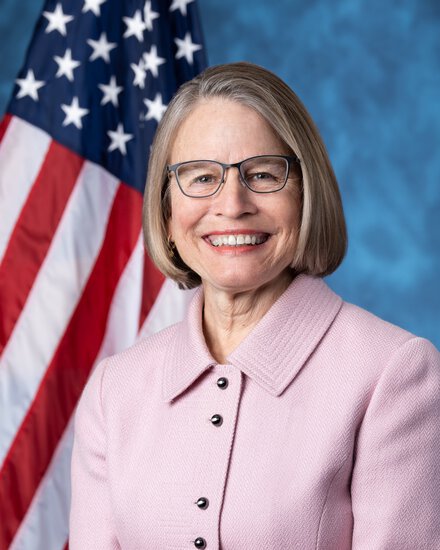
Rep. Mariannette Miller-Meeks
Sponsored bills
Maddy summaryThis bill creates a federal grant program to help cover medical costs for retired Federal working dogs (like police or military K9s). It authorizes $1 million annually (2026-2030) for eligible nonprofits with a two-year history of providing such care to dogs that have received official retirement letters and are now with their handlers. The grants allow these organizations to pay for veterinary expenses, directly supporting retired service dogs and their handlers. The program is administered through the Department of Homeland Security under existing grant authority.
Maddy summaryHR 3137 extends federal tax credits for biodiesel production and use through 2026, directly affecting biodiesel producers, refiners, and businesses that purchase or use biodiesel. The bill updates tax code provisions to keep the biodiesel credit active until 2026 (instead of expiring in 2024) and prevents double benefits by disallowing credits for fuel already covered under a separate clean fuel production credit. It also extends related credits for second-generation biofuels until 2027 and applies to fuels sold or used after December 31, 2024. The changes maintain existing tax incentives without altering eligibility or creating new requirements.
Maddy summaryThis bill creates a new federal program to expand high-speed broadband access in rural areas by providing grants, loans, and combinations of both. It sets minimum standards requiring 100 Mbps downstream and upstream speeds, prioritizes projects in communities where at least 90% of households lack such service, and directs funding toward areas with high poverty, small populations, or strategic community plans. Eligible applicants include tribal organizations, cooperatives, local governments, and rural utilities, with requirements to meet buildout deadlines, participate in federal affordability programs, and provide cost-sharing (up to 25%). The program authorizes $650 million annually from 2026 to 2030 to fund infrastructure construction, improvement, or acquisition in underserved rural communities.
Maddy summaryThis bill establishes a federal grant program to help states create or improve paid family leave programs that provide at least 6 weeks of paid leave for new parents (for birth or adoption). States with existing programs can apply for grants to fund implementation, improve access for low-income workers, and coordinate with other states through a new Interstate Paid Leave Action Network. The grants can be used for program design, technology, outreach, and administrative costs, with states required to meet specific benefit standards including income-based calculations (higher percentages for lower-income workers). The bill aims to increase access to paid family leave for workers across states by standardizing and coordinating state programs through the new interstate network.
Maddy summaryThe I-PLAN Act of 2025 establishes an Interstate Paid Leave Action Network (I-PLAN) to coordinate state paid family and medical leave programs across state lines. It requires participating states to develop a standardized interstate agreement covering key elements like benefit calculations, eligibility rules, and administrative processes to simplify compliance for employers and employees working in multiple states. The bill creates a national intermediary to support I-PLAN activities, including developing technology systems for processing cross-state leave claims and producing annual reports comparing state programs. States with existing paid leave programs can receive federal grants to help implement the agreement and cover administrative costs, with funding authorized for fiscal years 2026-2028. This legislation directly affects states, employers operating across state lines, and employees who work in multiple states.
Canadian Snowbird Act This bill authorizes the Department of Homeland Security to admit into the United States qualifying Canadian citizens as long-term nonimmigrant visitors. A qualifying Canadian citizen is an individual who (1) is at least 50 years old, (2) maintains a Canadian residence, (3) owns a U.S. residence or has rented a U.S. accommodation for the duration of the individual's stay, (4) is not inadmissible or deportable, (5) will not engage in employment or labor for hire in the United States other than for a non-U.S.-based person or entity by whom the Canadian citizen was employed in Canada or for whom the Canadian citizen performed services in Canada, and (6) will not seek certain forms of assistance or benefits. A qualified individual may be admitted for up to 240 days during any single 365-day period. The spouse of such an individual may be admitted under the same terms, except that the spouse is not required to separately satisfy the requirement for owning or renting a residence in the United States. An individual admitted into the United States under this bill shall have nonresident alien tax status.
Maddy summaryThis bill temporarily allows doctors to prescribe and dispense certain Medicare-covered medications directly to seniors in their offices from 2026 to 2030, under specific conditions. It requires prior in-person visits, limits dispensing to group practices, and mandates billing through the physician’s practice. The bill also directs the GAO to study whether physician-owned pharmacies are becoming common and how such arrangements might affect prescribing. It directly affects seniors receiving Medicare Part D drugs and physician practices participating in these arrangements. The exception expires in 2030, with no changes to Medicare Part D program rules.
Maddy summaryThis bill, HR 2936 (the ABC-ED Act), aims to reduce emergency department crowding by requiring real-time tracking of hospital bed capacity and related metrics like patient wait times. It allows federal grants to modernize public health data systems that monitor emergency department boarding rates, bed availability, and ambulance offload times, with results displayed on a public dashboard (while protecting privacy). The bill also adds two new Medicare Innovation Center pilot programs: one focused on improving care for older adults (through staffing, infrastructure, and senior care coordination) and another for psychiatric crisis care (including dedicated units and faster facility transfers). Finally, it mandates a one-year study by the Government Accountability Office to evaluate best practices for these data systems and their impact on emergency department efficiency.
Maddy summaryHR 2873 would make Executive Order 14220 permanent, which restricts copper imports to address national security concerns. This bill does not change the order's content but ensures the existing restrictions on copper imports remain in effect indefinitely. It directly affects businesses importing copper and federal agencies implementing the order. The bill is procedural, extending an existing executive order without creating new regulations.