

Supplemental Oxygen Access Reform Act of 2025 or the SOAR Act of 2025 This bill establishes certain requirements with respect to the payment and provision of supplemental oxygen and related services under Medicare. For example, the bill provides for separate payments, indexed to inflation, of oxygen and related equipment, supplies, and services under Medicare (rather than under the competitive acquisition program). It also specifically covers services that are provided by respiratory therapists under Medicare and provides for an additional payment adjustment for these services. Additionally, the bill (1) requires the Centers for Medicare & Medicaid Services to develop an electronic template for providers to use when prescribing oxygen and related equipment, supplies, and services; and (2) establishes certain rights for beneficiaries receiving these items and services, such as the right to choose their suppliers and to receive clear communications and be informed about the services provided.
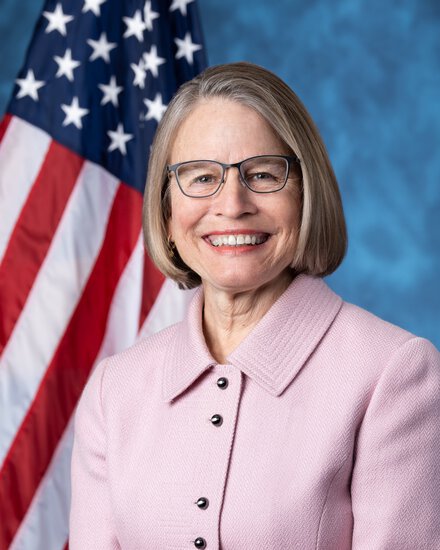
Rep. Mariannette Miller-Meeks
Sponsored bills
Safeguard American Voter Eligibility Act or the SAVE Act This bill requires individuals to provide documentary proof of U.S. citizenship when registering to vote in federal elections. Specifically, the bill prohibits states from accepting and processing an application to register to vote in a federal election unless the applicant presents documentary proof of U.S. citizenship. The bill specifies what documents are considered acceptable proof of U.S. citizenship, such as identification that complies with the REAL ID Act of 2005 that indicates U.S. citizenship. Further, the bill (1) prohibits states from registering an individual to vote in a federal election unless, at the time the individual applies to register to vote, the individual provides documentary proof of U.S. citizenship; and (2) requires states to establish an alternative process under which an applicant may submit other evidence to demonstrate U.S. citizenship. Each state must take affirmative steps on an ongoing basis to ensure that only U.S. citizens are registered to vote, which shall include establishing a program to identify individuals who are not U.S. citizens using information supplied by certain sources. Additionally, states must remove noncitizens from their official lists of eligible voters. The bill allows for a private right of action against an election official who registers an applicant to vote in a federal election who fails to present documentary proof of U.S. citizenship. The bill establishes criminal penalties for certain offenses, including registering an applicant to vote in a federal election who fails to present documentary proof of U.S. citizenship.
Maddy summaryThis bill requires the Secretaries of Health and Human Services and Defense to develop a 10-year strategy within 180 days of enactment to maintain stockpiles of anthrax countermeasures (like treatments and vaccines) in the Strategic National Stockpile and for military personnel and families on U.S. bases. It mandates annual reports to Congress detailing anthrax threats from foreign adversaries and terrorist groups, government programs addressing these threats, and efforts to ensure countermeasures are available for military dependents abroad. The strategy must prioritize sustainable cooperation with manufacturers and address multidrug-resistant strains. The bill directly affects military personnel, their families, and civilians on military installations by strengthening anthrax defense capabilities.
Maddy summaryThe Affordable Housing Credit Improvement Act of 2025 would reform the Low-Income Housing Credit program, which provides tax credits to developers of affordable housing. It would increase state allocations based on population with annual cost-of-living adjustments, modify tenant eligibility rules to allow higher income limits for some residents, and add protections for domestic violence victims in housing. The bill would simplify rules for rural and Native American housing projects, clarify credit eligibility requirements, and require greater transparency in program administration. These changes would directly affect developers, property owners, and low-income tenants in housing projects that receive LIHC tax credits.
Maddy summaryThis bill amends the Workforce Innovation and Opportunity Act to streamline employer-led training programs. It removes the requirement for one-stop operators to interview workers referred by employers for on-the-job training, provided the employer certifies the worker needs training and has the skills to succeed. Employers can now formally contract with local workforce boards to provide training, requiring agreements that specify program details, costs, credentials, and a commitment to hire participants after completion. The bill also updates terminology throughout the law to consistently use "employer-directed skills development" instead of "customized training."
Maddy summaryHR 2117, the "Crop Insurance for Future Farmers Act," extends enhanced crop insurance support to beginning farmers and veteran farmers. It increases the definition of "beginning farmer" from 5 to 10 crop years and updates veteran farmer definitions similarly. The bill adds tiered premium reductions: for the first two years of participation, insurance costs are reduced by 15 percentage points each year, decreasing to 10 percentage points for years five through ten. This directly affects new and veteran farmers by lowering their insurance costs during early years of operation.
Maddy summaryThis bill, HR 2102 (Major Richard Star Act), allows veterans with combat-related disabilities to receive both full military retired pay and veterans' disability compensation simultaneously, without the previous offset that reduced retired pay. It directly affects veterans already eligible for both benefits due to combat-related injuries, removing the requirement that their retired pay be reduced by the disability compensation amount. The key provision amends Title 10 and Title 38 to eliminate the offset rule (sections 5304 and 5305 of Title 38) for these veterans. The change applies to payments starting after the bill’s enactment date, effective for all qualifying veterans. This is a policy change to increase financial support for affected veterans, not a new benefit.
Maddy summaryHR 2645 would amend the Antiquities Act to impose a six-month expiration on national monuments established by presidential proclamation, or until the end of the current congressional session, whichever comes first. If Congress does not extend a monument during this period, the same land cannot be designated as a national monument for 25 years. This bill directly affects the President's authority to create new national monuments and the land within those designations. The change would require congressional action to maintain monument status rather than allowing it to remain in effect indefinitely.
Maddy summaryHR 2552, the RIFLE Act, repeals the federal tax on firearm transfers (Section 5811 of the Internal Revenue Code). This directly affects firearm sellers and purchasers by removing the tax paid when transferring firearms. The bill also updates related tax code references to reflect the repeal and specifies the tax removal applies to transfers after the law's enactment. It clarifies that the repeal does not change how firearms are regulated under the National Firearms Act or involve the Consumer Product Safety Commission.
Maddy summaryThis bill, titled "Secure Family Futures Act of 2025" but actually focused on tax code changes, primarily affects a specific subset of insurance companies. It amends the Internal Revenue Code to exclude certain debts (like bonds or notes) held by these companies from being counted as capital assets (Section 2), and extends their capital loss carryover period to 10 years for losses from foreign expropriation or losses incurred by these companies (Section 3). The changes apply to debts acquired and losses arising after December 31, 2025. The bill's title is misleading, as it does not relate to family policy but is a technical tax amendment targeting defined insurance industry entities.