

Home for the Brave Act of 2021 This bill excludes from income veterans' service-connected disability or death benefits for purposes of determinations made in connection with the Department of Housing and Urban Development's housing assistance programs.
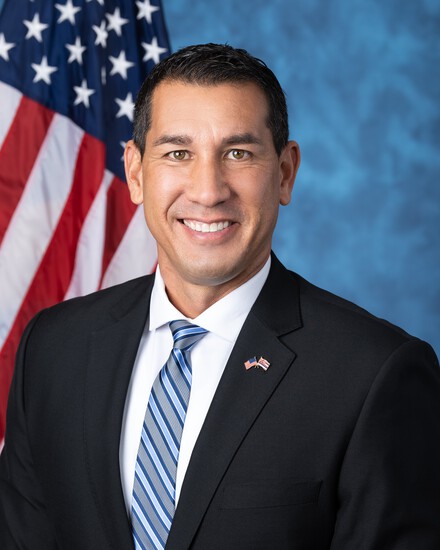
Rep. Kaiali’i Kahele
Sponsored bills
This bill requires the Department of Veterans Affairs (VA), the Department of Agriculture (USDA), and the Department of the Interior to jointly establish a pilot program to employ veterans in positions that relate to the conservation and resource management activities of USDA and Interior. The VA, USDA, Interior, and the Department of Defense (DOD) are authorized to enter into a partnership to include the pilot program as part of the Skillbridge program, which is a DOD program to provide training to members who are transitioning out of service in the Armed Forces. The bill also requires the VA to establish guidelines containing best practices for other federal agencies that carry out programs to employ veterans who are transitioning from service in the Armed Forces.
This resolution expresses support for the designation of Journeyman Lineworkers Recognition Day. (A journeyman lineworker is a person who builds and maintains electrical power systems.)
Preserving Rules Ordered for The Entities Covered Through 340B Act of 2021 or the PROTECT 340B Act of 2021 This bill prohibits pharmacy benefit managers (PBMs) and health insurance plans from discriminating against health providers participating in the 340B drug pricing program, including pharmacies contracted with such providers to dispense 340B drugs. The 340B program allows certain providers to receive covered outpatient drugs at reduced prices from manufacturers. Specifically, PBMs and insurance plans may not reimburse 340B participants at a lower rate than other entities not participating in the program; impose differing terms (such as fees, charge-backs, or audits) on 340B participants; interfere with an individual's choice to receive drugs from a 340B participant; require 340B participants to identify which drugs fall within the program; or refuse to contract with a 340B participant on the basis that they utilize the program. Violations of this bill are subject to a civil penalty of not more than $5,000 per violation per day. These prohibitions also apply to prescription drug (Part D) sponsors under Medicare. The bill also provides for a process to prevent duplicate 340B drug discounts to states under Medicaid.
Global Health Security Act of 2021 This bill directs the United States to implement a strategy to strengthen global health security, including by requiring the President to create the Global Health Security Agenda Interagency Review Council to implement the Global Health Security Agenda. The agenda is an initiative launched by nearly 30 nations to address global infectious disease threats. The council's responsibilities include (1) providing policy recommendations on agenda-related goals, objectives, implementation, and other international efforts to strengthen pandemic preparedness and response; (2) helping federal agencies with implementation; and (3) reviewing the progress and challenges in achieving U.S. commitments, including assistance to help other countries meet agenda targets. The bill also directs the federal agencies involved with the agenda to prioritize its implementation and to take certain steps to achieve that goal. The President shall coordinate a strategy for responding to global health security emergencies and submit a report on the implementation of this strategy. Additionally, the Department of State should seek to enter into negotiations with donors, relevant United Nations agencies, and other multilateral stakeholders to establish a Fund for Global Health Security and Pandemic Preparedness that (1) closes gaps in global health security and pandemic preparedness; and (2) builds capacity in eligible partner countries related to global health security, infectious disease control, and pandemic preparedness. The fund should provide grants, technical assistance, and innovative funding mechanisms to achieve its purposes.
Compact Impact Fairness Act of 2021 This bill expands the eligibility of citizens of the Freely Associated States lawfully residing in the United States for certain federal public benefits. Currently, citizens of the Freely Associated States (Micronesia, the Marshall Islands, and Palau) may live, study, and work in the United States as nonimmigrants. However, such individuals are generally ineligible for most federal public benefits, with Medicaid being one exception. Under this bill, such individuals may be eligible for certain federal public benefits, such as benefits under the Temporary Assistance for Needy Families program. Furthermore, current law generally bars individuals from receiving federal means-tested public benefits for the five-year period starting from the individual's entry into the United States. Under this bill, citizens of the Freely Associated States living in the United States shall not be subject to this bar.
Connecting Youth to Jobs Act This bill establishes and provides funding through FY2031 for grant programs to address barriers to youth employment. The bill also excludes certain youth employment income from Supplemental Nutrition Assistance Program (SNAP) eligibility determinations. Specifically, the bill requires the Department of Labor to provide formula grants to states and local areas, and competitive grants to community-based organizations and other eligible entities, to assist in carrying out subsidized public employment programs for youth with barriers to employment. Funding to states and local areas must be used for programs that lead eligible youth to unsubsidized full-time employment or to attainment of at least one recognized postsecondary credential. Grants to eligible entities must be used to match youth with employment barriers to subsidized employment programs funded by the bill and to provide hands-on work experience. The Government Accountability Office must evaluate and report on the activities funded by the bill. The bill also excludes from SNAP income eligibility determinations any income earned by a household member who is younger than 22 years old, is an elementary or secondary school student, and lives with a parent.
This concurrent resolution expresses the sense of Congress that title IX of the Education Amendments of 1972 applies to the National Collegiate Athletics Association (NCAA) and that the NCAA should work to prevent sex-based discrimination in its programs and activities.
This resolution calls on the Russian government to immediately release Trevor Reed, a U.S. citizen, and all other political prisoners. It also condemns the Russian government's use of politically motivated imprisonment.
Advancing FASD Research, Services, and Prevention Act or the FASD Respect Act This bill expands and establishes programs for fetal alcohol spectrum disorders (FASD). Specifically, it directs the Department of Health and Human Services, the National Institutes of Health, the National Center on Birth Defects and Developmental Disabilities, and the Health Resources and Services Administration to carry out and coordinate research, surveillance, and related activities to diagnose, prevent, and treat FASD. Furthermore, the bill establishes various grant programs to support FASD coalitions and develop systems of care; provide services for individuals affected by FASD and other conditions related to prenatal substance exposure; identify and implement best practices for educating children with FASD; and establish centers for excellence to build relevant capacity for preventing, treating, and responding to the needs of individuals with FASD. The bill also directs the Department of Education and the Department of Justice to develop and disseminate trainings and best practices related to FASD in schools and correctional facilities, respectively.