This resolution (1) commits to advancing policies that will end roadway fatalities by 2050, and (2) calls on Congress and the Department of Transportation to commit to working together to achieve zero roadway fatalities by the year 2050.
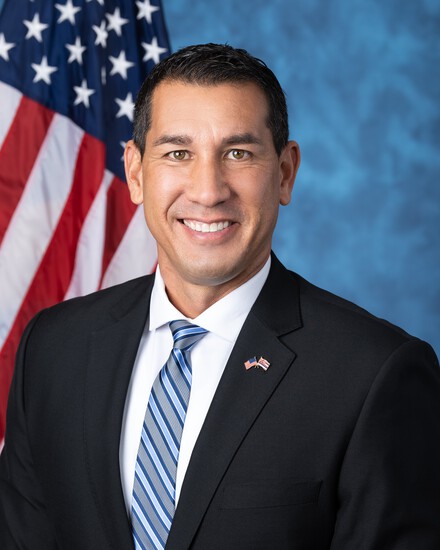
Rep. Kaiali’i Kahele
Sponsored bills
Healthy Dog Importation Act This bill imposes requirements on the importation of live dogs. Specifically, the bill prohibits the importation of a live dog into the United States unless the Department of Agriculture (USDA) determines the dog (1) is in good health, (2) has received all necessary vaccinations and demonstrated negative test results as evidenced by a certificate from a licensed veterinarian, and (3) is officially identified by a permanent method approved by USDA. Additionally, dogs entering the United States for transfer must be at least six months of age and accompanied by a USDA permit. Transfer is defined as a change of ownership or control of an imported dog to another person, including by sale, adoption, exchange, or donation. USDA must provide an exception to any requirements under the bill for dogs that are transferred for (1) research purposes; (2) veterinary treatment under certain conditions, including appropriate quarantining; or (3) lawful importation into the state of Hawaii if the dog is not transported out of Hawaii for resale at less than six months of age. USDA also has enforcement authority under the bill.

Saving America's Pollinators Act of 2021 This bill addresses the use of certain pesticides and the health and status of native bees and other pollinators. First, the bill requires the Environmental Protection Agency (EPA) to establish a Pollinator Protection Board to develop an independent review process for pesticides that pose a threat to pollinators and their habitats. All active ingredients and pesticide products that contain one or more specified neonicotinoid pesticides must be deemed to generally cause unreasonable adverse effects to the environment. Under the bill, the registration of all uses of neonicotinoid pesticides must be immediately and permanently canceled. The EPA must revoke any tolerance or exemption that allows the presence of a neonicotinoid pesticide, or any pesticide chemical residue that results from neonicotinoid pesticide use, in or on food. The continued sale or use of existing stocks of neonicotinoid pesticides is prohibited, and the EPA may not register any such pesticides under the Federal Insecticide, Fungicide and Rodenticide Act. The bill requires the Department of the Interior, the EPA, and the Department of Agriculture to coordinate monitoring activities and report on the health and population status of native bees and other pollinators. Finally, a state or federal agency may be granted an exemption to use neonicotinoid pesticides if the board votes that use of the pesticide is warranted (1) in an emergency situation to avert significant risk to threatened or endangered species, (2) to quarantine invasive species, or (3) to protect public health.
This bill eliminates a requirement that, to the maximum extent practicable, certain construction subcontracts awarded by the Small Business Administration must be awarded within the county or state where the work is to be performed.
This bill extends the deadline, from three years to five years, for the Alyce Spotted Bear and Walter Soboleff Commission on Native Children to submit its report to the President and Congress. The commission was established to conduct a comprehensive study of federal, state, local, and tribal programs that serve Native children and to develop plans for federal policy related to Native children.
Averting Loss of Life and Injury by Expediting SIVs Act of 2021 or the Allies Act of 2021 This bill increases the number of special immigrant visas available to qualified Afghan nationals who worked for the U.S. government or the North Atlantic Treaty Organization (NATO) missions in Afghanistan. The bill also relaxes certain qualifications for such visas. Specifically, this bill makes available an additional 8,000 visas for principal aliens under this special visa program, to be available until all such visas have been issued. (The numerical limitations in this program apply only to the principal alien who applies for the visa, not to any accompanying spouse or child.) Under this bill, an alien may qualify based on a credible basis for concern about the possibility of an ongoing serious threat in Afghanistan due to their work with the U.S. government or a NATO mission, where currently the alien must have experienced such a threat. The bill also eliminates a requirement for each applicant to submit a credible sworn statement describing that threat. Furthermore, for an applicant qualifying for a visa by performing duties for U.S. military personnel stationed with a NATO mission, this bill eliminates a requirement that the duties performed qualify as sensitive and trusted duties. If an alien submits a visa application that included an accompanying spouse or child but the alien passes away before the application is granted, the surviving spouse or child shall remain eligible to receive a visa under that application. Currently, a surviving spouse or child retains eligibility only if the application was approved before the alien passed away.
Strengthening the Vaccines for Children Program Act of 2021 This bill modifies vaccination programs and coverage for children under Medicaid and the Children's Health Insurance Program (CHIP). Specifically, the bill expands and otherwise modifies the Vaccines for Children Program, which provides free vaccinations to individuals 18 years of age or younger who are uninsured or underinsured (i.e., with limited or no insurance for vaccines), are eligible for Medicaid, or are American Indians or Alaskan Natives. The bill expands the program to include children enrolled in CHIP and temporarily provides for additional payments to incentivize provider participation. The Government Accountability Office must report on the related effects of the bill's changes. The bill also expands coverage under Medicaid and CHIP to include vaccine counseling and educational services for children and temporarily requires payments to be made at a rate that is no less than the rate under Medicare for equivalent services. It also temporarily increases the Federal Medical Assistance Percentage (i.e., federal matching rate) for states that conduct culturally appropriate outreach regarding the benefits of vaccinations for children.
Tax Fairness for the Self-Employed Act of 2021 This bill allows the tax deduction for health insurance costs in determining net earnings from self-employment.
Department of Defense Climate Resiliency and Readiness Act This bill requires the Department of Defense (DOD) to address climate resiliency and energy and resource efficiency. Each DOD contract for the procurement of property or services entered into on or after October 1, 2021, must include specified information related to energy consumption and energy sources. When deciding whether to enter into a contract, DOD must consider whether the contractor verifiably produces as much renewable energy as the total energy it consumes and whether there is any order against the contractor for a violation of an environmental law or regulation. Among other elements, the bill requires DOD to achieve aggregate net zero energy in use of energy by non-operational sources by December 31, 2031; DOD to give preference to contractors and small businesses that use green manufacturing technology; DOD to administer the Energy and Climate Resiliency Fund established by the bill; DOD and the military departments to consider climate change risks when making strategic decisions related to any military installation; DOD and other relevant federal agencies to incorporate climate change into the National Defense Strategy, the National Military Strategy, and DOD's operational plans; and DOD to conduct a program of research, development, and demonstration of hybrid microgrid systems and electric grid energy storage. The Government Accountability Office must report on the individual and aggregate uses of DOD's authority to give preference to contractors that use green manufacturing technology and small businesses that verifiably use green manufacturing technology or operate with net zero energy.
Comprehensive Paid Leave for Federal Employees Act This bill provides paid family and medical leave to federal employees. Currently, federal employees are entitled to 12 weeks of administrative leave for one or more of the following reasons: (1) the birth of a child, (2) the adoption or foster care of a child, (3) the care of an immediate family member with a serious health condition, (4) inability to work due to a serious health condition, and (5) exigencies relating to an immediate family member's active duty service in the Armed Forces. However, of these reasons, employees are entitled to paid administrative leave only in connection with the birth, adoption, or foster care of a child (i.e., parental leave). The bill provides 12 weeks of paid administrative leave for any of these reasons, and specifies that this leave is in addition to any annual or sick leave to which employees are entitled.