Ocean-Based Climate Solutions Act of 2022 This bill establishes a variety of requirements to reduce carbon emissions and protect oceans, coastal habitats, marine mammals, and fish populations from climate change and other threats.

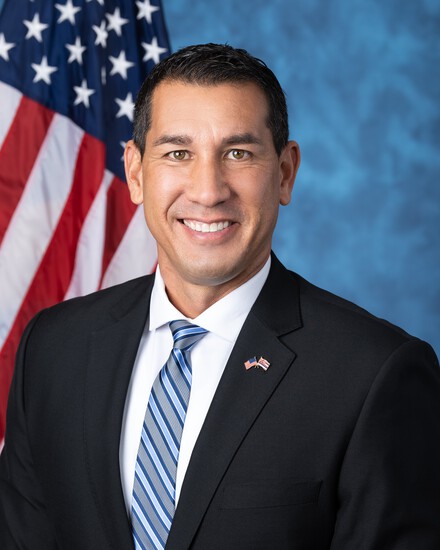
Rep. Kaiali’i Kahele
Sponsored bills
Environmental Justice For All Act This bill establishes several environmental justice requirements, advisory bodies, and programs and modifies the scope of environmental review under the National Environmental Policy Act of 1969. The bill sets forth provisions to address the disproportionate adverse human health or environmental effects of federal laws or programs on communities of color, low-income communities, or tribal and indigenous communities. It also prohibits disparate impacts on the basis of race, color, or national origin as discrimination. Aggrieved persons may seek legal remedy when faced with such discrimination. In addition, the bill directs agencies to follow certain requirements concerning environmental justice. For example, agencies must prepare community impact reports that assess the potential impacts of their actions on environmental justice communities under certain circumstances. It also raises coal, oil, and gas royalty rates to create a funding source to support fossil fuel-dependent communities and displaced workers as they transition away from fossil fuel industries. Additionally, the bill creates a variety of advisory bodies and positions, such as the White House Environmental Justice Interagency Council. Among other things, the council must issue an environmental justice strategy. It also establishes requirements and programs concerning chemicals or toxic ingredients in certain products. For example, the bill (1) requires certain products (e.g., cosmetics) to include a list of ingredients or warnings; and (2) provides grants for research on designing safer alternatives to chemicals in certain consumer, cleaning, toy, or baby products that have an inherent toxicity or that are associated with chronic adverse health effects. Finally, it creates a variety of funding programs, such as a grant program to enhance access to park and recreational opportunities in urban areas.

Old Pascua Community Land Acquisition Act This act directs the Department of the Interior to take tribally owned lands in Pima County, Arizona, into trust for the benefit of the Pascua Yaqui Tribe of Arizona. Lands taken into trust shall be part of the Pascua Yaqui Reservation. The act allows gaming on the land taken into trust.
This act prescribes that a peer support specialist of the Department of Veterans Affairs (VA) must not be responsible for providing assistance to a veteran regarding a claim for compensation for a covered mental health condition (e.g., post-traumatic stress disorder) based on military sexual trauma (MST) experienced during active service. Such specialists must only provide counseling services, guidance, and support and must not participate in the adjudication of the claim. As part of the forms for claims for compensation for a covered mental health condition based on MST, the VA must include an option for a veteran to elect to be referred to a MST trauma coordinator at the VA facility closest to the veteran's residence. Additionally, the VA must (1) ensure that its peer support specialists receive annual training on providing peer support regarding MST, and (2) provide annual training on the processing of claims for compensation for covered mental health conditions based on MST to its MST coordinators and peer specialists.
Uyghur Forced Labor Prevention Act This bill imposes various restrictions related to China's Xinjiang Uyghur Autonomous Region, including by prohibiting certain imports from Xinjiang and imposing sanctions on those responsible for human rights violations there. Goods manufactured or produced in Xinjiang shall not be entitled to entry into the United States unless U.S. Customs and Border Protection (1) determines that the goods were not manufactured by convict labor, forced labor, or indentured labor under penal sanctions; and (2) reports such a determination to Congress and to the public. The President shall periodically report to Congress a list of foreign entities and individuals knowingly facilitating (1) the forced labor of Uyghurs, Kazakhs, Kyrgyz, and members of other Muslim minority groups in Xinjiang; and (2) efforts to contravene U.S. laws regarding the importation of forced labor goods from Xinjiang. The President shall impose property-blocking sanctions on the listed individuals and entities and impose visa-blocking sanctions on the listed individuals. Securities issuers required to file annual or quarterly reports with the Securities Exchange Commission shall disclose in such reports instances in which the issuer knowingly engaged in certain activities related to Xinjiang, such as working with an entity building detention facilities or surveillance systems there. After such a disclosure, the President shall determine whether to investigate if sanctions or criminal charges are warranted. The Forced Labor Enforcement Task Force and the Department of State shall report to Congress strategies to address forced labor in Xinjiang or any other part of China. The State Department shall also report to Congress a determination of whether the treatment of Muslim groups in Xinjiang constitutes crimes against humanity or genocide under U.S. law.
Hawaiian Home Lands Preservation Act This bill reduces the minimum Native Hawaiian blood quantum required for successor homestead lessees and applicants on the waiting list for the Hawaiian Home Lands program.
Expanding the Voluntary Opportunities for Translations in Elections Act or the Expanding the VOTE Act This bill expands access to voting materials for individuals with limited proficiency in the English language, including by establishing incentive grants for states and political subdivisions to provide translated voting materials. Additionally, the bill directs the Government Accountability Office to study the impact of (1) reducing the threshold requirement under Section 203 of the Voting Rights Act of 1965, and (2) expanding the definition of language minorities to include native speakers of additional languages.
This act directs the Speaker of the House of Representatives and the President pro tempore of the Senate to arrange for the posthumous award of a Congressional Gold Medal to commemorate Glen Doherty, Tyrone Woods, J. Christopher Stevens, and Sean Smith, four Americans killed in the September 11, 2012, attack on the U.S. consulate in Benghazi, Libya. (Stevens was the U.S. Ambassador to Libya at the time, Smith was an officer in the Foreign Service, and Doherty and Woods were both government contractors and former Navy SEALs.) After the medal has been awarded, it shall be given to the Central Intelligence Agency Museum.
Real Courts, Rule of Law Act of 2022 This bill establishes the U.S. Immigration Courts, a system of courts to be independent of the executive branch. The bill also transfers all functions of the Executive Office for Immigration Review (EOIR) to the Immigration Courts, with some exceptions. (Currently, the EOIR, located in the Department of Justice, has authority to adjudicate immigration cases.) The trial division of the Immigration Courts shall have jurisdiction over various immigration-related matters, including (1) removal proceedings, (2) reviews of rescissions of lawful permanent resident status, and (3) reviews of credible fear determinations in applications for refugee status. The appellate division shall have jurisdiction over appeals of decisions by the trial division and certain Department of Homeland Security determinations. The bill establishes various requirements and authorities relating to the Immigration Courts, including qualifications, length of term in office, and mandatory retirement age for judges. Each appellate division judge must be appointed by the President with the advice and consent of the Senate, and the appellate division shall appoint the trial division judges.
Fair and Open Skies Act This bill prohibits the Department of Transportation (DOT) from issuing a foreign air carrier permit or an exemption from certain air carrier certificate requirements under the United States-European Union Air Transport Agreement of April 2007, unless DOT finds that issuing the permit or exemption would be consistent with Article 17 bis of the agreement, which provides that opportunities created by the agreement do not undermine labor standards or the labor-related rights and principles contained in the laws of the respective parties to the agreement; and imposes conditions on the permit or exemption necessary to ensure compliance with Article 17 bis . The bill modifies policy considerations relating to air carrier certificates to require DOT to consider preventing entry into U.S. markets by flag of convenience carriers (i.e., foreign air carriers established in a country other the home country of their majority owner in order to avoid regulations of the home country) and preventing the undermining of labor standards. In carrying out such air carrier certificate requirements, DOT must consider preventing entry of flag of convenience carriers into U.S. markets as being in the public interest and consistent with public convenience and necessity for safety in air transportation and air commerce. In formulating U.S. international air transportation policy relating to the elimination of discrimination and unfair competition, the Department of State and DOT must include in their considerations the undermining of labor standards.