

Big Cat Public Safety Act This act revises requirements governing the trade of big cats (i.e., species of lion, tiger, leopard, cheetah, jaguar, or cougar or any hybrid of such species) under the Lacey Act to limit the possession, breeding, and exhibition of big cats. The Lacey Act prohibits any person from importing, exporting, buying, selling, transporting, receiving, or acquiring big cats across state lines or the U.S. border. However, some exemptions are provided for certain entities, such as universities and wildlife sanctuaries. (Sec. 3) The act expands the Lacey Act prohibitions to include a prohibition on possessing or breeding big cats. Breeding means facilitating propagation or reproduction (whether intentionally or negligently), or failing to prevent propagation or reproduction. Owners of big cats that were born before this act's enactment may keep their big cats, but the owners must register them with the U.S. Fish and Wildlife Service. The act modifies the list of entities that are exempt from prohibitions to export, buy, sell, transport, receive, acquire, possess, or breed big cats. The modified list includes exemptions for entities or facilities exhibiting animals to the public if they (1) hold a Class C license in good standing under the Animal Welfare Act, and (2) do not allow individuals to come into direct physical contact with big cats. However, direct contact is allowed if the individual is a trained professional, a veterinarian, or directly supporting conservation programs that do not involve commercial activities and meet other specified restrictions. (Sec. 4) A person who knowingly violates the act must be fined not more than $20,000, or imprisoned for no more than five years, or both. The act considers each violation to be a separate offense. The offense must be deemed to have been committed not only in the district where the violation first occurred, but also in any district in which the defendant may have taken or been in possession of the prohibited wildlife species. (Sec. 5) The act extends forfeiture provisions to fish, wildlife, or plants that are bred or possessed; thus, big cats bred or possessed in violation of the act are subject to forfeiture. (Sec. 6) The Department of the Interior must issue regulations to implement this act.
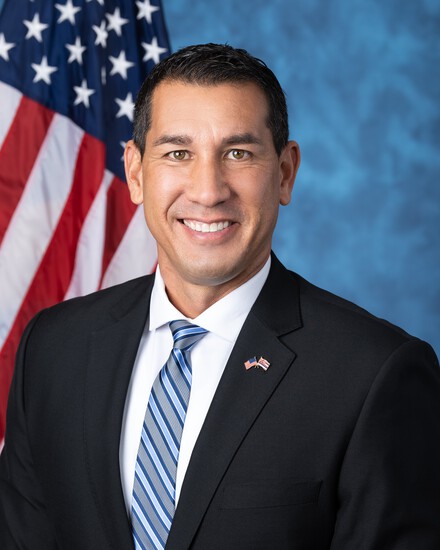
Rep. Kaiali’i Kahele
Sponsored bills
VA Employee Fairness Act of 2021 This bill repeals provisions excluding any matter or question concerning professional conduct or competence; peer review; or the establishment, determination, or adjustment of employee compensation from the applicability of collective bargaining rights for Veterans Health Administration employees.
Restoring Resilient Reefs Act of 2021 This bill addresses the conservation and sustainability of coral reef ecosystems. Among other things, the bill reauthorizes through FY2024 and revises the Coral Reef Conservation Program; directs the National Oceanic and Atmospheric Administration (NOAA) to provide block grants to states to support state coral reef management and restoration; requires NOAA to establish standards for the formation of partnerships among government and community members for the stewardship of coral reefs; provides statutory authority for the U.S. Coral Reef Task Force to lead, coordinate, and strengthen federal government actions to preserve, conserve, and restore coral reef ecosystems; requires the Department of the Interior to provide grants upon the declaration of a coral reef emergency to implement emergency plans; authorizes Interior to provide scientific expertise, technical assistance, and financial assistance for the conservation and restoration of coral reefs; and establishes a National Coral Reef Management Fellowship Program.
This resolution expresses that the House of Representatives is committed to building upon the 20 years of success of the George McGovern-Robert Dole International Food for Education and Child Nutrition Program, complementing humanitarian assistance efforts and development programs through the continued implementation of the McGovern-Dole Program to address global food insecurity and create conditions for peace and stability, and supporting U.S. farmers, millers, shippers, and commodity groups that provide agricultural commodities for use in the McGovern-Dole Program to help combat global malnutrition and food insecurity and advance global education.
Find It Early Act This bill requires health insurance plans (including public health insurance programs) to cover screenings and diagnostic imaging (with no cost sharing and no limit on frequency) for individuals who are at an increased risk of breast cancer.
This bill eliminates the minimum age at which members of the National Guard and Reserve who qualify for a reserve retirement may receive retired pay. Current law generally requires reserve retirees to be 60 years of age to receive retired pay, although the age can be lowered if the individual has performed certain types of active duty or active service. Under this bill, reserve retirees could draw retired pay immediately upon retirement regardless of their age.
Respect for Marriage Act This act provides statutory authority for same-sex and interracial marriages. Specifically, the act replaces provisions that define, for purposes of federal law, marriage as between a man and a woman and spouse as a person of the opposite sex with provisions that recognize any marriage between two individuals that is valid under state law. (The Supreme Court held that the current provisions were unconstitutional in United States v. Windsor in 2013.) The act also replaces provisions that do not require states to recognize same-sex marriages from other states with provisions that prohibit the denial of full faith and credit or any right or claim relating to out-of-state marriages on the basis of sex, race, ethnicity, or national origin. (The Supreme Court held that state laws barring same-sex marriages were unconstitutional in Obergefell v. Hodges in 2015; the Court held that state laws barring interracial marriages were unconstitutional in Loving v. Virginia in 1967.) The act allows the Department of Justice to bring a civil action and establishes a private right of action for violations. The act does not (1) affect religious liberties or conscience protections that are available under the Constitution or federal law, (2) require religious organizations to provide goods or services to formally recognize or celebrate a marriage, (3) affect any benefits or rights that do not arise from a marriage, or (4) recognize under federal law any marriage between more than two individuals.
International Violence Against Women Act of 2022 This bill requires a U.S. global strategy to prevent and respond to violence against women and girls. The bill establishes in the Department of State an Office of Global Women's Issues, which shall be headed by an Ambassador-at-Large for Global Women's Issues. The Ambassador-at-Large shall (1) coordinate U.S. government efforts regarding gender equality and the advancement of women and girls in foreign policy, and (2) develop or update periodically a U.S. global strategy to prevent and respond to gender-based violence. The bill establishes in the U.S. Agency for International Development the position of Senior Coordinator for Gender Equality and Women's Empowerment who shall coordinate policies, programs, and funding regarding gender equality and women's empowerment.
Climate Adaptation Science Centers Act or the CASC Act This bill provides statutory authority for the Department of the Interior's National and Regional Climate Adaptation Science Centers. The centers must provide scientific expertise to managers of natural resources, cultural resources, and ecosystem services to inform decisions that aid adaptation to a changing climate and extreme weather events. The program shall include a National Climate Adaptation Science Center and Regional Climate Adaptation Science Centers. Among its activities, the National Center shall serve as the national office for the regional centers, develop and facilitate coordination among the regional centers, and conduct research on cross-regional and national science priorities. Regional centers shall develop research, education, training, and advisory service priorities regarding the impacts of climate trends and variability on natural and cultural resource management. Interior shall establish an Advisory Committee on Climate and Natural Resource Sciences to advise the National and Regional Climate Adaptation Science Centers on specified matters, including (1) the contents of a national strategy identifying key climate adaptation science priorities to advance the management of natural and cultural resources in the face of climate change; and (2) the integration of equity, particularly for historically underserved communities, in the operation of the National Center and regional centers.
Truth and Healing Commission on Indian Boarding School Policies Act This bill establishes the Truth and Healing Commission on Indian Boarding School Policies in the United States and sets forth its powers, duties, and membership. Among other duties, the commission must investigate the impacts and ongoing effects of the Indian Boarding School Policies (federal policies under which American Indian, Alaska Native, and Native Hawaiian children were forcibly removed from their family homes and placed in boarding schools). Further, the commission must develop recommendations on ways to (1) protect unmarked graves and accompanying land protections; (2) support repatriation and identify the tribal nations from which children were taken; and (3) discontinue the removal of American Indian, Alaska Native, and Native Hawaiian children from their families and tribal communities by state social service departments, foster care agencies, and adoption agencies.