

Maddy summaryThe Small Business Language Accessibility Act requires the Small Business Administration (SBA) to update its regulations so that small business development centers (SBDCs) must assess whether language translation services are needed for their clients. This directly affects SBDCs - which provide free business support to small businesses - and the small business owners who use these services, particularly those with limited English proficiency. Within 180 days of the law taking effect, the SBA must revise a specific regulation (13 CFR §130.330(a)) to mandate this assessment as part of each SBDC’s needs evaluation process. The law aims to improve access to SBA resources by ensuring language barriers are identified before services are delivered.
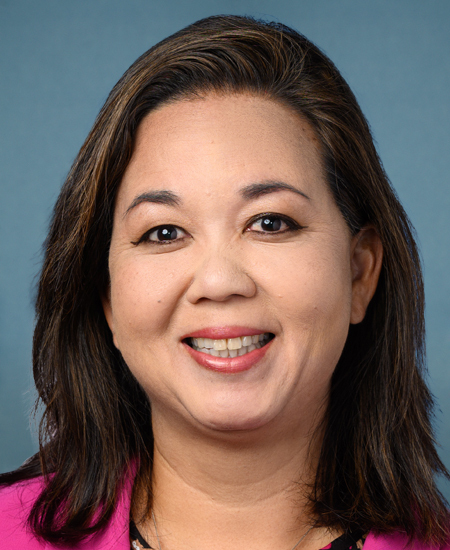
Rep. Jill N. Tokuda
Sponsored bills
Maddy summaryThe READ Act Reauthorization Act of 2023 extends the authorization period for the Reinforcing Education Accountability in Development Act (commonly known as the READ Act) from five to ten fiscal years. This change allows U.S. international education programs, administered by agencies like USAID, to operate without annual reauthorization for a longer period. The bill directly affects programs providing educational support in developing countries, such as teacher training and literacy initiatives. The key mechanism is amending Section 4(a) of the existing law to adjust the funding duration, ensuring continued program stability.
Maddy summaryHRES 1228 is a ceremonial resolution passed by the U.S. House of Representatives to formally recognize May as Asian American, Native Hawaiian, and Pacific Islander (AANHPI) Heritage Month. It celebrates the historical contributions of AANHPI communities to the United States, citing their diverse cultural impact and key milestones like the completion of the transcontinental railroad. The resolution does not create new laws or policies but encourages the public to observe the month through educational programs and events. It directly affects all Americans by promoting awareness of AANHPI history and achievements, while acknowledging ongoing challenges like anti-Asian hate crimes.
Maddy summaryHR 8407, "Domenic and Ed's Law," amends the Higher Education Act to allow parents who took out federal student loans for their children to have those loans forgiven if their child becomes permanently disabled or dies. The bill expands existing loan forgiveness provisions to include these two specific circumstances, directly affecting parents with outstanding federal education loans. Key provisions require the child's disability to be determined as permanent and total by the Secretary or the child's death, with no requirement that the disability or death occurred after the loan was taken out. This change applies to all parent loans, regardless of when the loan was received or when the disability or death occurred.
Maddy summaryHRES 1217 is a symbolic House resolution supporting the designation of May 10, 2024, as "National Asian American, Native Hawaiian, and Pacific Islander Mental Health Day." It directly affects the AANHPI community, which faces significant mental health disparities (including 63.7% of those needing care not receiving it and higher youth suicide rates). The resolution does not create new policies or funding but encourages federal, state, and local agencies to improve mental health awareness and culturally appropriate services for this community. It emphasizes recognizing cultural heritage as beneficial to mental health and aligns with existing May observances for AANHPI Heritage and Mental Health Awareness.
Maddy summaryHRES 1206 is a symbolic House resolution supporting the designation of May 2024 as "Mental Health Awareness Month." It does not create new laws or funding but aims to raise public awareness about mental health challenges, emphasizing the need to reduce stigma and treat mental well-being as equally important as physical health. The resolution cites statistics on rising mental health crises - including increased anxiety, depression, and suicide rates among youth, LGBTQ+ individuals, veterans, and communities of color - to underscore the urgency of the issue. It encourages nationwide efforts to promote mental health awareness and access to care during this designated month.
Maddy summaryHR 8319 creates a federal grant program to support the development, research, and adoption of innovative learning models in K-12 education. The bill authorizes $570 million annually for competitive grants to fund the development of evidence-based learning models through early-phase, mid-phase, and expansion grants, and $180 million annually for states to distribute to school districts to implement these models. It defines "innovative learning models" as comprehensive programs that integrate teaching resources, instructional practices, and technology to improve student outcomes, rather than just providing technology tools, and requires states to coordinate with schools and communities in their implementation.
Maddy summaryThe BUILD GREEN Infrastructure and Jobs Act establishes a $50 billion annual grant program (2025-2034) to fund electrified transportation infrastructure projects that reduce greenhouse gas emissions and improve transportation access. It prioritizes projects in frontline, vulnerable, or disadvantaged communities (requiring 40% of funds), with 30-40% allocated to rural areas and 60-70% to urban areas. The bill mandates recipients use 5% of grant funds for workforce training, pay a minimum wage of $17 per hour (increasing annually), and use renewable energy sources for project operations. Eligible projects include electric buses, rail systems, port infrastructure with EV charging, and micromobility initiatives that reduce emissions and improve transportation services.
Maddy summaryThe Educator Down Payment Assistance Act of 2024 creates a federal grant program to help eligible educators purchase homes. It authorizes HUD to award grants to local governments, school districts, or housing agencies to provide up to $25,000 (higher in high-cost areas) for down payments, closing costs, or interest rate reductions on eligible mortgages. To qualify, educators must be first-time homebuyers with at least 3 years of service in public K-12 schools, meet income limits (up to 180% of area median income in high-cost areas), and agree to live in the home as their primary residence for 3 years while continuing to work in education for 3 years. The program requires returning funds if these conditions are violated, except in cases of emergencies like military deployment or death.
Maddy summaryThis bill provides $280 million in funding for the Department of Education's Office for Civil Rights (OCR) for fiscal year 2024, with funds available through September 2025. The OCR investigates school discrimination complaints related to race, sex, disability, and other protected characteristics. This funding directly supports the OCR's ability to handle civil rights cases involving students and schools nationwide, without creating new student requirements or altering existing laws.