

Maddy summaryHRES 1349 is a symbolic House resolution recognizing the success of the Food for Peace Act, which provides U.S. humanitarian food aid to global populations facing hunger. It does not create new policy or funding but formally acknowledges the program’s impact - such as reaching 53 million people with emergency aid in 2022 - and highlights global hunger statistics (e.g., 783 million people hungry in 2022). The resolution urges continued U.S. funding prioritization for the program but has no binding effect or direct policy changes. It directly affects no new groups, as it solely expresses congressional support for an existing aid program.
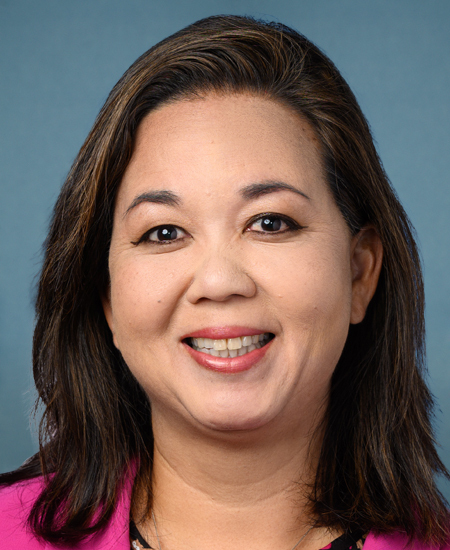
Rep. Jill N. Tokuda
Sponsored bills
Maddy summaryHR 8973 amends the American Indian, Alaska Native, and Native Hawaiian Culture and Art Development Act to update governance requirements for Native Hawaiian art and culture grant programs. The bill requires governing boards overseeing these grants to include Native Hawaiians and recognized experts in Native Hawaiian arts, with members serving fixed terms. This directly affects organizations receiving federal grants for Native Hawaiian cultural preservation and artistic development. The changes clarify board composition and structure without altering the grant program's core funding or eligibility.
Maddy summaryThis bill (HR 2365, Public Law 118-66) directs the U.S. Department of Health and Human Services (HHS) to establish the National Parkinson’s Project. It requires HHS to create and update a coordinated national plan for preventing, diagnosing, treating, and researching Parkinson’s disease and related disorders (including multiple system atrophy and progressive supranuclear palsy), while coordinating federal research and care efforts across agencies like the NIH, CDC, and VA. The law mandates annual progress assessments, an advisory council with patient advocates and diverse experts, and annual reports to Congress on federal Parkinson’s programs and recommendations for improvement. It affects federal agencies managing Parkinson’s-related programs and aims to improve care coordination and research efficiency for patients and caregivers, with the law sunsetting in 2035.
Maddy summaryHRES 1332 is a symbolic resolution recognizing June as LGBTQIA+ Pride Month. It encourages the celebration of Pride Month to honor the historical struggles and achievements of LGBTQIA+ people in the United States, while acknowledging the ongoing challenges they face. This resolution does not create new laws or policies, but serves as a formal recognition of LGBTQIA+ rights as human rights and highlights their integral role in American history. The resolution was introduced by multiple members of Congress and passed by the House of Representatives.
Maddy summaryHR 8911, the Worker Rights and Support Act, requires most employers to provide specific breaks to employees under the Fair Labor Standards Act. It mandates 30-minute meal breaks after 6 hours of work (unpaid unless work continues), 10-minute rest breaks every 4 hours (paid), and medical breaks (up to 20 minutes per need, paid) for documented health conditions. The bill ensures breaks are paid if employees aren't fully relieved of work duties or can't leave the premises. It does not override collective bargaining agreements or stricter state laws, and adds enforcement penalties for violations of these break requirements.
Maddy summaryHR 8859, the Deafblind DATA Act, requires the Census Bureau to create and publish a new annual table starting in 2026 showing the number of people in the U.S. who reported both hearing and vision loss in the American Community Survey. This table will display data by state, including sex, race, age, and economic factors like employment and income, without revealing personal details. The bill directly addresses the lack of a centralized count for deafblind individuals, who currently aren't accurately represented in census data. By cross-referencing existing survey responses, the Act aims to provide a clearer national picture to better understand and serve this population's needs.
Maddy summaryThis bill requires the Secretary of Commerce to standardize and publish geospatial data about public ocean and waterway access rules on a public website within 4 years. It mandates detailed information on where fishing is restricted, waterway closures, speed limits, allowed vessel types (like motorboats or kayaks), and fishing method rules. The data will include geographic boundaries of protected areas, seasonal closures, and navigation details like depth charts. This directly affects recreational users (boaters, anglers) and commercial operators who need clear, up-to-date access information for Federal waterways and fishing areas. The bill does not change existing fishing regulations but makes compliance information more accessible.
Maddy summaryThis bill creates a federal framework for "extreme risk protection orders" (ERPOs) that temporarily remove firearms from individuals who pose a risk of harming themselves or others. Family members or law enforcement officers can petition a federal court for a temporary order (up to 14 days) based on probable cause, followed by a hearing within 72 hours to determine if a longer-term order (up to 180 days) is warranted. The bill requires clear and convincing evidence of risk at the hearing and mandates respondents to surrender firearms to law enforcement within 48 hours. It also includes provisions for reporting, training law enforcement on ERPOs, and a federal grant program to support state ERPO implementation, without preempting state laws.
Maddy summaryThis bill (HR 1208) amends the 1934 Indian Reorganization Act to clarify that the Secretary of the Interior can take land into trust for any federally recognized tribe, updating outdated language. It specifically revises Section 19 to replace "any recognized Indian tribe now under Federal jurisdiction" with "any federally recognized Indian Tribe." The bill also ratifies and confirms all past land trust decisions made for federally recognized tribes, protecting those actions from legal challenges based on historical recognition status. This change directly affects federally recognized tribes by ensuring their land trust authority remains valid under current law.
Maddy summaryThis resolution, introduced around World Refugee Day, expresses congressional support for U.S. efforts to protect refugees and displaced persons globally and within the United States. It highlights that over 117 million people are displaced worldwide, references the U.S. resettling 60,000 refugees in fiscal year 2024, and calls on federal agencies to maintain the Refugee Admissions Program, uphold asylum protections, and support host countries. The resolution does not create new laws but reaffirms existing commitments to refugee resettlement, safety, and integration through current programs.