

Maddy summaryThe SIMPLE Act creates automatic enrollment in income-driven repayment plans for federal student loan borrowers who are delinquent on payments or rehabilitating defaulted loans. The Department of Education would use IRS tax return information (with borrower approval) to determine income and family size, then automatically enroll eligible borrowers in the lowest-cost repayment plan available. Borrowers would receive detailed notifications about their repayment options, including monthly payment amounts based on their income, and could opt out of automatic enrollment or update their information. The bill applies to borrowers of "covered loans" as defined in the Higher Education Act, and would take effect for the 2026-2027 award year.
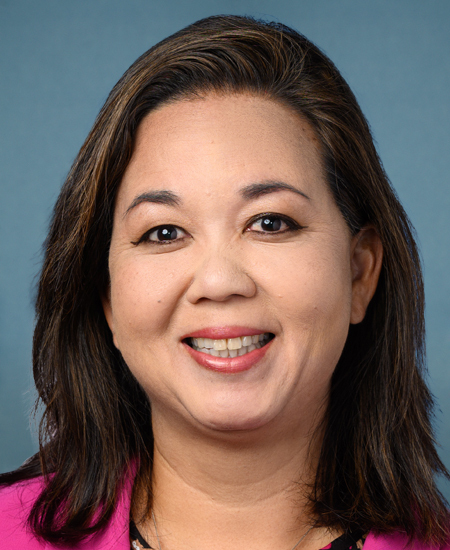
Rep. Jill N. Tokuda
Sponsored bills
Maddy summaryThis bill reauthorizes the Debbie Smith DNA Backlog Grant Program, which provides federal funding to state and local law enforcement agencies to reduce backlogs in processing DNA evidence from crime scenes. It extends the program's funding period from fiscal years 2024 through 2029 (previously ending in 2024). The bill also updates audit requirements to ensure grant funds are used properly through 2029. This directly affects law enforcement agencies that receive these grants to accelerate DNA analysis for criminal investigations.
Maddy summaryThis resolution designates the week of August 26-30, 2024, as "National Community Health Worker Awareness Week" to honor community health workers (CHWs). CHWs are frontline public health workers who connect underserved communities to health and social services through culturally competent outreach, education, and advocacy. The resolution symbolically supports CHWs’ work by raising awareness of their role in reducing health disparities, without creating new laws or funding. It directly affects CHWs and the communities they serve by highlighting their contributions to health equity. The House encourages collaboration at all levels to recognize CHWs’ efforts, but the resolution has no binding policy impact.
Maddy summaryH.J. Res. 193 proposes a constitutional amendment to eliminate legal immunity for federal officials, including the President, from criminal prosecution for actions taken while performing official duties. It also prohibits the President from granting a pardon to themselves. The amendment would apply to all federal officers (such as the President, Vice President, and members of Congress) except for Congress members acting in their legislative role as defined in the Constitution. If ratified by 38 states, this change would become part of the U.S. Constitution, requiring no further congressional action.
Maddy summaryHRES 1381 is a symbolic resolution that commemorates the United States Olympic and Paralympic Teams' historical achievements, including over 5,300 total medals across past Games. It expresses congressional support for U.S. athletes competing in the 2024 Summer Olympics and Paralympics in Paris, France, and commends the Government of France for hosting the events. The resolution also commits to ensuring a safe environment for the 2028 Los Angeles Olympic and Paralympic Games. As a non-binding expression of support, it does not create new laws or allocate funds.
Maddy summaryHRES 1385 designates the week of August 4-10, 2024, as "National Farmers Market Week" to recognize the economic and community role of farmers markets. The resolution highlights that farmers markets generated $1.7 billion in income for U.S. farmers in 2020, supported 8,771 markets nationwide by 2019, and connect urban and rural communities while promoting sustainable farming and nutrition access. It does not create new laws or funding but formally acknowledges these markets’ contributions to local economies, public health, and community engagement. The resolution aims to raise awareness of farmers markets’ importance, directly affecting farmers, vendors, and consumers who rely on these venues.
Maddy summaryThis bill modifies two key VA programs to improve benefits for Native Hawaiian veterans. First, it updates housing loan eligibility by aligning the definition of "Native Hawaiian" with the Native Hawaiian Health Care Improvement Act (42 U.S.C. 11711), ensuring they qualify for the same direct housing loans as Native American veterans. Second, it requires the VA to reimburse Native Hawaiian health care systems for veteran care provided through their networks (including referred or purchased care), and exempts Native Hawaiian veterans from cost-sharing under VA medical programs. These changes directly affect Native Hawaiian veterans and the health systems serving them by expanding access to housing and healthcare benefits.
Maddy summaryHR 9008, the SEWER Act, establishes a National Wastewater Surveillance System to detect disease-causing pathogens like SARS-CoV-2, flu, mpox, and others in sewage. The bill directs the CDC to expand this system, coordinating with federal, state, and local agencies to monitor wastewater for public health threats. It authorizes $150 million annually (2025-2029) for this effort, with funds remaining available until spent. The law explicitly states wastewater utilities are not required to comply with surveillance requests, making participation voluntary for them.
Maddy summaryThe Corner Post Reversal Act amends federal law to establish a six-year deadline for filing lawsuits challenging federal agency actions. It requires that any legal challenge to an agency decision must be initiated within six years of the agency's final action, unless another law specifies a different timeframe. This change directly affects individuals, organizations, or entities seeking to contest agency decisions in court by limiting the window for legal action. The bill does not alter substantive policies but modifies procedural rules governing judicial review of agency actions.
Maddy summaryHRES 1355 is a non-binding resolution supporting the designation of July 10 as Journeyman Lineworkers Recognition Day. It honors lineworkers who maintain electrical infrastructure under hazardous conditions, including during disasters, and commemorates Henry Miller, the first president of the International Brotherhood of Electrical Workers, who died on July 10, 1896, while troubleshooting an electrical outage. The resolution encourages public recognition of these workers' contributions but does not create new laws or policies.