

Maddy summaryThe Pell Grant Preservation and Expansion Act of 2024 would double Federal Pell Grants, increasing the maximum award to $10,000 for the 2025-2026 academic year with annual inflation adjustments, and make Pell Grants a fully mandatory program rather than requiring annual appropriations. It would expand eligibility for students with negative student aid indexes (those with the lowest expected family contributions), provide Pell Grant eligibility for "Dreamer" students protected under DACA, and restore eligibility for students who previously lost it due to academic progress issues. The bill would also increase the total semesters of Pell Grant eligibility from 12 to 18. These changes would directly affect millions of undergraduate students, particularly students of color who currently rely on Pell Grants, with 3 in 5 African American students and half of Latino students depending on these grants. The bill would take effect for the 2025-2026 academic year.
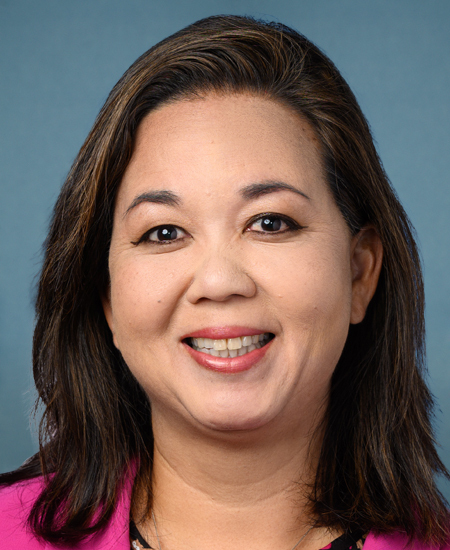
Rep. Jill N. Tokuda
Sponsored bills
Maddy summaryHRES 1306 is a non-binding resolution expressing congressional support for designating June 21, 2024, as National ASK (Asking Saves Kids) Day. It encourages parents to ask visitors' homes, "Is there a gun in your house?" and "Is it locked and unloaded?" to promote safe gun storage around children. The resolution specifically supports the ASK Campaign, a national initiative run by the Brady Campaign since 2000 that focuses on preventing accidental child firearm injuries through simple safety conversations. This resolution does not create new laws but formally endorses an existing public health awareness effort.
Maddy summaryHR 8764, the Clean Hands Firearm Procurement Act, prohibits federal agencies from entering contracts with gun dealers who are identified as "covered firearms dealers" based on firearm tracing data. A dealer becomes "covered" if 25 or more firearms traced to them were recovered within 3 years of a crime during two of the past three calendar years. Federal agencies must then avoid contracting with such dealers for the current year and the two preceding years, with a 180-day implementation period. The law includes a national security waiver for the Defense or Homeland Security Secretaries, requiring immediate notification to congressional judiciary committees. This directly affects federal procurement decisions and gun dealers meeting the specified tracing thresholds.
Maddy summaryHR 8768, the Restoring Trust in Public Safety Act, provides $15 million annually (2025-2030) for federal grants to state, tribal, and local governments to safely destroy firearms. Eligible entities must use funds to fully destroy firearms (including all parts and accessories) through methods like shredding or crushing, maintain detailed records, and provide documented proof of destruction. The bill requires grantees to use no more than 10% of funds for administration and prioritizes funding for rural areas and Metropolitan Statistical Areas. It directly affects local law enforcement agencies and governments seeking to eliminate firearms through certified destruction programs.
Maddy summaryThis bill amends the Occupational Safety and Health Act to explicitly include public employees - such as those working for federal, state, or local government agencies - under OSHA's coverage. It changes the definition of "employee" to specify that public sector workers are protected, removing previous exclusions. The law takes effect 90 days after enactment for most workplaces, but gives states and local governments without OSHA-approved plans up to 36 months to comply. This directly affects public service workers in government roles by bringing their workplace safety protections under the same federal OSHA framework as private-sector employees.
Maddy summaryHR 8732, the Domestic Workers Bill of Rights Act, would establish new labor protections for domestic workers including nannies, housekeepers, and caregivers who work in private homes. The bill requires written agreements between employers and domestic employees, provides earned sick days, ensures fair scheduling practices, and prohibits unfair wage deductions for cash shortages or communications. It also creates a Domestic Employee Standards Board to recommend workplace standards and establishes a National Domestic Employee Hotline for assistance. The bill specifically targets domestic workers who have historically been excluded from labor protections under the Fair Labor Standards Act and Civil Rights Act, benefiting an estimated 2.2 million domestic workers in the U.S. who are disproportionately women of color and immigrants.
Maddy summaryThis bill amends federal jury selection laws to explicitly prohibit discrimination based on sexual orientation and gender identity. It updates definitions in Title 28 of the U.S. Code by adding "sexual orientation and gender identity" to the protected characteristics under "sex" and defining key terms like "gender identity" and "sexual orientation." The changes directly affect federal jury pools by requiring courts to consider these factors when selecting jurors and preventing discrimination in the process. The law clarifies that discrimination based on these characteristics - including associations with others who share them - is prohibited during jury selection. This is a concrete policy change to expand anti-discrimination protections in federal jury service.
Maddy summaryThis bill authorizes $25 million annually (2025-2029) to fund training programs for community mental wellness workers through grants to eligible entities like community health centers. These workers will provide basic screening and evidence-based counseling for common mental health and substance use issues (e.g., anxiety, depression, alcohol use) with cultural and linguistic competence, primarily serving underserved communities facing high poverty, unemployment, substance use rates, or dual Medicare/Medicaid eligibility. Priority is given to programs in medically underserved areas or neighborhoods exceeding national averages for these challenges. The program includes mandatory technical assistance for grantees and requires annual reporting on participant numbers and certification outcomes.
Maddy summaryThe Student Loan Servicers Accountability Act of 2024 requires the Department of Education to rigorously vet student loan servicers before awarding contracts, evaluating factors like past errors, consumer satisfaction, and ability to serve vulnerable borrowers (including language access and disability accommodations). It mandates specific contract terms, including placing loans in interest-free administrative forbearance during servicer errors, refunding overpayments, correcting erroneous credit reports, and providing credit toward loan forgiveness for periods affected by errors. The bill also requires a review of existing contracts and allows contract revocation for misrepresentation, while directing a Comptroller General study on loan transfer errors and their impact on borrowers' credit. This act directly affects the private companies that service federal student loans, impacting millions of borrowers who rely on these services.
Maddy summaryHR 8617, the Adoptee Citizenship Act of 2024, automatically grants U.S. citizenship to certain internationally adopted individuals who meet specific criteria. It directly affects adoptees adopted by U.S. citizen parents before age 18, who were physically present in the U.S. in legal custody before age 18, never acquired citizenship before the bill's enactment, and were residing in the U.S. on the bill's effective date. For those already in the U.S., citizenship becomes automatic upon meeting these conditions; for those abroad, citizenship is granted upon lawful entry. The bill removes barriers that previously prevented automatic citizenship for these adoptees under prior immigration rules. It requires background checks for visa issuance but exempts applicants from standard inadmissibility grounds.