

Maddy summaryHR 330, the Organ Donation Referral Improvement Act, mandates a study by the Secretary of Health and Human Services on using electronic automated referral systems to improve organ donation processes. The study will examine how systems that automatically identify potential deceased donors through hospital electronic health records and refer them to organ procurement organizations could save staff time, improve eligibility determination speed, and increase donation volumes. It will also assess benefits of using standardized clinical criteria, secure data transmission, and best practices for implementation. The study, due within one year of enactment, will produce recommendations for nationwide adoption and be reported to relevant congressional committees. This bill directly affects hospitals and organ procurement organizations by studying a potential process change for organ donor referrals.
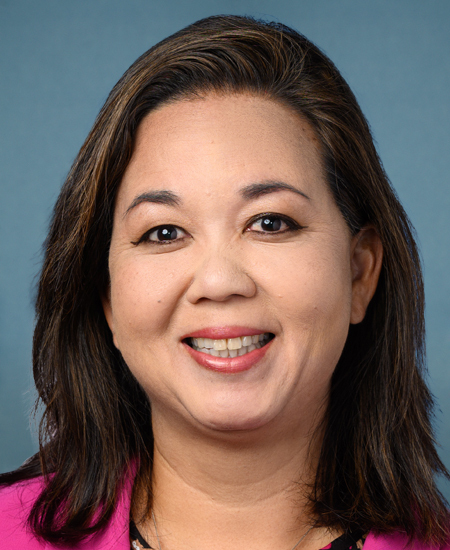
Rep. Jill N. Tokuda
Sponsored bills
Maddy summaryHR 82, the Social Security Fairness Act of 2023, repeals two provisions that reduce Social Security benefits for certain government workers. It eliminates the Government Pension Offset (GPO), which cuts spousal or survivor benefits for people with pensions from jobs not covered by Social Security (like federal or state government roles), and the Windfall Elimination Provision (WEP), which lowers retirement benefits for those with similar pensions. The law takes effect for benefits paid after December 2023, requiring the Social Security Administration to adjust benefit calculations to remove these reductions. This change directly affects public-sector employees who previously had their Social Security benefits reduced due to their government pensions.
Maddy summaryThis bill names a U.S. Postal Service facility in Captain Cook, Hawaii (located at 82-6110 Mamalahoa Highway) as the "Army 1st Lt. John Kuulei Kauhaihao Post Office Building" to honor the soldier. It requires all federal references in laws, documents, or records to use this new name instead of the facility's address. The bill has no policy impact beyond administrative renaming and affects only official U.S. government documentation.
Maddy summaryHR 40 would establish a 15-member commission to study the legacy of slavery and systemic discrimination against African Americans in the United States, and develop proposals for reparations. The commission would examine historical and ongoing effects of slavery, discriminatory policies (including redlining and educational disparities), and recommend remedies through education and potential reparations. Composed of members appointed by the President, House Speaker, and Senate President pro tempore, the commission would have 18 months to submit a report to Congress, with $20 million authorized for its work. This legislation creates a study process but does not provide reparations directly.
Washington, D.C. Admission Act This bill provides for the establishment of the State of Washington, Douglass Commonwealth, and its admission into the United States. The state is composed of most of the territory of the District of Columbia (DC), excluding a specified area that encompasses the U.S. Capitol, the White House, the U.S. Supreme Court building, federal monuments, and federal office buildings adjacent to the National Mall and the U.S. Capitol. The excluded territory shall be known as the Capital and serve as the seat of the government of the United States, as provided for in Article I of the Constitution. The state may not impose taxes on federal property except as Congress permits. The bill provides for the DC Mayor to issue a proclamation for the first elections to Congress of two Senators and one Representative of the state. The bill eliminates the office of Delegate to the House of Representatives. The bill applies current DC laws to the state. DC judicial proceedings and contractual obligations shall continue under the state’s authority. The bill also provides for specified federal obligations to transfer to the state upon its certification that it has funds and laws in place to assume the obligations. These include maintaining a retirement fund for judges and operating public defender services. The bill establishes a commission that is generally comprised of members who are appointed by DC and federal government officials to advise on an orderly transition to statehood.
Maddy summaryHR 44, the Rural 340B Access Act of 2025, would expand eligibility for the federal 340B drug discount program to include specific rural emergency hospitals. It directly affects rural emergency hospitals owned or operated by state/local governments, non-profits with governmental powers, or private non-profits with contracts to serve low-income patients. The bill amends the law to formally add these hospitals as "covered entities" under the 340B program, allowing them to purchase discounted drugs. This change would enable these facilities to access the same drug discounts previously available to other safety-net providers.
Maddy summaryThe Second Chances for Rural Hospitals Act changes the rules for hospitals to qualify as rural emergency hospitals under Medicare. It adds a new requirement that a hospital must have been designated as rural by the Health Resources and Services Administration's Office of Rural Health Policy. This affects rural hospitals seeking this specific designation, which is needed to receive certain Medicare payment benefits. The bill also updates the effective date for these criteria to January 1, 2014, instead of the bill's enactment date.
Maddy summaryThe Treat and Reduce Obesity Act of 2023 expands Medicare coverage for obesity treatment by allowing a wider range of healthcare providers - including nurse practitioners, dietitians, psychologists, and community-based counseling programs - to deliver intensive behavioral therapy for obesity, provided they coordinate with primary care providers. It also adds Medicare Part D coverage for medications used to treat obesity or for weight loss management in overweight individuals with related health conditions like diabetes or high blood pressure. These changes directly affect Medicare beneficiaries, particularly older adults (65+), who face higher obesity rates and associated costs, including $50 billion annually in Medicare spending for obesity-related care. The bill requires annual reports to Congress on implementation to improve coordination of obesity care across federal health programs.
Maddy summaryThis bill requires the U.S. Secretary of the Interior to study whether Lahaina, Hawaii (specifically the census-designated place in Maui County) should become a National Heritage Area - a federal program recognizing places with significant cultural or historical resources. The study will assess if designating Lahaina as such is suitable and feasible, involving coordination with Maui County, Hawaii state officials, historic preservation groups, and tourism entities. It does not create the heritage area itself but evaluates the potential for future designation. The bill directly affects Lahaina residents, local historic preservation efforts, and tourism stakeholders in the area.
Maddy summaryThe Autism CARES Act of 2024 reauthorizes and enhances federal programs supporting individuals with autism spectrum disorder. It requires the National Institutes of Health to expand research to include more fields like gerontology and psychiatry, and to ensure research reflects the full range of needs of people with autism, including those with co-occurring conditions. The bill mandates regular reports to Congress on progress, mental health needs, and transition services for young adults with autism, while increasing funding for autism-related programs from fiscal year 2025 through 2029. This legislation directly affects individuals with autism, their families, caregivers, and healthcare providers by improving access to evidence-based services and research.