

Maddy summaryHR 486, the Young Americans Financial Literacy Act, authorizes $27.5 million to $55 million annually through 2029 to fund competitive grants for centers of excellence focused on financial literacy education for individuals aged 8-24. These centers, established by eligible institutions like schools, nonprofits, or financial organizations, must develop research-based programs covering budgeting, debt management, student loan guidance, and avoiding pitfalls like predatory lending. The bill specifically requires programs to address at-risk populations, include evidence-based teaching methods, and serve groups such as high school graduates, college students, young families, and military personnel. It mandates annual reporting to Congress on grant recipients and the populations they serve, with funding ending in 2029.
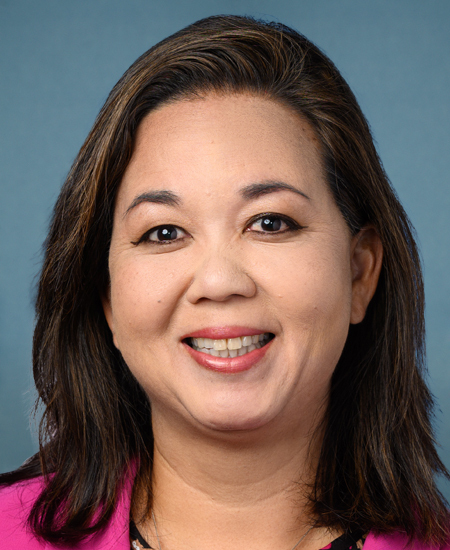
Rep. Jill N. Tokuda
Sponsored bills
Maddy summaryHR 429, the Rosie the Riveter Commemorative Coin Act, authorizes the U.S. Treasury to mint and sell three types of commemorative coins ($5 gold, $1 silver, and half-dollar) to honor women who worked on the U.S. home front during World War II. The coins will be sold at face value plus surcharges ($35 for gold, $10 for silver, $5 for half-dollar), with all surcharge revenue directed to the Rosie the Riveter Trust to support the Rosie the Riveter WWII Home Front National Historical Park and related educational programs. The coins must be issued between January 1, 2028, and December 31, 2028, in specified quantities (50,000 gold, 400,000 silver, 750,000 half-dollar), with all costs covered by the sales revenue to avoid net government expense.
Maddy summaryHR 433, the Department of Education Protection Act, prohibits the use of federal funds to reorganize the Department of Education. Specifically, it blocks any spending from current fiscal year appropriations on activities that would decentralize the department, reduce staffing, or alter its structure, responsibilities, or authority relative to its organization as of January 1, 2025. The bill directly affects the Department of Education by preventing structural changes to its existing offices and operations. This is a procedural measure focused solely on preserving the current departmental framework, not on changing education policy or funding.
Providing Real-world Education and Clinical Experience by Precepting Tomorrow's Nurses Act or the PRECEPT Nurses Act This bill establishes a new, nonrefundable tax credit for eligible nurse preceptors, subject to limitations. The bill also requires the Internal Revenue Service (IRS) to report to Congress certain information about the tax credit for nurse preceptors. Under the bill, a nonrefundable tax credit of $2,000 is allowed for an eligible nurse preceptor through 2032. An eligible nurse preceptor is defined as an individual who provides at least 200 certified hours of supervision and personalized experiential learning, training, instruction, and mentoring in the clinical practice of nursing to a nursing student, advanced practice registered nursing student, or newly hired licensed nurse in a community designated as a health professional shortage area. The bill also requires the IRS to report to Congress the number of taxpayers that claim the tax credit for nurse preceptors each year and the geographic distribution of such taxpayers, aggregated and averaged data on the preceptorships served by taxpayers as an eligible nurse preceptor, and the effectiveness of the tax credit in increasing the number of nurse preceptors in the United States.
Maddy summaryThis resolution expresses the House's support for Korean American Day, commemorating January 13, 1903 - the arrival of the first large wave of Korean immigrants to the U.S. It urges all Americans to observe the day to recognize Korean Americans' contributions to U.S. society, including their economic, cultural, and military service. The resolution honors the 122nd anniversary of this historical arrival, acknowledging the resilience of early Korean immigrants and their descendants. As a symbolic gesture, it does not create new laws or affect any specific group directly.
Head start Education And Development Workforce Advancement and Yield Act or the HEADWAY Act This bill allows some teachers in Early Head Start programs to teach while in the process of earning their Child Development Associate (CDA) credential and completing training. Currently, the Department of Health and Human Services (HHS) must ensure that all teachers providing direct services to children and families in Early Head Start centers (1) have a minimum of a CDA credential and have been trained in early childhood development, and (2) have been trained in early childhood development with a focus on infant and toddler development. The bill revises this requirement by requiring at least one teacher per classroom (instead of all teachers) to have a CDA credential and training. In particular, the bill requires HHS to ensure that (1) each additional teacher providing direct services to children and families is in the process of earning a CDA credential and completing training, and (2) the Early Head Start agency provides a mentor to oversee the progress and guide the work of a teacher who is in the process of earning a CDA credential and completing training.
Maddy summaryHRES 29 is a ceremonial resolution recognizing the 125th anniversary of organized Okinawan immigration to the United States, specifically marking the 1900 arrival of 26 Okinawan laborers in Honolulu. It highlights Okinawan Americans' historical contributions, cultural heritage, and connections to Okinawa, including community organizations, notable figures like former Hawaii Governor David Ige, and ongoing sister-state/city relationships. The resolution does not create new laws or policies; it formally acknowledges this milestone and urges the public to honor it through commemorative activities. As a symbolic gesture, it has no direct effect on individuals or government programs.
Maddy summaryThe Proxy Voting for New Parents Resolution (HRES 23) would allow U.S. House Members who have given birth or whose spouse has given birth to appoint another Member as a proxy to cast their vote or record their presence in the House and committees for up to 12 weeks after childbirth. To use this, the new parent must submit a signed letter to the Clerk detailing the birth or medical condition and naming the proxy; the proxy must vote exactly as instructed and announce the vote as "by proxy." The proxy vote does not count toward quorum, and the new parent can revoke the proxy at any time by submitting a new letter or casting their own vote. This resolution applies to all House Members, including Delegates and the Resident Commissioner, though they cannot cast votes for the House itself.
This resolution honors the life, achievements, legacy, and distinguished public service of former President Jimmy Carter. The resolution also (1) acknowledges President Carter's contributions to the state of Georgia, the United States, and the world; and (2) establishes his legacy as one of the great leaders and statesmen of the United States.
Maddy summaryThis bill increases healthcare affordability for low- and middle-income people by expanding eligibility for premium tax credits under the Affordable Care Act. It removes the previous 400% of poverty level cap for subsidy eligibility and replaces it with a new sliding scale based on income tiers, ranging from 0% to 8.5% of household income for coverage costs. The scale adjusts linearly across income levels, with households earning 300-400% of poverty paying 6.0%-8.5% of income (up from the prior fixed 400% cap), while lower-income households pay progressively less. These changes apply to tax years beginning after December 31, 2025, directly affecting individuals purchasing health insurance through marketplace plans.