

Maddy summaryThe Stop Campus Hazing Act requires colleges and universities to publicly report hazing incidents involving student organizations. It defines hazing as intentional acts causing physical or psychological harm during initiation or membership in student groups, including activities like forced substance consumption, sleep deprivation, or sexual acts. Institutions must include hazing statistics in annual security reports and publish a "Campus Hazing Transparency Report" on their websites by July 1, 2025, detailing findings about organizations violating hazing policies. The reports must include organization names, violation descriptions, and key dates while excluding personally identifiable student information. This applies to all colleges participating in federal student aid programs.
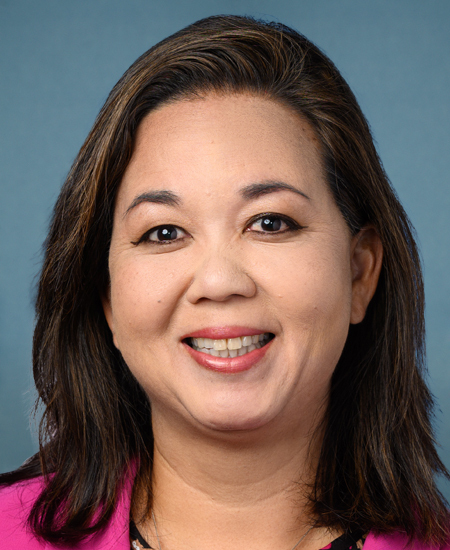
Rep. Jill N. Tokuda
Sponsored bills
Maddy summaryThis bill, HR 1097 (Everett Alvarez, Jr. Congressional Gold Medal Act of 2023), authorizes the award of a Congressional Gold Medal to Everett Alvarez, Jr., in recognition of his service as a U.S. Navy pilot and Vietnam War prisoner of war. It directly honors Alvarez, who was the first U.S. pilot shot down in the Vietnam War, spent over 8.5 years in captivity, and later served in the Peace Corps and Veterans Administration. The bill’s key mechanism is directing the U.S. Mint to strike a gold medal bearing his name and image, with bronze duplicates available for sale to cover costs. It does not create new policies or affect any group beyond the honoree.
Maddy summaryThis bill approves new agreements that amend the Compact of Free Association between the United States and the Federated States of Micronesia, the Republic of the Marshall Islands, and the Republic of Palau. It incorporates related agreements including fiscal procedures and trust fund agreements that govern how U.S. funding is managed and distributed to these nations. The bill provides funding for 2024-2043 to support programs like healthcare, education, veterans' services, and economic development in the Freely Associated States. It establishes reporting requirements and oversight mechanisms for federal agencies implementing these agreements. The bill directly affects U.S. federal agencies, the Freely Associated States, and U.S. funding mechanisms for these Pacific Island nations.
Maddy summaryThe Promoting Accessibility on Federal Lands Act of 2024 requires the Secretaries of Agriculture and the Interior to conduct a comprehensive assessment of accessibility for individuals with disabilities at federal trails, campsites, boat docks, and outdoor recreation facilities on National Forest System lands and public lands. Within 180 days of receiving funding, these assessments must be completed and made publicly available on the Department of Agriculture and Department of the Interior websites. Existing accessibility evaluations conducted before the bill's enactment may be incorporated into the required assessment. This legislation establishes a standardized process to document current accessibility conditions without mandating immediate facility modifications.
Maddy summaryThis bill amends existing federal laws to authorize the USDA Forest Service to fund native seed and seedling programs. It allows the agency to provide contracts, grants, or agreements to state forestry agencies, local nonprofits, and universities for collecting native seeds and producing seedlings. These funds will support habitat restoration projects by enabling the collection of native seeds and the production of seedlings for replanting degraded lands. The key mechanism is creating a formal process within current law to streamline these conservation activities, directly affecting state and local conservation groups working on ecosystem recovery.
Maddy summaryThis bill extends Medicare payment adjustments for physicians and other practitioners through 2025 instead of ending in 2024. It specifically adds a 4.73% payment increase for services provided between January 1, 2025, and January 1, 2026. The legislation modifies existing Medicare payment rules to stabilize practice revenues during transition periods. It directly affects doctors and healthcare providers who bill Medicare for patient services. The key change is the extended timeframe and the defined 4.73% rate for the 2025-2026 period.
Maddy summaryHR 9811, the Child Care Infrastructure Act, provides $10 billion in federal funding to improve child care facilities across the U.S. It requires the government to conduct immediate and long-term assessments of facility conditions, prioritizing pandemic-impacted centers serving low-income families, infants/toddlers, rural communities, and non-traditional-hour programs. The bill funds grants for states to renovate, build, or improve facilities (up to $35 million per state annually) and awards grants to intermediary organizations like community development groups to support financing and technical assistance. These grants must be used to address specific needs identified in the assessments, with labor standards requiring prevailing wage rates for construction work. The funding is authorized for fiscal years 2025-2029, with 3% reserved for tribal nations and territories.
Maddy summaryThe STAR Plus Scholarship Act creates a federal program to fund scholarships for students pursuing careers in mental health and substance use disorder treatment. It requires scholarship recipients to work full-time in designated mental health professional shortage areas for one year for each year of scholarship funding received. The program authorizes $75 million annually (2025-2029) to cover tuition and educational expenses for students enrolled in approved programs at accredited institutions. This directly affects students in behavioral health fields and aims to address workforce shortages in underserved communities by linking scholarship support to service requirements.
Maddy summaryThe Protecting and Preserving Social Security Act creates a new Consumer Price Index for Elderly Consumers (CPI-E) to calculate Social Security cost-of-living adjustments, replacing the current index used for these calculations. It changes how high earners' income is counted for Social Security taxes and benefits, with a decreasing percentage (86% in 2025, decreasing annually to 0% after 2030) of income above the contribution base being counted. The bill also modifies how surplus earnings (income above the Social Security base) are included in benefit calculations, creating a new formula that includes 3% of surplus earnings up to a certain limit. These changes primarily affect Social Security beneficiaries and high-earning workers who reach retirement age after 2024, while ensuring any benefit increases won't impact eligibility for Supplemental Security Income or Medicaid.
Maddy summaryHR 9152, the "SCHOOL Professionals Act of 2024," clarifies that contractors primarily providing operations or logistics services to educational organizations must be treated like direct employees for health coverage purposes under federal tax law. This means educational institutions using such contractors must determine if these workers qualify as "full-time" for health insurance requirements, similar to their own employees. The bill directly affects schools and colleges that rely on external contractors for facility or support services, requiring them to apply the same full-time employee rules to these contractors when assessing health coverage obligations. The rule change applies to months beginning after the bill's enactment date.