

AANAPISI Opportunity Act This bill requires the Department of Agriculture (USDA) to establish a scholarship grant program for covered Asian American and Native American Pacific Islander-serving institutions (AANAPISIs) to provide scholarships in agriculture-related fields. Covered institutions include community colleges, colleges, or universities that (1) have a student body consisting of at least 10% Asian American or Native American Pacific Islander students; and (2) offer associate, bachelors, or other accredited degree programs in agriculture-related fields. USDA may only award the grants to AANAPISIs that have established a competitive scholarship awards process for individuals who intend to pursue a career in agriculture, including in the agricultural disciplines of business, engineering, technology, food science, forestry, home economics, nutrition, soil conservation, non-medical biological sciences, and computer science. This bill also allows USDA to provide competitive grants for up to five years for integrated agricultural research, education, and extension projects at covered AANAPISIs to address U.S. agriculture priorities. The project grants include a 50% matching funds requirement that USDA may waive if certain requirements are met.
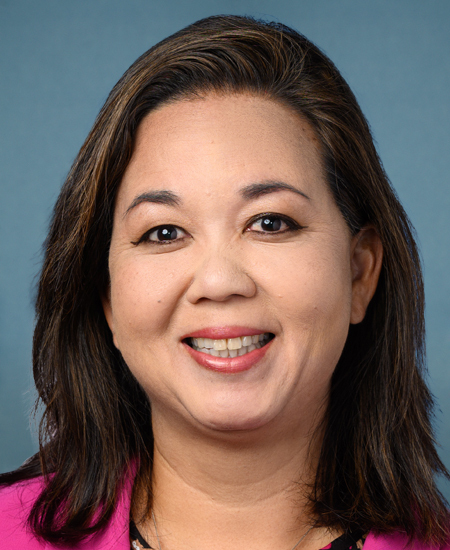
Rep. Jill N. Tokuda
Sponsored bills
Maddy summaryHR 2723 (Local Farms and Food Act of 2023) reforms the Local Agriculture Market Program to support local food systems. It extends funding periods to 2024-2028, increases annual funding to $75 million for program grants and $30 million for partnerships, and creates simplified application processes for projects under $100,000. The bill defines "food hub" to include businesses aggregating and distributing local food products, and adds new project categories like farmers market staff support and food safety equipment. It directly affects small local farms, food hubs, and rural communities by improving access to grants and reducing administrative barriers for market development.
Maddy summaryHRES 385 is a symbolic House resolution designating May 10, 2023, as "National Asian American, Native Hawaiian, and Pacific Islander Mental Health Day." It supports raising awareness about mental health disparities in the AANHPI community, where data shows lower treatment rates and higher suicide rates among youth. The resolution encourages federal, state, and local health agencies to improve mental health services for AANHPI communities but does not create new programs or funding. As a procedural resolution, it has no binding effect and serves only to recognize and highlight these issues.
Maddy summaryHRES 372 is a non-binding House resolution expressing support for designating May 2023 as "Mental Health Awareness Month." It does not create new laws or allocate funds but formally urges the nation to recognize mental health as a priority. The resolution supports reducing stigma around mental illness, expanding access to mental health services, and emphasizing that mental well-being is as important as physical health. It highlights the need for greater awareness and resources, particularly for youth, veterans, and communities of color facing mental health disparities, but does not mandate any specific policy changes.
Targeting Resources for Equitable Access to Treatment for Long COVID Act or the TREAT Long COVID Act This bill requires the Department of Health and Human Services to award competitive grants to create or expand the capacity of clinics that treat patients with persistent, long-term symptoms following recovery from acute COVID-19 (i.e., Long COVID) and associated conditions. Eligible recipients include federally qualified health centers, rural health clinics, urban Indian health centers, and state and local health departments.
Maddy summaryThis bill creates a new federal grant program to help nursing schools address faculty and clinical preceptor shortages. Schools of nursing with documented shortages can apply for funds to recruit and retain faculty/preceptors through hiring, improved pay, partnerships with healthcare facilities, or diversity-focused initiatives. Priority is given to schools that can't accept all qualified applicants due to shortages, serve underserved areas, or prioritize diverse faculty. Grantees must report annually on outcomes like faculty hired, student enrollment changes, and demographic data. The program aims to expand nursing education capacity by supporting schools directly affected by staffing gaps.
Maddy summaryHR 3218 requires the Federal Aviation Administration (FAA) to submit a detailed report to Congress within 120 days of the bill's enactment. The report must explain how the FAA chooses which air traffic control towers to replace, including the specific criteria used, the decision-making process, and the timeline for replacements. It also mandates the FAA to maintain and publish a public list of all towers replaced in the last decade, currently being replaced, or under consideration for replacement. This bill does not change existing policies but increases transparency about the FAA's tower replacement process.
National Concussion and Traumatic Brain Injury Clearinghouse Act of 2023 This bill establishes a clearinghouse for information (e.g., best practices and research) about concussions and traumatic brain injuries for medical professionals, patients, and other stakeholders. The Department of Health and Human Services and the Centers for Disease Control and Prevention must maintain the clearinghouse.
Health Center Service Expansion and Provider Shortage Reduction Act This bill provides funding through FY2028 for certain services under the Community Health Center Program, which supports outpatient health care facilities that provide comprehensive primary care to medically underserved populations. It also provides funding through FY2028 to expand the National Health Services Corps, which provides scholarships and student loan repayment awards to health care providers who agree to work in areas with health care provider shortages. In particular, the bill requires that health centers provide behavioral health, mental health, and substance use disorder services and provides funding for those services. (Currently, centers may provide those as additional services.) Furthermore, the bill provides funding for (1) expanding the operating hours of community health centers; and (2) New Access Point Grants, which assist centers to establish new delivery sites for care.
Maddy summaryThe PAST Act of 2023 amends the Horse Protection Act to ban specific devices used to cause pain (soring) in horses at shows, particularly affecting Tennessee Walking Horses, Racking Horses, and Spotted Saddle Horses. It defines prohibited "action devices" (like boots or chains causing friction) and requires licensed, conflict-free inspectors at events to enforce rules. The bill increases penalties for violations to up to $5,000 fines or 3 years in jail, and mandates longer disqualifications for repeat offenses (180 days → 1 year → 3 years). Horse show organizers, exhibitors, and participants must comply with these new inspection and penalty requirements.