

Maddy summaryThis bill requires pharmacies and drug distributors to investigate suspicious orders of controlled substances. If they identify signs drugs might be diverted to illegal use, they must document their investigation, report to the DEA, and may decline the order. However, if they resolve all concerns, they can fill the order without reporting to the DEA. The DEA will define specific warning signs within one year, and the rules take effect one year after enactment.
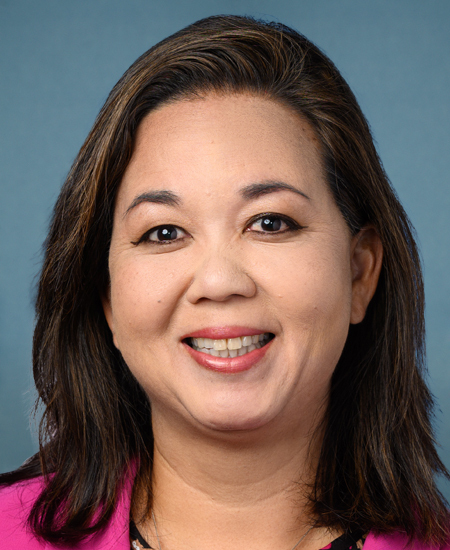
Rep. Jill N. Tokuda
Sponsored bills
Maddy summaryThe Early STEAM Achievement Act (HR 3374) creates a federal grant program to support early childhood education programs serving children from birth through age eight. It authorizes the Secretary of Health and Human Services to award competitive grants for STEAM (science, technology, engineering, art, and mathematics) activities, prioritizing rural communities (at least one-third of funds) and nonprofit organizations (at least one-quarter of funds). Grants must fund specific activities like teacher training, educational materials, or partnerships with colleges and arts organizations. The program is authorized for fiscal years 2024 through 2028.
Maddy summaryThe Employee Equity Investment Act of 2023 creates a new facility to provide financial support for employee-owned businesses by establishing new rules for "employee equity investment companies." These companies must invest at least 75% of their capital in employee ownership transitions, requiring independent trustees and fairness opinions for transactions to protect employee interests. The bill also modifies government procurement rules to help employee stock ownership plans and worker-owned cooperatives access set-aside contracts. The facility will expire 20 years after the first license is issued, with detailed reporting requirements for all investments.
This concurrent resolution authorizes the use of Emancipation Hall in the Capitol Visitor Center on June 11, 2023, for an event to celebrate a King Kamehameha Day Lei Draping Ceremony.
Maddy summaryHRES 319 is a symbolic resolution passed by the U.S. House of Representatives on April 24, 2023, recognizing the federal government's duty to develop a Green New Deal. It states the House believes the government should create a comprehensive plan to address climate change and economic inequality through a 10-year national mobilization. The resolution outlines goals like achieving net-zero emissions by 2050, creating high-wage union jobs, upgrading infrastructure, and prioritizing frontline communities, but it does not establish binding policy or funding mechanisms. As a non-binding resolution, it serves as a statement of legislative intent rather than a law.
This resolution addresses the need for improvements to broadband infrastructure, particularly in rural areas, and the role of specified federal agencies in making such improvements.
Maddy summaryHR 3331, the Improving Mental Health and Wellness in Schools Act, requires public schools participating in federal school meal programs to integrate mental health into their wellness policies. The bill mandates schools to form teams including mental health professionals to develop and update these policies, and to promote mental health assessments, encourage mental health support, and build resilient school environments. It amends the National School Lunch Act to add mental health promotion alongside physical activity and eating disorder prevention, and extends a policy review deadline from 2014 to 2026. This directly affects all K-12 schools receiving federal nutrition funding.
Maddy summaryThis bill extends eligibility for the WIC nutrition program to new mothers for 24 months after childbirth (up from six months) and extends breastfeeding support periods to 24 months (up from one year). It directly affects new mothers and infants who rely on WIC for nutrition assistance, breastfeeding support, and health services. Key provisions include amending the Child Nutrition Act to lengthen these benefit periods and requiring a report within two years evaluating health outcomes, breastfeeding rates, and family experiences. The report must assess impacts on maternal/infant health, racial disparities, and program effectiveness. This is a substantive policy change focused on improving access to critical postpartum support.
Justice for Incarcerated Moms Act This bill establishes new requirements related to grants, programs, and reports to improve the treatment and care of pregnant and postpartum women who are incarcerated. Specifically, the bill requires the following: states must restrict the use of restraints on pregnant women in prison in order to receive full funding under the Edward Byrne Memorial Justice Assistance Grant program; the Bureau of Prisons must establish programs to optimize maternal health outcomes for pregnant and postpartum women in federal prisons; the Bureau of Justice Assistance must award state grants for programs to support pregnant and postpartum women in state and local prisons and jails; and the Government Accountability Office must report on adverse maternal and infant health outcomes among incarcerated individuals and infants born to such individuals, with a particular focus on racial and ethnic disparities.
Processing Revival and Intrastate Meat Exemption Act or the PRIME Act This bill exempts from federal inspection requirements animals and meats that are slaughtered and prepared at custom animal slaughter facilities for distribution within the state. Under current law, a custom slaughter exemption applies if the meat is slaughtered exclusively for personal, household, guest, or employee uses. Specifically, the bill expands the federal inspection exemption to include the slaughter of animals or the preparation of carcasses, meat, and meat food products that are slaughtered and prepared at a custom slaughter facility in accordance with the laws of the state where the facility is located; and prepared exclusively for distribution to household consumers in the state or restaurants, hotels, boarding houses, grocery stores, or other establishments in the state that either prepare meals served directly to consumers or offer meat and food products for sale directly to consumers in the state. The bill does not preempt any state law concerning (1) the slaughter of animals or the preparation of carcasses, meat, and meat food products at a custom slaughter facility; or (2) the sale of meat or meat food products.