

Maddy summaryThe Firearm Safety Act of 2023 amends the Consumer Product Safety Act to remove firearms from an existing exclusion, reclassifying them as consumer products under federal law. This change would subject firearms to safety standards, testing, and oversight by the Consumer Product Safety Commission (CPSC), which currently does not regulate firearms under this framework. The bill specifically targets Section 3(a)(5) of the Consumer Product Safety Act, eliminating the exemption that previously kept firearms outside the definition of "consumer product." As a result, firearm manufacturers and sellers would now face CPSC requirements, such as safety testing, labeling, and reporting, similar to other consumer products.
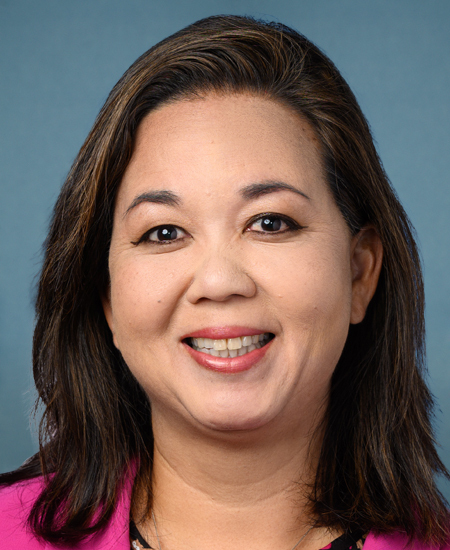
Rep. Jill N. Tokuda
Sponsored bills
Affordable Pricing for Taxpayer-Funded Prescription Drugs Act of 202 3 This bill requires companies that receive federal funding for research (or a license of the rights to a patent or regulatory test data) for a biomedical product or service to agree to set reasonable prices for the resulting biomedical product or service. The Department of Health and Human Services (HHS) must determine a reasonable price based on a formula that ensures the U.S. price for the product or service is not more than the median price for the product or service in Canada and six other reference countries with, based on specified criteria, large economies and high incomes. Companies entering these agreements also must report to HHS certain financial information related to the biomedical product or service involved.
Maddy summaryHRES 390 is a resolution recognizing May as Asian American, Native Hawaiian, and Pacific Islander (AANHPI) Heritage Month. It formally honors the historical contributions of AANHPI communities to the United States, highlighting their diverse cultural impact and achievements across U.S. history. The resolution emphasizes celebrating these contributions while acknowledging ongoing challenges, such as anti-Asian hate crimes, and references key milestones like the 125th anniversary of *United States v. Wong Kim Ark*. As a symbolic recognition resolution, it does not create new policies or affect specific groups through legislation.
Maddy summaryHR 3228 establishes the Mental Health in Schools Excellence Program to expand the workforce of school-based mental health providers. It authorizes the Education Secretary to partner with eligible graduate schools (offering accredited programs in school counseling, psychology, or social work) to cover up to 50% of participating students' tuition costs, with schools matching that contribution. The program prioritizes students who received Federal Pell Grants or attended certain institutions as undergraduates. It directly affects graduate students in school-based mental health fields and participating institutions, aiming to increase the pipeline of licensed providers for schools.
Maddy summaryThe Nonprofit Stakeholders Engaging and Advancing Together Act of 2023 creates a White House Office on Nonprofit Sector Partnership led by a Nonprofit Advisor to coordinate federal efforts with the nonprofit sector. The bill establishes an Interagency Council and an Advisory Board to improve data collection on nonprofits, requiring agencies to gather more detailed information about nonprofit economic impact, volunteerism, and charitable giving. It includes provisions to streamline grant processes, reduce administrative burdens for nonprofits, and improve data on volunteerism and charitable giving through updated surveys and reporting requirements. The legislation directly affects the 1.8 million nonprofit organizations in the United States, which contributed $1.5 trillion to the economy in 2022 and employed over 12.5 million people.
Maddy summaryThe RETAIN Act creates a refundable tax credit for early childhood educators, teachers, school leaders, and mental health providers who work in high-poverty schools for multiple years. It provides cash payments (ranging from $5,800 to $11,600 annually) based on continuous service, with higher amounts for longer tenure (e.g., $11,600 after 10 years). The credit directly affects educators in qualifying schools - those serving high-poverty students, as defined by Title I funding eligibility - and is designed to reduce turnover by rewarding retention. Schools cannot reduce other compensation for staff receiving this credit, and the credit applies to all eligible roles in public elementary/secondary schools or qualifying early childhood programs.
Maddy summaryThe RAISE Act of 2023 creates a new refundable tax credit for teachers and early childhood educators working in schools with high student poverty rates. The credit starts at $1,000, with additional amounts up to $14,000 (or $9,000 for early childhood educators without bachelor's degrees) based on the school's poverty ratio. The bill also increases the educator expense deduction from $250 to $500 and establishes mandatory funding for local schools that maintain or increase teacher salaries. These provisions directly affect K-12 teachers, early childhood educators, and their schools, with specific eligibility requirements and protections against employer retaliation regarding the credit.
Maddy summaryHR 3233, the Diversify Act, amends the TEACH Grants program to increase funding and expand eligibility for future teachers. It doubles the annual grant amount from $4,000 to $8,000, raises the maximum service obligation from $16,000 to $32,000, and adds high-need early childhood education programs to eligible teaching settings. The bill also prohibits penalties for not completing service requirements and exempts these grants from automatic budget cuts (sequestration). These changes directly affect teacher candidates pursuing careers in underserved schools or early childhood education programs.
Maddy summaryHR 3145, the People Over Parking Act of 2023, eliminates local and state requirements for minimum parking spots at new or substantially rebuilt residential, retail, commercial, or industrial developments located within 0.5 miles of a "covered public transit point." This directly affects developers and local governments in areas meeting the transit access criteria defined by the bill (such as fixed-guideway transit or high-frequency bus routes intersecting at least two lines). The key mechanism is preempting conflicting state or local laws, giving property owners sole discretion over parking provision within the specified transit-accessible zones. The bill aims to reduce mandatory parking infrastructure, potentially encouraging transit use and denser development near transit hubs.
Maddy summaryThe Beagle Brigade Act of 2023 establishes a National Detector Dog Training Center to train dogs and handlers for detecting foreign pests and diseases threatening U.S. agriculture and natural resources. The Center will collaborate with agencies like U.S. Customs and Border Protection and state agriculture departments to safeguard farms and ecosystems. It requires annual funding for operations and mandates a congressional report within one year detailing pest threats, Center effectiveness, and recommendations for improving detection capabilities. The law directly affects agricultural protection efforts by enhancing canine-based prevention of invasive species.