

Maddy summaryThe REPAIR Act requires car manufacturers to provide vehicle owners and independent repair shops with free, unrestricted access to vehicle data and repair information. It bans manufacturers from using technological or legal barriers to block access to diagnostics, tools, or aftermarket parts, and prohibits mandating specific brands for repairs or restricting customers’ choice of repair facility. The law also prevents manufacturers from requiring waivers of these rights as a condition of purchase, lease, or warranty service. The Federal Trade Commission will enforce these provisions to ensure fair competition in vehicle repair.
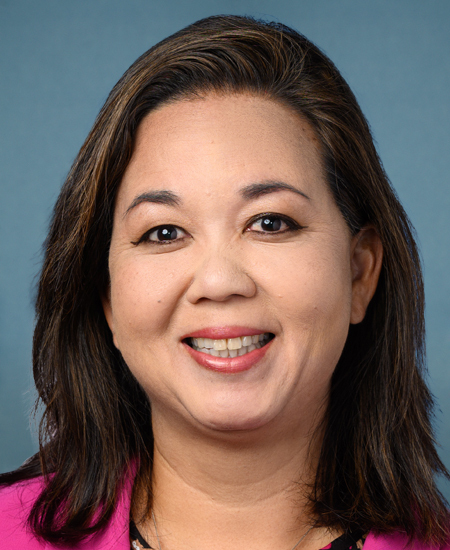
Rep. Jill N. Tokuda
Sponsored bills
Maddy summaryHRES 831 is a symbolic congressional resolution supporting October as "National Domestic Violence Awareness Month." It does not create new laws or allocate funding, but formally expresses the House of Representatives' support for the goals of raising awareness about domestic violence. The resolution urges Congress to continue highlighting domestic violence's impact and backing programs that prevent and address it. It directly affects public awareness efforts and serves as a non-binding statement of congressional support for victims and advocacy organizations.
Maddy summaryThe PHASE Act of 2023 directs the National Institute of Standards and Technology (NIST) to identify innovative traffic control technologies that improve safety for pedestrians and cyclists without causing distraction. It requires the Transportation Secretary to conduct a study analyzing urban areas with rising pedestrian fatalities and test physical safety measures like crosswalk technology, better lighting, and accessible sidewalks. The bill also creates a $5 million annual grant program for cities, tribes, and municipalities to fund specific pedestrian safety infrastructure, including marked crosswalks, adaptive lighting, accessible curb ramps, and upgraded traffic signals. These grants must comply with federal regulations and the Americans with Disabilities Act. The law directly affects local governments seeking funding and aims to protect pedestrians and vulnerable road users through concrete infrastructure improvements.
Maddy summaryHR 5983, the Clean Water Act of 2023, redefines "protected water resources" under federal law to explicitly include all interstate and intrastate waters (such as intermittent and ephemeral streams), wetlands, and their tributaries. This directly affects federal agencies like the EPA, states managing water quality, and developers or landowners needing permits for activities near these waters. The bill eliminates the Supreme Court’s narrow "navigable waters" definition from Sackett v. EPA (2023), restoring protections for tens of millions of acres of wetlands and millions of miles of small streams. Key mechanisms require the EPA to annually review and adjust exclusions from protections based on scientific evidence, ensuring water bodies critical to drinking water, flood control, and ecosystems remain safeguarded.
Maddy summaryThe Student Support Act (HR 6091) establishes a federal grant program to address the critical shortage of mental health professionals in schools, authorizing $100 million annually through 2028. The bill sets specific target ratios for school-based mental health providers: one counselor for every 250 students, one psychologist for every 500-700 students, and one social worker for every 250 students. Funds would be distributed to states based on the number of children in poverty and total student enrollment, with states required to provide matching funds. This legislation directly affects public and private K-12 schools across the United States, particularly those serving low-income students who currently lack adequate mental health support.
Maddy summaryThis bill restores federal student loans for graduate and professional students by temporarily reinstating eligibility for Federal Direct Stafford Loans, which was previously terminated. It applies directly to graduate students who were excluded from these loans, preventing them from accumulating additional debt. The change is temporary, ending on or before June 30, 2023, and modifies specific provisions of the Higher Education Act without requiring additional rulemaking.
Maddy summaryThe BAD APPS Act requires the Secretary of Defense to create a risk framework assessing foreign mobile applications (like social media or shopping apps) that could threaten Department of Defense personnel or operations. It mandates defining categories of "foreign mobile applications of concern" based on factors like data collection practices, foreign ownership, malicious software, and ties to countries deemed security threats. The framework must be updated annually, and the Secretary must issue guidance to DoD personnel on mitigating risks from these apps on government devices or during official activities. The bill directly affects DoD personnel, operations, and contractors by establishing standardized security assessments for foreign apps.
Maddy summaryHR 6079, the CHILD Labor Act, strengthens protections against child labor by defining "oppressive child labor" more clearly and expanding prohibitions on children under 18 working in dangerous occupations like mining, manufacturing, and meat processing. The bill requires Federal contractors and recipients of Federal financial assistance to prevent child labor throughout their supply chains, with new reporting requirements and significant penalties for violations including fines up to $750,000 per violation causing death or serious injury. It creates a new "child labor tag" system to identify goods produced with child labor and establishes a system for victims to seek compensatory and punitive damages. The bill also mandates regular reports to Congress on work-related injuries and deaths, with data collection to be conducted in consultation with the Department of Health and Human Services.
Maddy summaryThe All Students Count Act of 2023 amends the Elementary and Secondary Education Act to require states to collect and report detailed educational data for specific Asian American and Native Hawaiian/Pacific Islander subgroups, including Chinese, Filipino, Cambodian, Hmong, Samoan, and Chamorro communities. It mandates that states disaggregate student performance data by these specific ethnic subgroups rather than reporting only broad categories. This change directly affects public school systems and state education agencies, which must now collect and report data for these detailed groups as part of federal accountability requirements. The bill aims to address historical data gaps that obscured educational disparities affecting diverse communities, such as lower high school graduation rates or college enrollment among specific subgroups.
Transportation Assistance for Individuals with Disabilities Act This bill directs the Department of Transportation (DOT) to establish a grant program for protection and advocacy (P&A) systems to advocate for individuals with disabilities to access transportation. (Each state has a designated P&A system that protects and advocates for the rights of individuals with disabilities.) The bill directs DOT to select 10 P&A systems to receive five-year grants. Grant recipients must submit an annual report documenting the work they have done to address the barriers to accessing transportation for individuals with disabilities. Further, DOT must award one grant annually to a national organization with extensive knowledge of P&A systems to provide training and technical assistance to the systems.