

Maddy summaryThis resolution (HRES 802) is a symbolic gesture designating October 23, 2023, as "National Marine Sanctuary Day." It does not create new laws or policies but aims to raise public awareness about the existing National Marine Sanctuary System. The resolution encourages Americans to visit and support these protected areas, which conserve marine biodiversity, support coastal economies, and offer recreational opportunities. It has no direct effect on individuals or communities, as it is purely a recognition effort.
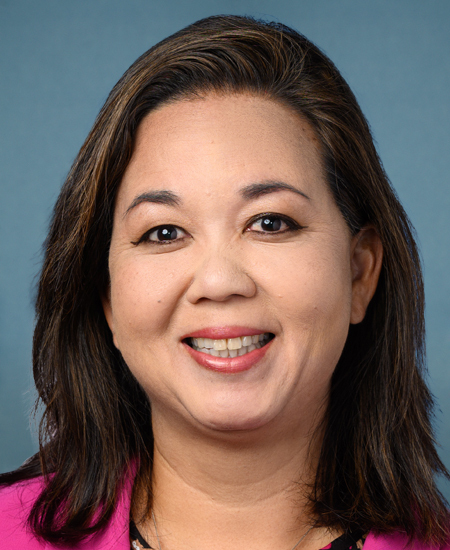
Rep. Jill N. Tokuda
Sponsored bills
Maddy summaryHRES 783 is a symbolic House resolution supporting the designation of October 16, 2023, and October 16, 2024, as "World Food Day" in the United States. It does not create new laws, funding, or policies - it merely expresses congressional support for recognizing an existing global observance established by the UN's Food and Agriculture Organization (FAO). The resolution cites global hunger statistics and encourages Americans to observe the day with activities, but it has no binding effect on government action or policy. As a procedural resolution, it affects no specific groups or programs and serves only to affirm existing international recognition of World Food Day.
Maddy summaryHRES 771 is a non-binding resolution expressing the U.S. House of Representatives' support for Israel following Hamas' October 7, 2023, attack. It condemns Hamas' actions, affirms Israel's right to self-defense, and calls for the immediate release of hostages. The resolution also urges enforcement of existing laws restricting aid to terrorists and sanctions against Iran for supporting Hamas. It does not create new policies or allocate funds, as it is a symbolic statement of congressional support.
Maddy summaryHRES 768 is a symbolic House Resolution expressing congressional support for Israel following Hamas' October 7, 2023 attacks. It condemns Hamas' actions, reaffirms Israel's right to self-defense, and calls for the immediate release of hostages. The resolution references the U.S. commitment to Israel's security through existing military aid programs, including the 2016 U.S.-Israel Memorandum of Understanding, and emphasizes enforcement of laws like the Taylor Force Act to prevent U.S. aid from reaching terrorist groups. As a symbolic resolution, it does not create new policy but serves as a statement of congressional support for Israel.
This resolution supports the designation of National Wildlife Refuge Week. The resolution acknowledges the importance of national wildlife refuges for their recreational opportunities and contribution to local economies. Finally, the resolution reaffirms the support of the House for wildlife conservation and the National Wildlife Refuge System.
Maddy summaryHR 6047 requires the U.S. Postal Service to implement specific recommendations from its Inspector General (IG) regarding undelivered and partially delivered mail routes. The bill directs the Postal Service to review and adopt the IG's 2022 report (Report No. 21-262-R23) on improving identification and notification processes for such mail within one year of the bill's enactment. This affects the Postal Service's operational procedures for handling mail delivery issues. The key provision mandates the Postal Service to act on these IG recommendations, aiming to enhance mail delivery reliability. The bill focuses on procedural changes to the Postal Service's internal operations, not new funding or broader policy.
Maddy summaryThis bill authorizes a one-time $40,000 payment to former Air America employees who served at least five years during 1950-1976, or to their survivors (widows/widowers, dependents, or children). Additional $8,000 payments are provided for each full year of service beyond five years. The total funding is capped at $60 million, with claims due within two years of regulations being finalized. It does not create ongoing benefits or change Air America’s legal status, and payments are issued as a single lump sum.
Maddy summaryThe MAUI STRONG Act establishes the Emergency Micro-enterprise Recovery Grant Pilot Program, providing grants to small Maui businesses and nonprofits that experienced revenue losses between August 8 and December 31, 2023. Eligible entities - including businesses with 25 or fewer employees, sole proprietors, and certain nonprofits - can receive up to $20,000 per grant to cover payroll, rent, materials, or revenue shortfalls. Grants must be used for specific business costs, and the program runs from August 2023 through December 2024, with $30 million authorized for funding. Grants are tax-exempt, and the Small Business Administration must report on the program’s impact by 2026.
Maddy summaryThe Safe Schools Improvement Act (HR 6031) requires public elementary and secondary schools to implement comprehensive anti-bullying policies that specifically prohibit harassment based on protected characteristics like race, gender identity, disability, religion, and sexual orientation. It mandates schools to collect and publicly report annual data on bullying incidents while establishing clear grievance procedures for students and parents. The bill also requires states to submit biennial reports on school compliance and supports evidence-based interventions, such as restorative practices, to reduce exclusionary discipline. This legislation directly affects all public K-12 schools and students in the U.S., aiming to create safer learning environments through standardized policy requirements and data transparency.
Maddy summaryThe America's College Promise Act of 2023 would make community college tuition free for eligible students by creating a Federal-State partnership where the federal government covers most of the cost. For the 2024-2025 academic year, the federal government would pay 100% of tuition costs for eligible students at community colleges, decreasing to 80% by 2028-2029. States would provide the remaining share, starting at 0% for 2024-2025 and increasing to 20% by 2028-2029. The bill requires states to implement reforms to improve student outcomes, including transfer pathways between community colleges and four-year institutions, as well as support services for underrepresented students. Tribal colleges and universities would receive different funding rules, with the federal government potentially covering 100% of costs.