

Maddy summaryHR 1268 updates the legal definition of U.S. customs waters in two key laws (the Tariff Act of 1930 and the Anti-Smuggling Act) to align with current international maritime standards. It replaces the outdated "four leagues from the coast" language with specific references to the U.S. territorial sea (per Presidential Proclamation 5928, 1988) and contiguous zone (per Presidential Proclamation 7219, 1999). This change directly affects U.S. Customs and Border Protection enforcement activities in coastal waters. The bill makes no new policy or tax changes - it only clarifies existing legal boundaries for customs jurisdiction. The update takes effect upon the bill's enactment.
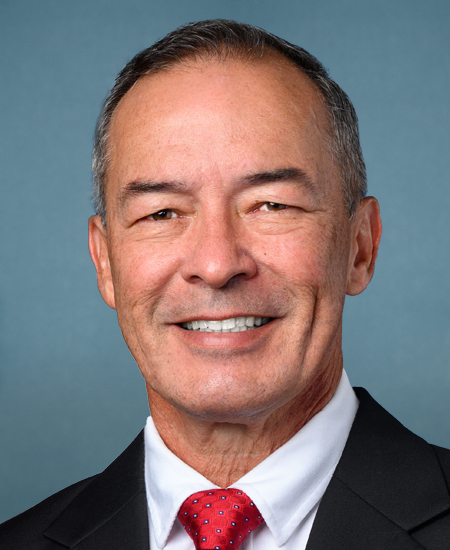
Rep. James C. Moylan
Sponsored bills
Maddy summaryThis bill expands eligibility for death and disability benefits under the public safety officers' death benefits program to include retired law enforcement officers who die or become permanently disabled from targeted attacks directly related to their past service. It specifically covers officers who retired in good standing from public agencies, including those who served without compensation. The policy change applies retroactively to cases occurring since August 28, 2012, and amends the Omnibus Crime Control and Safe Streets Act of 1968. This provides financial support to retired officers and their families affected by violence targeting their law enforcement careers.
Rural Obstetrics Readiness Act This bill creates and expands federal grant programs within the Health Resources and Services Administration (HRSA) to increase capacity to provide emergency obstetric health services in rural areas or areas without practitioners or facilities specializing in obstetric services. Specifically, HRSA must establish a program for providing grants to certain hospitals or consortiums that include hospitals in rural areas or areas with maternal health care professional shortages for training, developing a workforce, and purchasing equipment relating to obstetric emergencies. In addition, the bill requires HRSA’s Alliance for Innovation on Maternal Health Capacity program to provide grants for training on emergency obstetric services for practitioners in rural health care facilities without dedicated obstetric units. HRSA must also establish a pilot program to provide grants to government entities for developing or improving telehealth access programs to support urgent maternal health care in rural facilities without a dedicated obstetric unit.
Doctors in our Borders Act This bill increases the number of Conrad 30 waivers available each year from 30 to 100. Typically, a J-1 visa holder (nonimmigrant exchange visitor) must leave the United States for two years after finishing the exchange visitor program, including J-1 visa holders who entered the United States to receive graduate medical training. The Conrad 30 waiver program waives this requirement for eligible foreign medical graduates who agree to practice medicine in an underserved area or for an underserved population in the United States.
Maddy summaryHR 1189, the National Plan for Epilepsy Act, creates a coordinated federal strategy to address epilepsy through a National Plan for Epilepsy. The plan requires the Secretary of Health and Human Services to establish an annual assessment, maintain a diverse Advisory Council (including people with epilepsy, caregivers, and experts), and coordinate research and care across federal agencies. Key provisions include annual progress reports to Congress, data sharing between agencies, and recommendations to improve diagnosis, treatment access, and reduce epilepsy-related disparities. The plan expires December 31, 2035, and directly affects the estimated 3.4 million people in the U.S. living with epilepsy and their caregivers.
Maddy summaryHR 1153, the Rural Physician Workforce Production Act of 2025, provides additional Medicare payments to hospitals training medical residents in rural areas to address physician shortages. Hospitals can receive payments equal to the difference between rural training costs (based on 2015 GAO data adjusted for inflation) and standard graduate medical education payments, for residents spending at least 8 weeks in rural settings. It specifically supports hospitals with residency programs where over 50% of training occurs in rural locations, regardless of specialty or training site. This bill directly affects eligible hospitals, including critical access and rural emergency hospitals, by incentivizing rural physician training through updated Medicare funding mechanisms.
Alpha-gal Allergen Inclusion Act This bill expands the definition of major food allergen to include galactose-alpha-1,3-galactose (commonly known as alpha-gal ). Under current law, food labels generally must identify each major food allergen found in labeled food products. (Certain tick bites cause an allergic condition known as alpha-gal syndrome that can result in an allergy to the alpha-gal molecule, which is found in red meat and other products made from mammals.)
Maddy summaryThis bill expands 529 college savings account flexibility by allowing funds to cover costs for industry-recognized postsecondary credentials, not just traditional degrees. It defines "qualified expenses" to include tuition/fees for recognized credential programs (like certifications or apprenticeships), required testing fees, and continuing education needed to maintain credentials. To qualify, programs must meet specific criteria, such as appearing on state lists under the Workforce Innovation and Opportunity Act or being listed in VA or Defense directories. The change applies to 529 distributions made after the law's enactment, giving families more options to use these accounts for job-focused training.
This resolution supports the designation of Career and Technical Education Month to celebrate career and technical education across the United States.
Maddy summaryHR 1076, the WARN Act, requires the Comptroller General to study how well local, state, and federal emergency alert systems share timely weather emergency information during events like storms or power outages. The study will examine alert methods (including social media), the clarity of public messages, and outdoor siren systems, using feedback from emergency managers and community groups. It mandates a report to Congress within 18 months of enactment, focusing on identifying improvements to alert systems for public safety. The bill itself does not change existing policies but directs a review to inform future emergency communication strategies.