

Maddy summaryThe Pacific Island Flight Alternatives Act of 2025 (PIFAA) would update federal aviation rules to allow airlines from Japan, the Philippines, and South Korea to operate more direct flights between Guam, the Northern Mariana Islands, and the U.S. It clarifies that adding or removing passengers in Guam or the Northern Mariana Islands during a flight between the U.S. and other Pacific destinations does not break the international journey for these carriers. This change aims to increase competition on routes currently dominated by limited U.S. carriers, potentially lowering travel costs for residents. The bill specifically applies to foreign airlines from those three nations that already hold permits under existing U.S. aviation regulations.
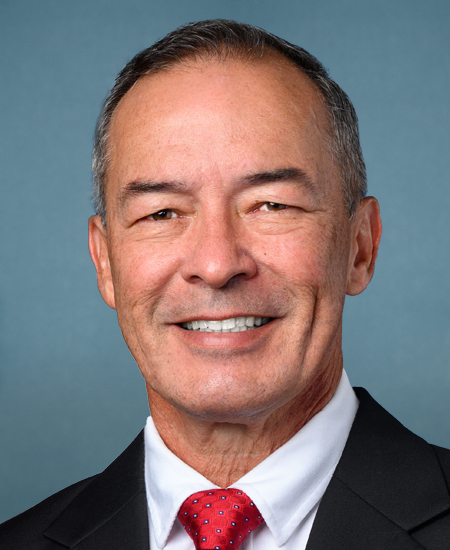
Rep. James C. Moylan
Sponsored bills
Pay Our Coast Guard Parity Act of 2025 This bill provides continuing appropriations to the Coast Guard for pay and benefits when there is a Coast Guard-specific funding lapse. Under the bill, a Coast Guard-specific funding lapse occurs when (1) a bill providing appropriations for the Coast Guard for a fiscal year has not been enacted before the beginning of that fiscal year, and no joint resolution providing continuing appropriations for the Coast Guard is in effect; and (2) a bill providing appropriations for the Department of Defense (DOD) for the fiscal year has been enacted before the beginning of the fiscal year, or a joint resolution providing continuing appropriation for DOD is in effect. If a Coast Guard-specific funding lapse occurs, the bill provides appropriations to the Coast Guard for pay and allowances for military members of the Coast Guard who perform active service or inactive-duty training; pay and benefits for certain civilian employees and contract employees; the payment of a death gratuity; payments for travel related to funerals, the dignified transfer of remains, and unit memorial services; and the temporary continuation of the basic allowance for housing for dependents of members of the Coast Guard dying on active duty. The bill generally provides the appropriations to the Coast Guard until the earlier of the enactment of specified Coast Guard appropriations legislation, the termination of the availability of appropriations for DOD, or two weeks after the beginning of the Coast Guard-specific funding lapse.
Maddy summaryHR 1506, the SWIM Act of 2025, creates a new tax deduction for basic water safety and swimming instruction. It allows taxpayers to deduct up to $500 annually (or $1,000 for joint returns or heads of household) for qualified water competency and safety lessons, including necessary equipment costing no more than $100 per item. The bill specifically defines eligible expenses as those for basic swimming instruction focused on safety - not competitive training - and requires lessons to meet this safety criterion. This change applies to tax years beginning after the bill's enactment.
Maddy summaryHR 1502 authorizes the creation of a Congressional Gold Medal to honor the volunteers and communities (primarily from Nebraska, Colorado, and Kansas) who supported the North Platte Canteen during World War II. The bill directs the Treasury Secretary to design and strike the medal, which will be presented to the individuals who contributed to the canteen’s operations and then permanently displayed at the Lincoln County Historical Museum in North Platte, Nebraska. It also permits the sale of bronze duplicates to cover production costs, with proceeds going to the U.S. Mint. This is a commemorative measure recognizing historical service, not a policy change affecting current laws or programs.
Maddy summaryHJRES 36 is a congressional disapproval resolution targeting a specific Forest Service rule. It seeks to block the rule titled "Law Enforcement; Criminal Prohibitions" (published in the Federal Register on November 25, 2024), which would have governed how the Forest Service enforces criminal prohibitions on federal lands. If passed, the resolution would stop this rule from taking effect, directly affecting the Forest Service's law enforcement procedures under the Department of Agriculture.
This concurrent resolution declares that Congress should not impose any new performance fee, tax, royalty, or other charge relating to the public performance of sound recordings on a local radio station for broadcasting sound recordings over the air, or on any business for such public performance of sound recordings.
Maddy summaryHR 1330 establishes the Smithsonian National Museum of the American Latino, authorizing its location within the National Mall's "Reserve" area. The bill requires the Smithsonian Board to coordinate with federal agencies managing potential museum sites, including notifying relevant congressional committees before land transfers. It mandates that the museum's exhibits and programs accurately represent the diverse cultures, histories, and viewpoints of Hispanic and Latino communities in the U.S., seeking input from a broad range of community experts. The Smithsonian must also submit regular reports to Congress detailing compliance with these representation requirements.
More Homes on the Market Act This bill increases the amount of gain from the sale of a principal residence that an individual may exclude from gross income (for federal tax purposes). Under the bill, an individual may exclude from gross income gain from the sale of a principal residence of up to $500,000 (currently $250,000), and taxpayers who are married and file a joint federal income tax return may exclude up to $1 million (currently $500.000). The bill also requires these amounts to be adjusted annually for inflation.
Maddy summaryThe Midnight Rules Relief Act streamlines Congress's ability to disapprove regulations issued near the end of a presidential term ("midnight rules"). It allows a single joint resolution of disapproval to cover multiple such rules, rather than requiring separate resolutions for each one. This change applies specifically to rules for which the agency's report was submitted during the final year of a president's term. The bill modifies procedural rules for congressional review but does not alter the substance of the regulations themselves.
Maddy summaryHR 1273 creates a national registry for Korean Americans separated from family members in North Korea after the 1953 Korean War Armistice. The State Department will collect family information to organize future reunions (in-person or via video) in the U.S., South Korea, or third countries, and maintain a private internal database of affected families. The bill requires the State Department to prioritize family reunions in U.S.-North Korea talks, consult with South Korea, and submit annual reports to Congress on registry status, reunion participation, and North Korea's cooperation. It directly affects Korean Americans with living relatives still in North Korea who seek reunification.