

Ensuring Diverse Leadership Act of 2024 This bill requires that, when appointing a president, a Federal Reserve Bank must interview at least one individual reflective of gender diversity and one reflective of racial or ethnic diversity. The bill amends numerous banking-, finance-, and trade-related acts to make references to officials (including those to the Chairman of the Board of Governors of the Federal Reserve System) gender-neutral.
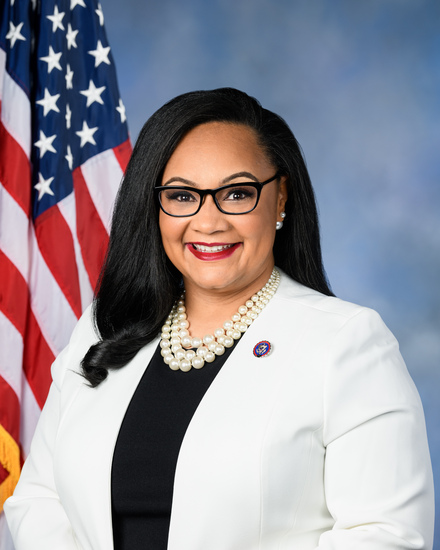
Rep. Nikema Williams
Sponsored bills
Maddy summaryHR 7244, the "End Tax Breaks for Dark Money Act," eliminates tax exemptions for political groups and certain nonprofits when they receive property that has increased in value (like stocks or real estate). It targets organizations that accept anonymous donations ("dark money") by removing their ability to avoid capital gains tax on such property transfers. The bill amends the tax code to require these groups to pay tax on the appreciated value when receiving property, rather than allowing them to bypass capital gains tax. This change directly affects political organizations under Section 527 and specific nonprofits under Section 501(c), applying to transfers after the bill's enactment.
Maddy summaryThe JOBS Act of 2023 would expand Federal Pell Grant eligibility to cover certain short-term job training programs that prepare students for high-demand careers. It defines "eligible job training programs" as those offering 150-600 hours of instruction over 8-15 weeks, aligned with in-demand industry sectors, and leading to recognized credentials that help students meet hiring requirements and take licensure exams. The bill would allow students in these programs to receive Pell Grants under standard terms, with the minimum Pell Grant amount reduced from 10% to 5% of the maximum. It also requires accrediting agencies to evaluate these programs and creates data-sharing between Education and Labor departments to track program effectiveness.
Maddy summaryHR 7210, the Help America Run Act, allows campaign funds to cover essential personal expenses like child care, elder care, and health insurance premiums for candidates running for office. This amendment to the Federal Election Campaign Act (Section 313) treats these payments as authorized campaign expenses if necessary for campaign activities, while limiting total payments to the same cap as candidate salary. The bill directly affects working parents, caregivers, and lower-income candidates who might otherwise be unable to run due to unaffordable basic living costs. It aims to remove financial barriers that currently prevent many everyday Americans from seeking office, particularly impacting working mothers and caregivers. The policy change does not alter overall campaign finance limits but expands permissible uses of campaign funds for critical personal needs.
Maddy summaryThis symbolic resolution (HRES 989) urges the U.S. House of Representatives to recognize January as "Muslim-American Heritage Month" to honor the contributions of Muslim Americans. It highlights their historical and contemporary roles in U.S. society across fields like business, science, sports, and public service. The resolution calls for public observance through ceremonies and programs but has no legal effect or policy changes. It does not allocate funding, alter laws, or directly affect any specific group beyond raising awareness of Muslim-American heritage.
Maddy summaryHRES 990 is a non-binding resolution expressing the House of Representatives' support for fair treatment of paraprofessionals (like instructional assistants) and education support staff (such as clerical, custodial, and food service workers) in schools. It states these over 3 million frontline workers deserve livable wages, affordable health care, job security, paid leave, professional development, and safe working conditions. The resolution lists specific recommendations, including eligibility for family medical leave and protections against retaliation for reporting workplace issues. It does not create new laws but formally recognizes these staff as essential to school success and calls for policies addressing their current challenges.
Maddy summaryThe Credit for Caring Act of 2024 creates a new federal tax credit for family caregivers. It allows eligible caregivers to claim a credit equal to 30% of qualified caregiving expenses (like home modifications, medical supplies, or respite care) exceeding $2,000 per year, capped at $5,000 annually. To qualify, caregivers must earn over $7,500 in income and provide care for a relative (like a spouse or parent) certified by a healthcare provider as needing long-term care for at least 180 days. The credit phases out for higher earners, with a $75,000 income threshold for single filers and $150,000 for joint returns.
Maddy summaryHR 7132 creates a federal grant program to help state and local governments, tribes, and Native Hawaiian organizations develop and implement housing plans. Grants fund both planning (creating strategies) and implementation (putting strategies into action) to increase housing supply and affordability while avoiding displacement of current residents. At least 10% of funds must support rural communities, and recipients must report annually on progress and submit final evaluations after three years. The program requires comprehensive plans addressing housing needs, land use reforms, and community engagement to expand housing options.
Maddy summaryHRES 983 is a non-binding resolution recognizing January 2024 as "National Mentoring Month" to highlight the value of mentoring relationships. It acknowledges mentors (including program staff and volunteers) and emphasizes mentoring's benefits for youth development, such as improved academic performance, career readiness, and mental well-being. The resolution promotes expanding quality mentoring programs nationwide but does not create new laws or allocate funding.
Maddy summaryThe ACCESS Act of 2024 creates a federal grant program to help clinics and health care providers expand abortion and reproductive health services in states where abortion is legal (outside of life or health exceptions). It authorizes $200 million annually for fiscal years 2024-2028 to fund specific capacity-building activities, including facility expansions, hiring clinical staff, telehealth services, and culturally appropriate patient resources. Priority is given to providers in states experiencing the highest increases in out-of-state patients seeking abortion care. The bill directly supports health care entities serving patients who travel across state lines for services, aiming to reduce wait times and improve access for vulnerable communities.