

Maddy summaryThe Pursuing Equity in Mental Health Act (HR 2904) aims to reduce mental health disparities affecting racial and ethnic minority groups by modifying federal grant programs, requiring research on disparities, and funding targeted initiatives. It directs the Health and Human Services Secretary to prioritize grants for community health organizations serving minority populations, mandates a National Institutes of Health study on mental health research gaps in these groups, and establishes training programs for health professionals to address cultural competency in mental health care. The bill also requires a public outreach strategy developed with community input to reduce stigma and improve access to culturally appropriate care, alongside $20 million annually (2026-2031) for this effort. Additional funding includes $150 million yearly for NIH mental health research and $750 million yearly for the National Institute on Minority Health.
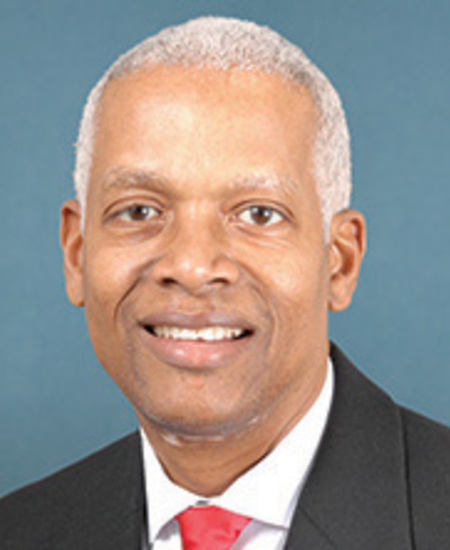
Rep. Henry C. "Hank" Johnson, Jr.
Sponsored bills
Maddy summaryHR 2837 establishes an Advisory Council under the Department of Health and Human Services to improve access to existing resources for victims of gun violence. The council, composed of federal agency heads and appointed victims/support professionals, will assess needs, identify effective programs, and compile a public resource hub with contact information for medical, financial, mental health, legal, and government support services. It requires a detailed report within 180 days of enactment and a follow-up report within two years, focusing on gaps in current assistance and coordination. The bill directly affects individuals defined as victims of gun violence (including those wounded, threatened, witnessing incidents, or related to victims) and aims to connect them to existing federal, state, and nonprofit resources without authorizing new funding. The council will sunset after five years.
Maddy summaryThis bill requires the U.S. Postal Service to maintain certain mailbox units (called "covered cluster box units") that have been primarily maintained by the Postal Service for at least 20 years. It applies to private property owners (not government entities) who own these units and want the Postal Service to continue maintenance. Property owners must apply to the Postal Service with proof of 20+ years of USPS maintenance and permission to maintain the unit; the Postal Service must decide within one month. The Postal Service must maintain the units but is not responsible for damage caused intentionally by the owner or for structural changes.
Maddy summaryThis bill expands eligibility for two tax credits: the Saver's Credit (for retirement savings) and the Saver's Match (for low-income workers). It removes the previous exclusion of full-time students, allowing any dependent student claimed by a parent on their tax return to qualify for these benefits. The change applies to contributions made after the bill's enactment and aligns with existing rules for dependents under Section 151 of the tax code. This directly affects dependent college students who were previously ineligible for these credits, potentially increasing their access to retirement savings incentives.
Maddy summaryThe Vote at Home Act of 2025 requires states to mail ballots to all registered voters for federal elections at least two weeks before Election Day, eliminating unnecessary barriers like notary requirements or excuses for voting by mail. It ensures ballots are accessible to voters with disabilities and provides free postage for all mail-in ballots, making voting more convenient for rural voters, those with disabilities, and people with scheduling conflicts. The bill also expands automatic voter registration through motor vehicle offices, streamlining the process while protecting against errors in registration. These changes aim to increase accessibility and participation in federal elections while reducing election administration costs, with states required to comply for elections beginning in 2026.
Maddy summaryHR 2843 establishes an Advisory Committee to review and recommend renaming Federal land units (such as national parks, forests, and wildlife refuges) with names containing racial slurs, honoring individuals who held racist views or committed atrocities against minorities, or perpetuating stereotypes. The Committee will gather public input, propose new names, and submit recommendations to the Board on Geographic Names, which must act on these proposals within three years. This process aims to replace offensive names with equitable alternatives across all federal lands, following defined criteria for "offensive place names." The bill creates a structured, public review mechanism to address historically insensitive geographic names without altering existing federal land management authority.
Maddy summaryThe Community First Act provides federal grants to local governments and community partnerships to reduce jail populations and shorten pretrial stays. It funds planning grants ($100,000 for 1 year) and implementation grants ($500,000-$3 million over 6 years) for evidence-based strategies like expanding pretrial services, reducing cash bail, and creating non-incarceration diversion programs. Grantees must achieve specific annual jail reduction targets (5% in year one, 50% by year six) while addressing racial/ethnic equity disparities in incarceration data. The bill directly affects communities with high local jail rates, particularly those disproportionately impacted by the justice system, by requiring data-driven reforms and community collaboration.
Maddy summaryHRES 321 is a symbolic resolution supporting the "Rise Up for LGBTQI+ Youth in Schools Initiative," which calls for communities to demand equal educational opportunities, civil rights protections, and inclusion for LGBTQI+ students in K-12 schools. It urges states and localities to adopt policies prohibiting bias-based discrimination, exclusion, and erasure of LGBTQI+ students - particularly transgender, nonbinary, Black, Indigenous, and disabled youth - while recognizing existing efforts like National Day of Silence. The resolution does not create new laws or allocate funds but formally endorses community-led advocacy to address hostile school environments documented in studies showing discrimination correlates with higher absenteeism, lower grades, and mental health challenges among LGBTQI+ students. It directly affects state education policies and school climates, encouraging local action without federal enforcement.
Maddy summaryHRES 317 is a non-binding resolution urging the U.S. government to lead global efforts to halt and reverse the nuclear arms race. It calls on the President to pursue negotiations with nuclear-armed states to reduce arsenals, end the U.S. policy allowing first use of nuclear weapons, eliminate immediate launch readiness, stop developing new weapons, and support communities affected by nuclear programs. The resolution emphasizes diplomatic action over military modernization to reduce nuclear risks and prevent catastrophic conflict.
Maddy summaryThe Adult Education WORKS Act establishes "college and career navigators" who provide personalized guidance to help individuals access education, job training, and workforce development services. These navigators help people identify career paths, connect to financial aid, and develop digital literacy and information literacy skills needed for success in education and employment. The bill requires state and local workforce boards to collaborate with adult education providers to promote these navigator positions and authorizes $135 million annually for library-based and community-based navigator programs. It updates definitions to include digital and information literacy skills as essential components of adult education. The bill directly affects adult education providers, workforce development systems, and individuals seeking to improve their job skills or educational opportunities.