Maddy summaryThe Hunger-Free Future Act of 2025 amends the SNAP program to require that any update to the thrifty food plan must not increase food insecurity. It mandates that adjustments to the diet cost must continue following existing rules while explicitly ensuring updates do not worsen food insecurity, defined as households lacking adequate food due to insufficient money or resources. This directly affects SNAP beneficiaries by setting a new standard for how the program's cost calculations are reviewed. The bill changes the procedural requirement for SNAP re-evaluations without altering benefit amounts or eligibility rules.
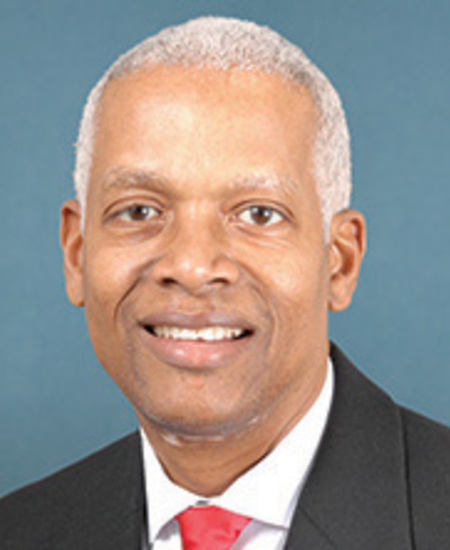
Rep. Henry C. "Hank" Johnson, Jr.
Sponsored bills
Hot Foods Act of 2025 This bill expands the Supplemental Nutrition Assistance Program (SNAP) to permit the use of SNAP benefits to purchase hot foods or hot food products ready for immediate consumption.
Maddy summaryThe Housing for All Act of 2025 creates new funding streams and expands existing housing programs to address housing shortages and homelessness. It authorizes $45 billion annually for a Housing Trust Fund, $40 billion for the HOME Investment Partnerships Program, and $14.5 billion for project-based rental assistance. The bill expands the housing choice voucher program by 500,000 vouchers in 2025, increasing to 1 million by 2028, and establishes new programs including Safe Parking Programs, Eviction Protection Grants, and Mobile Crisis Intervention Teams. The legislation also creates a racial equity commission to address housing disparities and requires reports on eviction data and inclusive transit-oriented development.
Maddy summaryThis bill establishes the Ralph David Abernathy, Sr. National Historic Site in Atlanta, Georgia, to preserve the West Hunter Street Baptist Church (where Dr. Abernathy served as pastor during the civil rights movement) and honor his legacy as a civil rights leader. It defines the site's boundary using a specific map and requires the Secretary of the Interior to acquire land (primarily through donation) before formally establishing the site. The bill is procedural, creating a National Park System unit with standard administrative rules and requiring a management plan within three years of funding. It directly affects the preservation of this historic church and its surrounding area in Georgia.
Maddy summaryHR 2948, the Safer Neighborhoods Gun Buyback Act of 2025, authorizes $360 million annually from 2025-2027 to fund gun buyback programs across the country. The bill creates a grant program for states, local governments, tribal governments, and eligible gun dealers to collect firearms from individuals using "smart prepaid cards" that cannot be used to purchase guns. Participants would pay 125% of a gun's market value (with possible increases for modified weapons) and must destroy all collected firearms and ammunition within 30 days. The program requires criminal background checks on all collected weapons and prohibits reselling any guns obtained through the initiative, with a new federal criminal provision making it illegal to use these cards for firearm transactions.
Maddy summaryThe All-Americans Tax Relief Act of 2025 would significantly expand tax benefits for low-to-moderate income individuals and families. Key provisions include making the Child Tax Credit fully refundable (allowing payments even if taxpayers owe no income tax), expanding the Earned Income Tax Credit with higher maximum amounts, and creating new deductions for medical expenses, daycare, commuting, tutoring, and credit card interest. The bill would also establish a rent deduction for primary residences and exclude certain discharged debt from taxable income. These changes would apply to tax years beginning after December 31, 2026, and would primarily benefit working families with children and lower-income taxpayers.
Maddy summaryHRES 332 is a resolution designating April 11-17, 2025, as "Black Maternal Health Week" to raise awareness about maternal health disparities affecting Black women and birthing people in the U.S. It references CDC data showing Black women are 2-3 times more likely to die from pregnancy-related causes than White women and that the U.S. has the highest maternal mortality rate among developed nations. The resolution emphasizes the need to address systemic inequities contributing to these outcomes without creating new laws or funding. It serves as a symbolic recognition to amplify community-led efforts, such as those by the Black Mamas Matter Alliance, rather than implementing policy changes.
Maddy summaryThis resolution (HRES 331) is a non-binding House of Representatives statement supporting National Youth HIV/AIDS Awareness Day. It urges state/local governments and schools to recognize the day and promotes inclusive HIV education in curricula, including information on pre-exposure prophylaxis (PrEP). The resolution calls for removing outdated HIV criminalization laws, expanding youth-friendly healthcare access (including confidential testing and treatment without parental consent), and supporting existing programs like the Ryan White HIV/AIDS Program. It specifically highlights the disproportionate impact of HIV on young Black gay and bisexual men and advocates for reducing stigma to improve health outcomes for youth living with HIV.
Maddy summaryHR 2884 establishes a National Center on Antiracism and Health within the CDC to address structural racism as a public health crisis. The center will research how racism impacts health outcomes, collect disaggregated data by race, ethnicity, and other factors, and develop antiracist interventions for public health systems. It requires CDC to create regional centers in minority communities, build a public data clearinghouse, and train health professionals on racism's health effects. The bill also directs the CDC to research police violence's public health impacts and develop prevention strategies, requiring annual reports to Congress on these efforts.
Working for Immigrant Safety and Empowerment Act or the WISE Act This bill expands eligibility for U nonimmigrant visas (victims of criminal activity) and prohibits immigration enforcement activities in specified areas. Generally, U visas are for victims of specified crimes (e.g., rape, trafficking, or domestic violence) who assist with the investigation or prosecution of the crime. The bill adds hate crimes, child abuse, and elder abuse as crimes that may qualify a victim for a U visa and removes criteria related to the victim's assistance with the investigation or prosecution of the crime. Furthermore, the Department of Homeland Security (DHS) must provide work authorization to U visa applicants, whereas currently DHS may grant work authorization but is not required to do so. The bill also eliminates the annual numerical cap on U visas. The bill establishes a rebuttable presumption that certain individuals, including U visa applicants and T visa (victims of human trafficking) applicants, shall not be detained while the application is pending. Additionally, the bill provides immigration-related protections, such as by extending the admission period and providing work authorization, to the spouse or child of a nonimmigrant visa holder who subjected that spouse or child to battery or extreme cruelty. Further, the bill prohibits, with some exceptions for exigent circumstances, U.S. Immigration and Customs Enforcement or U.S. Customs and Border Protection from conducting immigration enforcement actions within 1,000 feet of a school, health care facility, place of worship, or other location specified in the bill.