

Maddy summaryThis bill prohibits the President, Vice President, Members of Congress, and their immediate family members from engaging in specific digital asset activities. It bans them from owning digital assets where they could unilaterally alter them, serving as officers for crypto issuers, receiving compensation for crypto sales/marketing, or trading with non-public information while in office. The law also prevents these individuals from using trusts, companies, or other entities to secretly participate in digital asset markets, requiring full disclosure of indirect ownership. Violations could trigger criminal penalties under existing federal law, mirroring restrictions on other financial conflicts of interest.
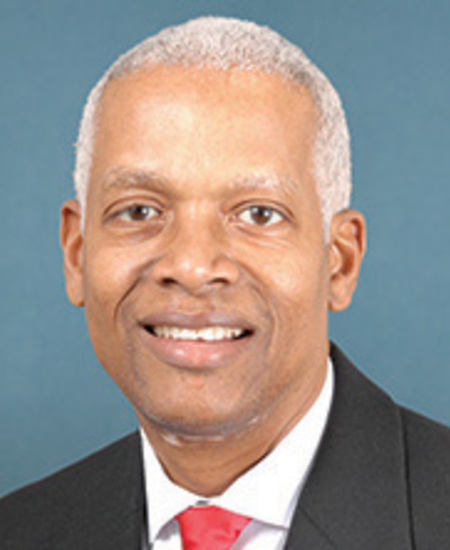
Rep. Henry C. "Hank" Johnson, Jr.
Sponsored bills
Maddy summaryThis bill establishes a federal demonstration program to address high school graduation gaps by funding additional school counselors in struggling schools. It targets secondary schools with a four-year graduation rate of 60% or lower, providing competitive 4-year grants to hire counselors focused on students at risk of not graduating. Grants require maintaining a 1:250 counselor-to-student ratio for at-risk youth, covering new counselors and related resources like professional development, while ensuring funds supplement - rather than replace - existing counseling staff. Schools must show at least a 10% graduation rate improvement to renew funding for up to three cycles. The program aims to directly support historically underserved student groups with lower graduation rates, including students of color, those with disabilities, and English learners.
Maddy summaryThe College for All Act of 2025 would eliminate tuition and required fees for eligible students at public community colleges and 4-year institutions through a federal-state partnership. The federal government would cover 100% of costs in the first year (2026-2027), gradually decreasing to 80% by 2030-2031, while states would start with 0% and increase to 20% by 2030-2031. Eligible students would include those with family income below $150,000 for single parents or $300,000 for married parents, regardless of immigration status. The bill also includes requirements to maintain instruction funding, improve transfer pathways between community colleges and 4-year institutions, and provide additional support for students after tuition elimination.
Maddy summaryThis bill would establish 18-year fixed terms for all Supreme Court justices, replacing lifetime appointments. It requires the President to nominate one justice every two years (during first and third years after presidential elections), with Senate confirmation within 90 days, and prohibits reappointments after a single term. Current justices would be phased out in order of seniority as new justices are appointed under this schedule. The bill directly affects all sitting and future Supreme Court justices by mandating term limits and a structured appointment process.
Maddy summaryHR 3532, the Striking and Locked Out Workers Healthcare Protection Act, prohibits employers from terminating or altering an employee’s employer-sponsored health coverage during a lawful strike or a lockout (when an employer withholds work to influence bargaining). It directly affects workers participating in strikes or facing lockouts, ensuring continued healthcare access during these labor disputes. The bill adds penalties: $75,000 per violation for lockout-related coverage termination (up to $150,000 for repeat offenses), and $50,000 per violation for strike-related termination (up to $100,000 for repeat offenses), with penalties applied alongside other remedies. These provisions amend the National Labor Relations Act to protect workers’ healthcare rights during collective bargaining actions.
Clinical Trial Modernization Act This bill authorizes a grant program and provides certain exemptions to support the participation of individuals in clinical trials. Specifically, the bill authorizes a grant program to support outreach, education, and recruitment efforts for clinical trials that may benefit certain underrepresented populations or communities in need, such as rural or tribal areas. The bill also exempts from anti-kickback laws for federal health care programs (1) remuneration that is offered to cover participants' expenses to participate in clinical trials, (2) the provision of free digital health technologies to support participation of underrepresented populations in clinical trials, and (3) payment for participants' cost-sharing obligations in relation to clinical trials. Finally, the bill exempts up to $2,000 in remuneration that is received for participating in a clinical trial from income tax.
Maddy summaryThis bill establishes a code of conduct for Supreme Court justices, requiring them to disclose gifts, income, and potential conflicts of interest. It creates a formal process for handling complaints about justices, including a judicial investigation panel to review allegations. The bill adds specific circumstances requiring recusal, such as when a justice or family member has financial ties to a party in a case. Additionally, it mandates that parties and amicus briefs disclose any gifts given to justices and lobbying activities related to their nomination. These provisions aim to increase transparency and accountability in the Supreme Court's operations.
Maddy summaryHR 3498, the Henrietta Lacks Congressional Gold Medal Act, authorizes a commemorative gold medal to honor Henrietta Lacks for her contribution to science through her immortal HeLa cells. The bill directs the Treasury Secretary to strike the medal, which will be presented posthumously by Congress and displayed at the Smithsonian Institution. It also permits the sale of bronze duplicates to cover costs, with proceeds going to the U.S. Mint fund. This is a ceremonial recognition of Lacks' legacy, not a policy change affecting any group or requiring new regulations.
Stronger Communities through Better Transit Act This bill requires the Department of Transportation (DOT) to establish a grant program to support operating projects for public transportation and related service improvements, particularly in underserved communities and areas of persistent poverty. Specifically, the bill requires DOT to allocate funding under the program for urbanized areas, states, and Indian tribes that are recipients of funds under either the Federal Transit Administration's (FTA's) Urbanized Area Formula Funding program or Formula Grants for Rural Areas program. Eligible recipients may use funding for operating costs associated with projects that improve public transportation service for transit-dependent populations and support increased transit ridership (e.g., service expansion, information technology enhancements, and workforce development). DOT must apportion the funding so that recipients receive funds that are proportional to their share of operating costs. The bill also provides for an increased federal cost share for operating assistance for projects or programs carried out in areas of persistent poverty or underserved communities. DOT must set up a multimodal access measurement interface for public agencies to aid transit agencies in determining and reporting on access to jobs and essential services. A grant recipient must (1) report specific information to the FTA for inclusion in the National Transit Database, and (2) survey transit riders and non-riding residents regarding transit service improvements. Further, the bill expands the purposes of the public transportation programs to include supporting public transportation's role in combating climate change through growing/retaining transit ridership.
Maddy summaryHRES 414 is a symbolic resolution recognizing the U.S. government's moral and legal obligation to provide reparations for the harms of slavery and its lasting impacts on Black Americans. It acknowledges the historical and ongoing effects of chattel slavery, systemic racism, and discriminatory policies on Black communities, including economic disparities, environmental racism, and the criminal justice system. The resolution encourages support for H.R. 40, which would establish a commission to study reparations proposals, and calls for formal acknowledgment of slavery's legacy through congressional apologies. This resolution does not create new legal obligations or provide reparations itself, but serves as a statement of recognition and a call to action for further policy development.