

Maddy summaryThe Menstrual Equity For All Act of 2025 requires schools, colleges, correctional facilities, and federal buildings to provide free menstrual products to those who need them. It makes menstrual products covered by Medicaid, prohibits states from taxing these products, and creates grant programs to support low-income individuals. Key provisions include mandating free products in educational settings, requiring employers with 100+ employees to provide them, and expanding Medicaid coverage for these items. The bill directly affects students, incarcerated individuals, homeless people, Medicaid beneficiaries, and low-income families by addressing period poverty through concrete access requirements.
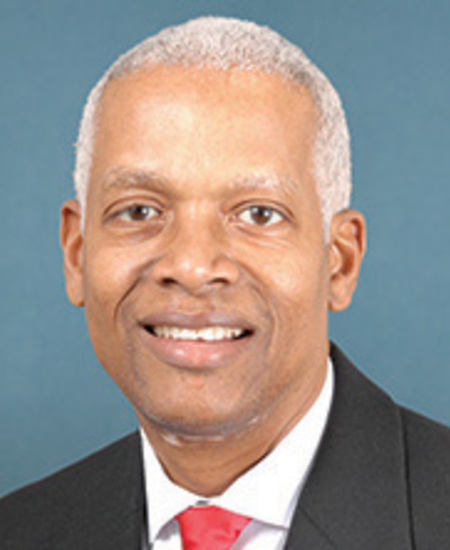
Rep. Henry C. "Hank" Johnson, Jr.
Sponsored bills
Maddy summaryHR 3607, the MARSHALS Act, restructures the U.S. Marshals Service by moving it from the Department of Justice to the judicial branch of the federal government. It requires the Chief Justice, in consultation with a new oversight Board, to appoint marshals for each judicial district (with four-year terms) and establishes a Director to lead the Service. The bill expands the Marshals Service’s duties to include protecting judges, court officers, and witnesses from intimidation, and adds specific roles in assisting with sex offender investigations and locating missing children at the Attorney General’s request. These changes directly affect federal marshals, judicial branch operations, and law enforcement coordination with the Department of Justice.
Maddy summaryHR 3606, the Equity and Inclusion Enforcement Act of 2025, restores private lawsuits to challenge policies causing unintentional discrimination in federally funded education programs. It allows individuals to sue when schools or programs violate existing Title VI regulations (which prohibit discrimination based on race, color, or national origin) as if the violation were intentional. The bill requires education programs receiving federal funds to name a staff member to handle compliance and notify students/employees of this contact. It also creates a new Department of Education position, the Special Assistant for Equity and Inclusion, to coordinate compliance with Title VI and inform the public about their rights under the law. This directly affects schools and educational institutions receiving federal funding.
Maddy summaryThe End For-Profit Prisons Act of 2025 would end federal contracts with for-profit companies for core prison services - such as housing, safety, and discipline - in federal prisons and community confinement facilities. It requires the Bureau of Prisons and U.S. Marshals Service to transition to using federal employees for these services within 6 years (for prisons) and 8 years (for community confinement), with limited exceptions for state/local facilities meeting all standards. The bill also mandates annual facility inspections, regular reports on prison demographics (including race and gender), and new reentry support for released prisoners, such as information on job programs and benefits like Medicaid. These changes directly affect federal correctional agencies, for-profit prison operators, and incarcerated individuals.
Maddy summaryThis bill amends federal law (Section 1983) to eliminate qualified immunity as a defense in civil rights lawsuits. It would prevent government officials from avoiding liability by claiming they acted in good faith, believed their actions were lawful, or didn't know a right was clearly established at the time. This directly affects individuals who sue police, law enforcement, or other officials for violating constitutional rights. The change would apply to lawsuits filed after the bill's enactment, requiring officials to face liability under the original standard of Section 1983.
Maddy summaryHR 3604, the *Reducing Waste in National Parks Act*, requires National Park Service (NPS) units to reduce and eliminate the sale of disposable plastic products (including water bottles, bags, and food containers) where feasible, considering operational factors like cost, waste reduction, and concessioner impacts. Park officials must develop visitor education plans, implement refill stations, and weigh 13 specific factors before eliminating sales, such as infrastructure costs, revenue effects, and public health safety. The program must be evaluated every two years to measure visitor satisfaction, waste collection rates, and safety outcomes. This bill directly affects NPS operations, concessioners, and park visitors who use park facilities.
Maddy summaryHR 3603, the Andrew Kearse Accountability for Denial of Medical Care Act of 2025, requires federal law enforcement officers, Bureau of Prisons staff, and U.S. Marshals Service personnel to provide immediate medical care when someone in federal custody shows medical distress (like breathing difficulties). It makes it a crime for these officials to negligently fail to act, punishable by fines, up to one year in prison, or both. The bill mandates agency inspector general investigations for such failures resulting in harm, requires staff training on medical assistance, and allows state attorneys general to pursue civil legal remedies for affected residents. This directly affects federal custody staff and aims to prevent avoidable harm through enforceable medical response standards.
Maddy summaryThis bill extends existing federal reentry programs under the Second Chance Act through 2030, continuing funding for services supporting people returning to communities after incarceration. It specifically maintains grants for state/local reentry projects (including substance use treatment, housing, and peer recovery services), family-based substance abuse treatment, prison/jail educational programs, career training, and community mentoring by nonprofits. The bill updates program timelines from their previous 2019-2023 authorization period to 2026-2030 without altering the core services provided. It directly affects state/local agencies, prisons, and nonprofit organizations administering these reentry programs. The legislation focuses solely on extending current funding mechanisms, not changing program requirements or creating new initiatives.
Maddy summaryThis bill prohibits the U.S. military from discriminating against service members or applicants based on gender identity. It bans policies that would deny service, involuntarily separate members, deny medically necessary healthcare, or require service in a gender different from one's identity. The law defines "gender identity" broadly to include a person's internal sense of gender, appearance, and mannerisms, regardless of sex assigned at birth. It directly affects transgender and gender-diverse individuals currently serving or seeking to serve in the Armed Forces.
This bill prohibits the President from selling, transferring, or exporting certain defense articles or services to Israel, except in specified circumstances. Defense articles covered by the prohibition include BLU-109 bunker busting bombs, Joint Direct Attack Munition (JDAM) assemblies, and 155mm artillery ammunition. Defense services directly related to such articles are also covered. The President may sell, transfer, or export such defense articles or services to Israel if (1) a law is enacted specifying the purposes for which such articles or services may be used, and (2) Israel provides written assurances that the defense articles or services will be used for those specific statutory purposes and in a manner consistent with certain other laws, including international human rights laws.