

Maddy summaryHR 3708, the "No Place for LGBTQ+ Hate Act," repeals five specific executive orders targeting LGBTQ+ rights and blocks federal funding for their implementation. It directly affects transgender, nonbinary, intersex, and gender-nonconforming individuals by reversing policies that: mandated discrimination in employment/healthcare (EO 14168), reinstated a military ban (EO 14183), restricted transgender youth healthcare (EO 14187), barred transgender female students from sports (EO 14201), and required schools to deny transgender existence (EO 14190). The bill’s key mechanism prohibits federal funds from being used to enforce these orders, effectively nullifying them. This is a procedural repeal bill focused on reversing specific executive actions, not creating new laws.
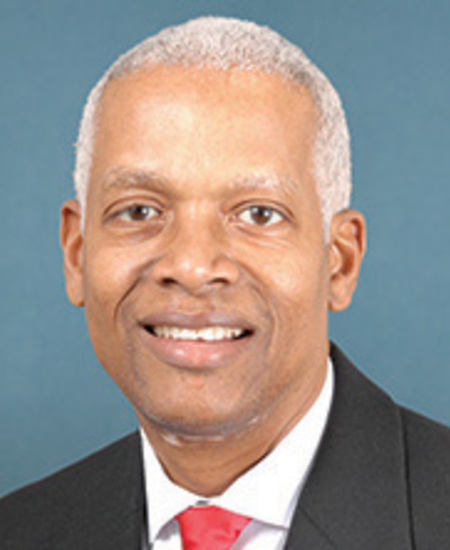
Rep. Henry C. "Hank" Johnson, Jr.
Sponsored bills
Maddy summaryHRES 473 is a non-binding House resolution calling on the U.S. government to urgently use diplomatic efforts to ensure food and medical supplies reach civilians in Gaza. It directly addresses the needs of approximately 2.2 million Palestinians facing acute hunger, including 10,000 children identified with acute malnutrition, following a border blockade that blocked aid from March to May 2025. The resolution specifically urges the White House and State Department to secure "immediate and secure delivery and disbursement" of aid and a lasting end to the conflict, citing collapsed bakeries, exhausted food rations, and a near-total health system collapse.
Maddy summaryThis bill amends the WIC program to replace "drug abuse" with "substance use disorder" throughout its provisions, directly affecting WIC participants who may have substance use disorder. Key mechanisms include creating new nutrition education materials for pregnant individuals with substance use disorder and infants affected by prenatal exposure, establishing an online clearinghouse for these resources, and authorizing $1 million for fiscal year 2026. The changes aim to provide evidence-based, non-judgmental support through updated program materials and outreach. The bill specifically targets WIC participants impacted by substance use disorder, not broader population changes.
Maddy summaryThe Family Vaccine Protection Act makes the Advisory Committee on Immunization Practices (ACIP) an official part of federal law, requiring it to provide vaccine recommendations based on strong scientific evidence. It mandates that the CDC Director must adopt ACIP's recommendations unless they don't meet the evidence standard, and if not adopted, the CDC must explain its decision and notify Congress within 48 hours. The bill establishes procedures for ACIP to review new vaccines within 90 days of licensure and to consider breakthrough therapies or public health emergencies. This act aims to strengthen transparency and evidence-based decision-making in vaccine recommendations for the public health system. It affects the CDC, ACIP, and Congress through formalized processes for vaccine policy development.
Maddy summaryHR 3714, the Forage Fish Conservation Act of 2025, amends federal fisheries law to protect small schooling fish like herring, sardines, and anchovies that serve as critical food for larger marine species. It requires the Secretary of Commerce to define "forage fish" within 12 months and mandates that fishery management plans consider ecosystem needs - such as ensuring enough forage fish remain for predators like tuna and seabirds - when setting catch limits. The bill directs regional fisheries councils to identify unmanaged forage fish stocks and prohibit new commercial fisheries until conservation plans are approved, with specific timelines for action (e.g., adding river herring and shad to management plans within 180 days). These changes directly affect federal fisheries managers, commercial fishing industries targeting forage species, and marine ecosystems dependent on these fish. The law aims to prevent overfishing by linking catch limits to ecological roles, not just fishery yields.
Maddy summaryThis bill repeals key provisions of the Protection of Lawful Commerce in Arms Act (PLCAA), which previously shielded gun manufacturers and dealers from civil lawsuits. It allows gun trace data from the federal Firearms Trace System to be used as evidence in civil court cases involving gun violence. Victims of gun violence (or their families) who sue gun manufacturers, dealers, or distributors in state or federal court can now access and rely on this trace information. The bill directly changes the legal landscape by removing a major barrier to holding gun industry entities accountable in civil cases. It does not alter criminal proceedings or affect gun ownership rights.
Maddy summaryHRES 465 is a resolution expressing the House of Representatives' support for Congress to enact the Older Americans Bill of Rights. It calls for future legislation establishing specific rights for older Americans, including access to dignified healthcare (like affordable prescriptions and caregiver support), financial security (such as strengthened Social Security), and community participation (like accessible housing and voting). The resolution itself does not create new laws but urges Congress to draft such a bill. It directly addresses older Americans, particularly those facing poverty, health disparities, or isolation, based on cited statistics about their challenges.
Maddy summaryThis resolution (HRES 457) is a symbolic measure expressing congressional support for designating June 6, 2025, as "National Gun Violence Awareness Day" and June 2025 as "National Gun Violence Awareness Month." It does not create new laws or policies but encourages public awareness through specific actions: wearing orange on June 6, focusing on gun safety during summer months, and holding community discussions. The resolution references statistics on gun violence deaths and honors Hadiya Pendleton, a teen victim killed in 2013. It directly affects the public by calling for voluntary observance and community engagement, not government mandates.
Maddy summaryHR 3623, the Horse Transportation Safety Act of 2025, prohibits transporting horses between states in motor vehicles with two or more stacked levels. This directly affects horse transporters, including owners and carriers moving horses across state lines. The bill defines "motor vehicle" to exclude rail vehicles but requires compliance with the multi-level ban, imposing civil penalties of $100-$500 per horse transported in violation. Violations are enforced through separate penalties for each horse transported illegally, in addition to other applicable laws.
Maddy summaryThis bill requires the U.S. Attorney General, in collaboration with the Department of Health and Human Services, to collect annual data on law enforcement interactions with people experiencing mental illness starting in 2026. It mandates standardized guidelines for gathering this data and strictly limits its use to anonymized research or statistics - prohibiting any information that could identify individuals. The Attorney General must publish an annual summary of the findings for Congress and the public. The data collection is authorized for fiscal years 2026 through 2036, using the definition of "mental illness" established in existing law (34 U.S.C. §10651(a)(7)).