

Maddy summaryThis bill, titled the Parks to People Active Transportation Act, directs the U.S. Department of Transportation to create a competitive grant program for building and improving greenway paths that connect communities. Eligible organizations such as state and local governments, regional planning councils, and Indian Tribes can apply for funding to construct hard-surfaced walkways, bikeways, or shared-use paths that cross jurisdictional lines and link to public transit. The program prioritizes projects that reduce vehicle congestion, improve safety for pedestrians and cyclists, and address disparities in access to jobs, schools, and recreational opportunities for low-income and minority communities. Grants may cover up to 80 percent of project costs, with higher funding levels available for rural areas and communities with high poverty rates, and the legislation authorizes $300 million annually from 2027 through 2031 to support these initiatives.
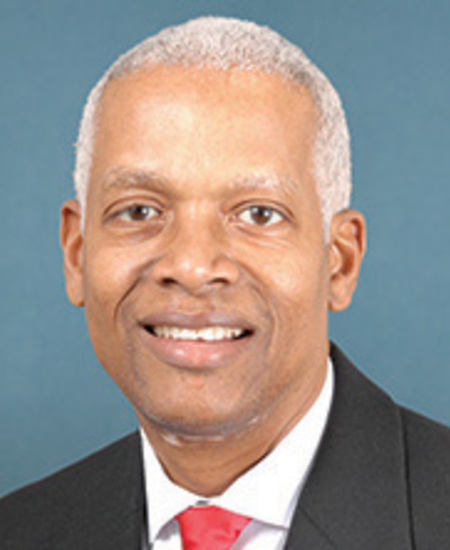
Rep. Henry C. "Hank" Johnson, Jr.
Sponsored bills
Maddy summaryHRES 1086 is a symbolic resolution recognizing the Clotilda as the last known ship to illegally bring enslaved Africans to the U.S. in 1860 (carrying 110 people) and condemning the U.S. government's historical role in enabling the transatlantic slave trade. It acknowledges the lasting harm of slavery on African Americans, specifically honoring the descendants who established Africatown in Alabama and maintaining cultural heritage. The resolution urges support for preserving Africatown and encourages the Architect of the Capitol to consider a memorial on Capitol grounds for the Clotilda and all victims of the slave trade. As a non-binding resolution, it has no policy or funding impact.
Maddy summaryHRES 1087 is a non-binding House resolution recognizing community water fluoridation as a safe and effective public health measure to prevent tooth decay. It acknowledges decades of scientific support for fluoridation, including CDC recognition as a top public health achievement, and highlights its cost-effectiveness in reducing dental treatment costs. The resolution encourages states and localities to maintain or adopt optimal fluoridation levels but does not create new legal requirements or directly affect any specific group. It serves as a symbolic endorsement of existing public health practice, referencing support from major health organizations.
Maddy summaryThis resolution (HRES 1088) is a non-binding House of Representatives measure recognizing the importance of Black history museums and cultural institutions. It formally acknowledges their role in preserving Black American history and contributions, particularly in relation to the 2026 100th anniversary of Black History Month and the U.S. 250th anniversary. The resolution urges the House to affirm that Black history is foundational to American history and calls for federal agencies to support these institutions through funding and partnerships. It also encourages the public to visit these museums, support them financially, and engage with their educational resources. The resolution does not create new laws or allocate funding, but serves as a symbolic endorsement of these institutions' cultural and historical significance.
Maddy summaryHR 7740, the African American History Act of 2026, authorizes $4 million annually for the National Museum of African American History and Culture to develop educational resources and support teaching about African American history. The bill directs the museum to create digital and print materials, provide teacher training, and expand access to curriculum resources for K-12 and college classrooms. It requires annual reports to Congress on fund usage and expires in 2030. This program directly affects educators and students by enhancing classroom materials and professional development on African American history.
Maddy summaryThis bill requires the Bureau of Prisons to employ at least one full-time, board-certified OB-GYN at every federal prison housing female inmates. It mandates specific services including menstrual care, contraception, prenatal care, cancer screenings, and postpartum support, along with patient protections like informed consent and the right to refuse non-emergency care. The bill also requires initial OB-GYN visits within 14 days of incarceration and establishes a process for referrals to other specialists without delays. Annual reports to Congress will track facility compliance, staffing vacancies, and health outcomes like prenatal visits, childbirths, and pregnancy-related deaths.
Maddy summaryThis bill prohibits the Department of Homeland Security from using federal funds to buy or use full-body restraints, which are devices that immobilize individuals. It directly affects DHS personnel and operations by banning the acquisition and utilization of four-point and five-point restraints. The law includes penalties for violations, such as removal from federal service for officers who break the rules or deceive leadership about them. DHS must also submit quarterly reports to Congress detailing compliance status and any instances where restraints were used, including specific information about the individuals restrained and the circumstances involved. Existing contracts for these restraints made before the bill's enactment are exempt from the ban.
Maddy summaryHRES 1081 is a symbolic resolution (not a law) introduced in the U.S. House of Representatives to raise awareness about chordoma, a rare bone cancer affecting the skull and spine. It states the House's "sense" that chordoma patients need increased funding and support for four specific areas: accurate early diagnosis, new treatments and cures, faster translation of research into therapies, and patient-focused drug development. The resolution highlights chordoma's challenges - such as high recurrence rates, limited treatment options, and no known curative drugs - impacting roughly 300 people annually in the U.S. and over 25,000 globally. As a non-binding resolution, it does not create new laws or allocate funds but formally expresses congressional support for addressing this disease.
Maddy summaryHRES 1080 is a symbolic resolution recognizing and celebrating Black History Month 2026, focusing on its theme "A Century of Black History Commemorations." It highlights historical figures and events central to Black history, including Carter G. Woodson’s founding of Negro History Week (the precursor to Black History Month), Juneteenth, and key moments like the 1865 Charleston commemoration. The resolution emphasizes how Black history commemorations counter historical erasure and affirm Black contributions to U.S. history, referencing figures like Mary McLeod Bethune and W.E.B. Du Bois. As a ceremonial resolution, it has no binding effect but aims to raise awareness of Black achievements through official recognition.
Maddy summaryThis bill requires states to create and maintain searchable online directories of career and technical education programs. Each directory must list programs by school district, industry focus, and credentials earned, using open, standardized data formats that work together. States must update the directories annually and include details like course sequences, work-based learning opportunities, and evidence linking programs to local job market needs. These directories directly affect state education agencies and school districts operating career training programs under the Perkins Act.