

Maddy summaryThis bill establishes two new offices within the Supreme Court: an Office of Ethics Counsel and an Office of Investigative Counsel, both authorized by the Chief Justice. The Ethics Counsel office would provide guidance to justices and their spouses on judicial ethics matters including financial disclosures, gift acceptance, political activity, and conflicts of interest, while the Investigative Counsel office would review and investigate ethics complaints filed by congressional leaders against justices. Both offices would be staffed by experienced attorneys with competitive salaries, and the Investigative Counsel would have subpoena power to compel testimony and evidence during investigations. The bill also requires annual reports on ethics advice given and mandates that investigation findings be submitted to the Chief Justice and made available to congressional committees.
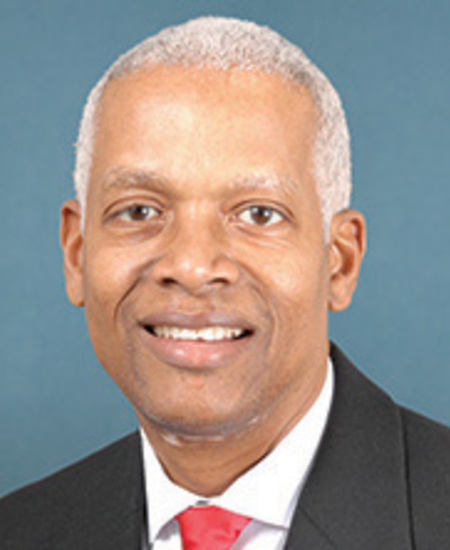
Rep. Henry C. "Hank" Johnson, Jr.
Sponsored bills
Maddy summaryThis bill prohibits using federal funds - including the Judgment Fund or victim compensation programs - to pay any individual prosecuted for the January 6 Capitol attack, even if later pardoned. It also bans creating new compensation funds for these individuals and stops refunds of court-ordered payments like restitution or fines from being returned to rioters. Any funds that would have been refunded must instead be transferred to the Architect of the Capitol. The law directly affects those convicted or pardoned for involvement in the Capitol attack, blocking taxpayer-funded compensation for their actions.
Maddy summaryHRES 1071 is a non-binding resolution recognizing the historical desegregation efforts at Girard College in Philadelphia and the civil rights leaders involved. It highlights how the college, founded in 1848 to admit only poor white male orphans, rejected African-American students in 1954, leading to legal challenges led by figures like Raymond Pace Alexander and Cecil B. Moore. The resolution notes the U.S. Supreme Court’s 1957 ruling that the racial ban was unconstitutional, followed by Girard College’s eventual admission of seven students in 1968 after further court action. The resolution formally acknowledges these events and the leaders’ contributions to expanding civil rights and integration.
Maddy summaryThis bill prohibits Immigration and Customs Enforcement (ICE) officers from conducting most immigration enforcement operations during the four weeks before federal elections. Exceptions only allow enforcement for specific criminal investigations involving a particular individual or to prevent imminent death or serious injury. It directly affects ICE operations by requiring stronger legal justification for actions near election periods. The law amends existing federal code to explicitly include immigration officers in election interference prohibitions.
Maddy summaryHR 7601, the "No Immunity for Glyphosate Act," removes legal protections for manufacturers of glyphosate-based herbicides and elemental phosphorus products. It allows individuals harmed by exposure to these chemicals - through physical injury, illness, disease, or death - to file civil lawsuits against manufacturers, distributors, or sellers in federal court, without requiring proof of fault. The bill explicitly blocks manufacturers from using the "Federal contractor defense" (claiming compliance with government orders) as a shield from liability and preserves all existing lawsuits filed under federal or state law. It does not change the use of these chemicals but ensures victims can seek compensation through courts for damages, including medical costs, lost wages, and punitive damages.
Maddy summaryHR 7608, the Southeast Asian Deportation Relief Act of 2026, prevents the deportation of eligible Cambodian, Laotian, and Vietnamese nationals who entered the U.S. before January 1, 2008, and have continuously resided here since. The bill halts removals for these individuals, grants them permanent work authorization with 5-year permits renewable indefinitely, and eliminates in-person check-ins for immigration supervision. It also requires immigration authorities to reopen past deportation cases for eligible individuals, allowing them to seek relief under the Act’s provisions without retroactive penalties. This directly affects approximately 15,000 long-term Southeast Asian residents, many of whom arrived as child refugees following conflicts the U.S. was involved in.
Maddy summaryHR 7591 requires the U.S. Department of Education to develop and distribute annual firearm safety best practices to schools, focusing on secure storage methods and suicide prevention resources. The bill mandates that local school districts create community-specific guidance incorporating these best practices, to be shared with students, parents, and staff annually before the start of each school year. It specifies that materials must include practical storage solutions (like locks and safes), mental health resources, and neutral information about firearm safety without promoting or discouraging gun ownership. The law directly affects schools receiving federal funding under the Elementary and Secondary Education Act, aiming to reduce firearm-related injuries and suicides through education, not by changing gun ownership laws.
Maddy summaryHR 7599 creates a federal framework for extreme risk protection orders (ERPOs), allowing family members or law enforcement to petition courts to temporarily prohibit individuals from possessing firearms when they pose a risk of harm to themselves or others. The bill establishes a process for issuing ex parte orders (up to 14 days) followed by a hearing within 72 hours to determine if a longer-term order (up to 180 days) should be issued, requiring respondents to surrender firearms to U.S. Marshals or designated law enforcement. Courts must consider specific factors like recent threats, violence, substance abuse, or cruelty to animals before issuing orders, with no fees for petitioners. The law requires law enforcement training to address bias, includes annual reporting requirements, and ensures firearms are returned once the order expires and the individual is eligible to own firearms under federal law.
Maddy summary# Summary of the Workplace Discrimination and Harassment Bill This comprehensive legislation aims to strengthen protections against workplace discrimination and harassment, with several key provisions: ## Key Provisions ### 1. Expanded Protections for Workers - Extends protections to independent contractors, interns, and volunteers - Clarifies that domestic service workers in households are covered under interstate commerce - Prohibits nondisclosure and nondisparagement clauses that cover harassment or discrimination ### 2. Nondisclosure Agreement Restrictions - Makes it unlawful for employers to require nondisclosure or nondisparagement clauses covering harassment or discrimination - Establishes specific requirements for valid settlement agreements: - Requires mutual agreement - Limits scope to statements with knowledge of falsity - Requires written advice to consult an attorney - Provides 21-day consideration period and 7-day revocation period - Prohibits enforcement of such clauses against workers reporting discrimination ### 3. Federal Contractor Compliance - Requires federal contractors to disclose labor and civil rights violations from the past 3 years - Establishes Labor Compliance Advisors within executive agencies - Creates procedures for pre-award and post-award compliance monitoring - Mandates annual reporting on contractor compliance ### 4. Nationwide Grant Programs - **National Grants**: For preventing and addressing employment discrimination through education, outreach, and complaint assistance - **Legal Assistance Grants**: For low-income workers facing employment discrimination - **State Advocacy System**: Creates state-level systems to protect workers' rights, with: - Independent lead entities - Authority to investigate discrimination - Annual reporting requirements - Coordination with federal and state agencies ### 5. Enforcement Mechanisms - Empowers the Equal Employment Opportunity Commission to enforce the bill - Establishes clear procedures and remedies for violations - Requires employers to provide specific information about their compliance with labor laws The bill represents a comprehensive approach to workplace rights, focusing on prevention, reporting, and enforcement mechanisms while ensuring workers can seek redress without fear of retaliation or silencing through restrictive agreements.
Maddy summaryHRES 1061 is a symbolic resolution recognizing the cultural and historical significance of Lunar New Year in 2026. It does not create new laws or policies, but formally acknowledges Lunar New Year's origins (over 4,000 years in China), its celebration as Seollal in Korea and Tết in Vietnam, and its observance by millions of Asian Americans and others in the U.S. The resolution expresses respect for Asian Americans and extends holiday wishes for a "happy and prosperous new year" during the Year of the Horse. As a non-binding resolution, it has no legal effect or direct impact on any individuals or groups.