

Maddy summaryHRES 1107 is a House resolution urging the President to issue a proclamation flying the U.S. flag at half-staff to honor Rev. Jesse Jackson. The resolution recognizes his civil rights leadership, including founding the Rainbow PUSH Coalition and his presidential campaigns in 1984 and 1988, which advanced racial equality and economic justice. This symbolic gesture directly affects the President (as the one who would issue the proclamation) and the public, who would observe the flag at half-staff.
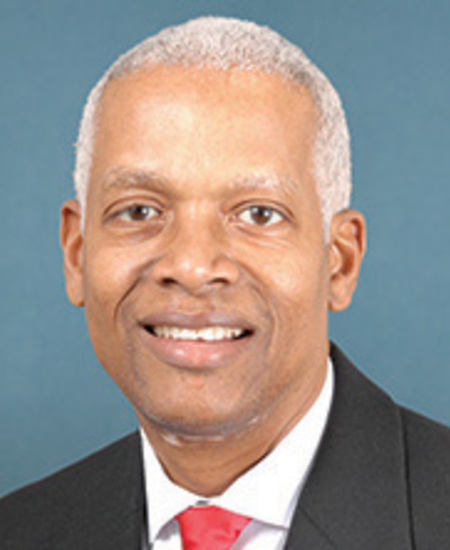
Rep. Henry C. "Hank" Johnson, Jr.
Sponsored bills
Maddy summaryThis bill, titled the Welcoming International Success Act, would nullify a 2025 executive proclamation that restricted entry for certain nonimmigrant workers. It directly affects foreign workers holding H-1B visas and other nonimmigrant categories who were previously subject to the entry restrictions. The key provision states that the proclamation will have no legal force and prohibits the use of federal funds to implement it. This legislation would effectively remove the barriers established by the earlier proclamation, allowing the affected workers to enter the United States under normal immigration procedures.
Maddy summaryHR 7827 restricts the Department of Defense from purchasing or selling military-style assault weapons and certain high-capacity ammunition (like .223 Remington) in commercial markets. It imposes strict requirements on dealers selling firearms or ammunition, including mandatory NICS background checks, limits on high-volume sales, security measures (like surveillance systems), and electronic recordkeeping for transactions. Dealers must also meet crime trace limits (fewer than 24 crime guns traced annually) and implement training on recognizing straw purchases and preventing illegal sales. Government-owned weapons plants must annually report commercial sales data to Congress, including customer locations and revenue.
Maddy summaryThis bill establishes the United States Immigration Courts as an independent judicial system under Article I of the Constitution, separate from the executive branch. It creates three divisions (appellate, trial, and administrative), sets qualifications for judges, and defines jurisdiction for immigration proceedings. The bill transfers functions from the Executive Office for Immigration Review to this new court system, with detailed provisions for appointment, compensation, and retirement of judges. It also requires annual reporting to Congress on court workload and outcomes, including demographic information and case processing times.
Maddy summaryThis bill, the PrEP Access and Coverage Act of 2026, requires most health insurance plans to cover HIV prevention medication without charging patients any out-of-pocket costs. It directly affects people with private insurance, government health programs like Medicare and Medicaid, military health care, and the Indian Health Service. The law mandates that insurance companies cannot require pre-approval for these medications, cannot charge deductibles or copayments for them, and cannot deny or charge higher premiums for life, disability, or long-term care insurance based on someone taking HIV prevention medication. The bill also creates a new public education campaign to increase awareness about HIV prevention options and provides federal funding to states and community organizations to expand access to these services.
Maddy summaryHRES 1106 is a non-binding House resolution honoring the life and legacy of Rev. Jesse Louis Jackson, Sr., a prominent civil rights leader and activist. The resolution recognizes his lifelong work in advancing equality through organizations like Operation PUSH, his leadership in the anti-apartheid movement, and his historic presidential campaigns in 1984 and 1988. It expresses condolences to his family and calls on all Americans to continue his legacy of promoting civil rights and unity. As a commemorative resolution, it does not create new laws or affect any policies.
Maddy summaryThis bill, known as the Direct File Act of 2026, would establish a government-run online system allowing taxpayers to prepare and file their individual income tax returns for free. The legislation prohibits the Treasury Department from entering into agreements that restrict its ability to provide tax preparation or filing services, and it voids any existing contracts with such restrictions. The program would use IRS data to simplify filing, include customer support, be available in multiple languages, and allow users to file even if they are not required to. It also enables taxpayers in participating states to file state and local returns alongside their federal returns, with funding provided to states that meet certain standards.
Maddy summaryThe DISCLOSE Act of 2026 aims to increase transparency in election spending and prevent foreign influence. It expands the ban on foreign money to cover federal, state, and local elections, including ballot initiatives and judicial nominations, and criminalizes using corporations to conceal these funds. The bill mandates that organizations spending over $10,000 on campaign-related activities, such as independent expenditures or judicial nomination advocacy, disclose their beneficial owners and top donors. Additionally, it establishes new "Stand By Every Ad" disclaimers for political communications, requiring the highest-ranking official to approve the message and, for certain ads, list their top funders. These provisions directly affect non-candidate organizations, individuals involved in political and judicial nomination spending, and foreign nationals.
Maddy summaryHR 7803, the "Save Medicare Act," renames Medicare Advantage plans to "Alternative Private Health Plan" for all federal references, including in the Social Security Act. It requires health plans to stop using "Medicare" in their titles after enactment, imposing a $100,000 civil penalty per violation. The change applies to all Part C Medicare plans and mandates a full transition by October 15, 2023, with a temporary period allowing both terms to be used during the switch. This bill directly affects private health insurers offering Medicare Part C plans and federal agencies managing Medicare programs. The policy change is solely about terminology, not benefits or coverage.
Maddy summaryThe Stop Militarizing Law Enforcement Act reforms the Department of Defense's 1033 program, which transfers surplus military equipment to federal, state, and local law enforcement agencies. The bill prohibits the transfer of specific military-grade items, including controlled firearms (like automatic weapons), ammunition, grenades, mine-resistant ambush-protected vehicles, and silencers. For any permitted transfers, non-federal agencies must notify their local community, get approval from their local governing body, and certify the equipment's necessity for specific public safety or emergency purposes. The bill also mandates increased accountability for all transferred property, prohibits agencies from taking ownership, and requires the return of equipment if an agency is involved in widespread civil liberties abuses using that property.