

Maddy summaryThe Perinatal Workforce Act directs the Department of Health and Human Services to issue guidance encouraging hospitals, insurers, and maternity care providers to recruit and retain diverse healthcare professionals, including midwives, physician assistants, and perinatal health workers, while incorporating implicit bias and racism training into their practices. The bill authorizes $15 million annually from 2027 to 2031 for grants that establish or expand accredited education programs for perinatal health professionals, prioritizing schools that recruit students from racial and ethnic minority groups and those planning to practice in areas with maternal health disparities. Additionally, the legislation creates a separate grant program for nursing schools to provide scholarships to students pursuing careers in maternal and perinatal health, with similar diversity and training requirements. The act also requires the Secretary of HHS to conduct a study on respectful maternity care practices and mandates periodic reports from the Government Accountability Office on barriers to maternal health education and access to care.
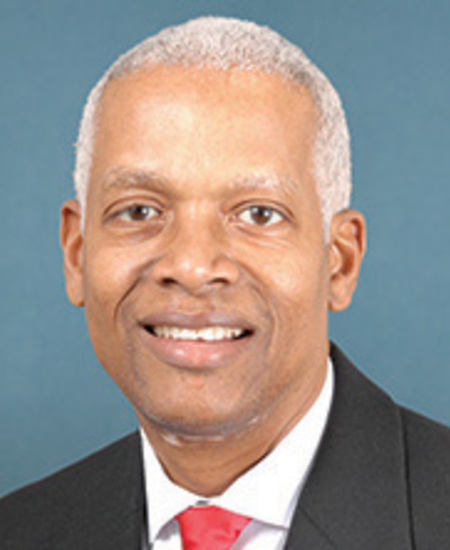
Rep. Henry C. "Hank" Johnson, Jr.
Sponsored bills
Extending WIC for New Moms Act This bill amends the Special Supplemental Nutrition Program for Women, Infants, and Children (WIC) to extend the eligibility periods for breastfeeding and postpartum women. Specifically, a state program may elect to certify a breastfeeding woman for up to 24 months (currently 1 year) postpartum. The bill also expands the eligibility period for postpartum women to up to 24 months after termination of pregnancy (currently 6 months). The Department of Agriculture must submit a report to Congress evaluating the effect of these changes to the program on (1) maternal and infant health outcomes, (2) breastfeeding rates, and (3) qualitative evaluations of family experiences under WIC.
Maddy summaryThis bill establishes a federal task force to address maternal health disparities by coordinating efforts across multiple government agencies and community stakeholders to reduce preventable maternal deaths and serious health complications. The task force will include representatives from various departments such as Health and Human Services, Housing and Urban Development, and Transportation, along with community leaders, patients, and healthcare providers focused on maternal health. Additionally, the bill authorizes $100 million over five years to provide grants to community organizations for addressing social determinants of maternal health including housing, transportation, nutrition, employment, and environmental conditions. These grants prioritize areas with high rates of maternal mortality and poverty, and recipients must submit annual reports on their activities and outcomes. The legislation defines key terms such as maternal mortality and social determinants of maternal health to guide implementation and reporting requirements.
Maddy summaryThis bill expands federal labor protections to incarcerated workers by explicitly including them under the Fair Labor Standards Act, regardless of whether they work in publicly or privately operated correctional facilities. It defines these workers as individuals performing labor within prison programs, work release initiatives, or facility operations, and clarifies that they are employed by either the public agency or the private contractor running the facility. A key provision allows employers to deduct the cost of board, lodging, and certain court-imposed fees from an incarcerated worker's wages without counting these deductions against minimum wage requirements. The legislation also specifies which fees qualify for deduction, such as court surcharges and filing costs, while explicitly excluding payments for child support, victim compensation, civil judgments, and criminal fines.
Maddy summaryThe Energy Bills Relief Act aims to lower household energy costs and accelerate the development of low-cost, clean energy by modifying federal tax credits, expanding weatherization programs, and streamlining permitting processes. Key provisions include restoring tax incentives for renewable energy projects, increasing funding for low-income heating assistance, and requiring federal agencies to treat wind, solar, and storage projects with the same procedural fairness as oil and gas projects. The bill also establishes new incentives for upgrading the electricity grid, such as tax credits for transmission lines and grants for wildfire prevention measures, while creating mechanisms to ensure utilities serve public interests and protect consumers from price volatility.
Maddy summaryThis bill requires the Department of Veterans Affairs (VA) to cover abortion care, counseling, and related medication as part of standard hospital and medical services for eligible veterans and certain dependents. It amends VA healthcare law to explicitly include these services under existing coverage for veterans qualifying under section 1703 and dependents eligible under section 1781(a). The policy directly affects veterans and their dependents enrolled in VA healthcare programs by expanding covered benefits to include abortion-related care. This is a concrete policy change to VA healthcare benefits, not a broader abortion law.
Maddy summaryHCONRES 78 is a symbolic resolution designating March 10, 2026, as "Abortion Provider Appreciation Day" to honor abortion providers and staff. It recognizes their work amid rising violence, clinic closures, and abortion restrictions following the Dobbs decision, citing threats and challenges faced by providers. The resolution expresses congressional support for providers' safety and access to abortion care, condemning policies that restrict access. It does not create new laws or alter existing policies - it solely affirms Congress’s stance through a symbolic gesture. This is a procedural resolution focused on recognition, not policy change.
Maddy summaryThis bill would require infant formula manufacturers to conduct standardized testing for specific pathogens and microorganisms in both their facilities and finished products. It mandates that companies report positive test results to the FDA within one business day and retain records of these findings for inspections. The legislation also requires the FDA to notify congressional committees within one business day of receiving positive test results or issuing certain inspection classifications. Additionally, the bill establishes clear inspection standards that apply to all infant formula products regardless of where they are made.
This concurrent resolution directs the President to terminate the use of U.S. Armed Forces from hostilities against Iran or any part of the Iranian government or military unless a declaration of war or authorization to use military force for such purpose has been enacted. The resolution specifies that it shall not be construed to prevent the United States from defending itself from imminent attack.
Maddy summaryHRES 1109 is a symbolic resolution supporting National Women and Girls HIV/AIDS Awareness Day, observed annually on March 10. It recognizes the disproportionate impact of HIV/AIDS on women and girls in the U.S., particularly women of color who face higher infection rates and barriers to care. The resolution calls for increased investment in prevention, treatment, and education programs to reduce new infections and address health disparities, while emphasizing the need for culturally responsive services and comprehensive sexual health education. It does not create new laws or funding but expresses congressional support for ongoing efforts to end the HIV epidemic among women and girls.