Election Worker and Polling Place Protection Act This bill addresses certain protections for election workers and polling places. In particular, the bill prohibits, with enhanced penalties for certain types of threats and harms (1) intimidation of poll watchers, election officials, and election agents, vendors, and contractors involving violence or threats of harm; and (2) physical damage to or threats to physically damage a polling place, tabulation center, or other election infrastructure.
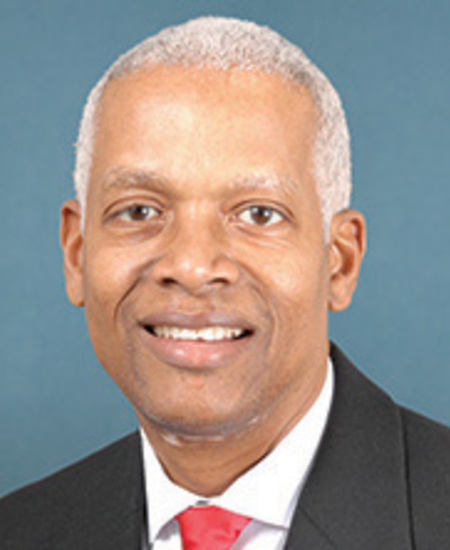
Rep. Henry C. "Hank" Johnson, Jr.
Sponsored bills
Special Inspector General for Law Enforcement Act This bill establishes the Office of the Special Inspector General for Law Enforcement. The bill sets forth the duties of the office, including investigating racial profiling, officer misconduct, use of force, use of deadly force, or pattern or practice of unconstitutional misconduct involving federal law enforcement agencies or officers; and use-of-deadly-force cases referred by state and local law enforcement agencies. The bill requires a state or local government that receives funding under the Edward Byrne Memorial Justice Assistance Grant program or the Community Oriented Policing Services grant program to have in effect a law establishing a process by which use-of-deadly-force cases can be referred to the office for investigation.
Fresh Start Act of 2022 This bill establishes a federal statutory process to expunge records related to certain nonviolent criminal offenses. The bill defines the nonviolent offenses eligible for expungement; it establishes qualifications for an eligible offender; and it sets forth procedures for filing an expungement petition.
End Prison Gerrymandering Act This bill requires the Department of Commerce, beginning with the 2030 decennial census, to attribute an individual incarcerated in a correctional center to the individual's last place of residence before incarceration. Further, a state must treat such an individual's last place of residence in the state before incarceration as the individual's place of residence for purposes of congressional redistricting.
Climate Resilience Workforce Act This bill sets forth provisions to establish a climate resilience workforce, a national climate resilience action plan, an Office of Climate Resilience within the White House, and related efforts and entities.
Constitutional Accountability Act This bill extends civil liability to federal, state, and local government entities and officials for constitutional violations committed by law enforcement officers. Current law provides a statutory civil cause of action against state and local government actors (e.g., law enforcement) for violations of constitutional rights (also known as Section 1983 lawsuits); the Supreme Court has also found an implied cause of action against federal law enforcement officers in certain situations (e.g., Fourth Amendment violations). However, under the judicial doctrine of qualified immunity, government officials performing discretionary duties are generally shielded from civil liability except when their actions violate clearly established rights of which a reasonable person would have known. Additionally, under the doctrine of sovereign immunity, federal and state government entities generally cannot be sued without their consent. Further, the Supreme Court has held that a local government entity cannot be sued for an injury inflicted by its employees. The bill provides a statutory civil cause of action against and extends liability to federal, state, and local government entities and officials for violations of constitutional rights committed by law enforcement officers in their employment, regardless of any immunity that would otherwise apply.
Comprehensive Addiction Resources Emergency Act of 2021 This bill establishes programs, grants, and other activities to address substance use disorders. Specifically, the Department of Health and Human Services (HHS) must establish a program for purchasing and distributing opioid overdose reversal drugs for states and Indian tribes. HHS must also award grants for and otherwise support addressing substance use, particularly in states, tribes, territories, and localities with disproportionately high drug overdose rates; increasing access to preventive, medical, recovery, and related services; developing innovative models of delivering treatment and harm reduction services; and expanding the treatment capacity of Medicaid providers. In addition, HHS must issue model standards of care for treatment services and recovery residences and may award grants for training health care professionals. The bill also supports prevention and treatment services for workers, addiction and pain management research, and data collection on substance use disorders. Further, dispensers, distributors, and manufacturers of schedule II controlled substances (e.g., oxycodone), with the exception of opioid treatment programs, must certify that they maintain effective drug diversion controls. Violators are subject to specified civil and criminal penalties. Collected penalties shall be used for the grant programs and other substance use disorder activities established under the bill.

Assessing Monetary Influence in the Courts of the United States Act or the AMICUS Act This bill requires certain disclosures in relation to amicus briefs (i.e., briefs that are filed by those who are not a party to a case but have an interest in the case). Specifically, each amicus brief that is filed in a U.S. court of appeals or the Supreme Court must list the name of any person who contributed (1) to the preparation or submission of the brief, (2) at least 3% of the gross annual revenue of the entity filing the brief for the previous year, or (3) more than $100,000 in the previous year to the filer. Such requirements do not apply to routine commercial transactions that are unrelated to amicus brief filings. The bill also prohibits those who file amicus briefs from giving gifts or providing travel to a judge of a U.S. court of appeals or a justice of the Supreme Court, except for reimbursements for travel expenses in relation to law school appearances. Violators are subject to civil penalties.
Family Unity Act of 2021 This bill modifies the scope of a statutory prohibition against the judicial review of claims involving the removal of a non-U.S. national ( alien under federal law). Currently, a court is barred from reviewing any claim by a non-U.S. national arising from a decision by the Department of Justice (DOJ) to commence proceedings, adjudicate cases, or execute removal orders against a non-U.S. national. Under this bill, a court is only barred from reviewing a claim by a non-U.S. national challenging a discretionary decision by DOJ to take such actions.
Fair and Independent Experts in Clemency Act or the FIX Clemency Act This bill establishes the independent U.S. Clemency Board, which shall review applications and recommend individuals for clemency directly to the President. It also abolishes the Office of the Pardon Attorney of the Department of Justice and transfers its functions, assets, and personnel to the board.