Bivens Act of 2021 This bill provides individuals with a statutory right to sue and recover damages from federal officials for violations of their constitutional rights. Currently, individuals have a statutory right to bring such suits against state or local officials (e.g., law enforcement), commonly known as Section 1983 suits or Bivens actions. Although the statute does not explicitly authorize such suits against federal officials, the Supreme Court has found this right to be inferred from the Constitution in certain situations (e.g., Fourth Amendment violations committed by federal law enforcement officers).
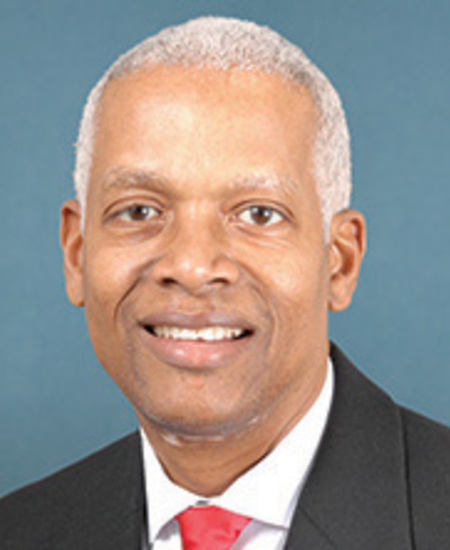
Rep. Henry C. "Hank" Johnson, Jr.
Sponsored bills
Stop Corporate Capture Act This bill modifies the process for federal agency rulemaking. Specifically, it (1) requires interested parties who submit a study or research as part of a comment to a proposed rule to disclose the source of the funding for the study or research, (2) limits the use of the negotiated rulemaking process to government agencies, (3) provides statutory authority for the judicial principle that requires courts to defer to an agency's reasonable or permissible interpretation of a federal law when the law is silent or ambiguous (i.e., the Chevron doctrine), and (4) establishes an Office of the Public Advocate to support public participation in the rulemaking process.
Repeal Existing Policies that Encourage and Allow Legal HIV Discrimination Act of 2022 or the REPEAL HIV Discrimination Act of 2022 This bill addresses federal and state laws, policies, and regulations that may burden people living with HIV/AIDS. Specifically, the bill directs the Department of Justice (DOJ), the Department of Health and Human Services (HHS), the Department of Defense (DOD), and the White House Office of National AIDS Policy to initiate a national review of federal (including military) and state laws, policies, regulations, and judicial precedents and decisions regarding criminal and related civil commitment cases involving people living with HIV/AIDS. DOJ must transmit to Congress and make publicly available the results of such review with related recommendations. The White House Office of National AIDS Policy must also develop and publicly release guidance to assist states with handling relevant cases. The office, DOJ, HHS, and DOD must transmit to the President and Congress any proposals necessary to implement adjustments to federal laws, policies, or regulations. This bill shall not be construed to discourage the prosecution of individuals who act with the intent to do harm to another individual by intentionally transmitting HIV.
Bringing an End to Harassment by Enhancing Accountability and Rejecting Discrimination in the Workplace Act or the BE HEARD in the Workplace Act This bill expands protections against discrimination and harassment in the workplace and raises the minimum wage for tipped employees. Specifically, the bill (1) makes it an unlawful employment practice to discriminate against an individual in the workplace based on sexual orientation, gender identity, pregnancy, childbirth, a medical condition related to pregnancy or childbirth, or a sex stereotype; and (2) provides a statutory definition for what constitutes workplace harassment. Further, these protections apply to all workplaces, regardless of size, and to all workers, including independent contractors, interns, volunteers, and trainees. The bill prohibits employers from entering into contracts or agreements with workers that contain certain nondisparagement or nondisclosure clauses and prohibits certain predispute arbitration agreements and postdispute agreements. It also establishes grant programs to (1) prevent and respond to workplace discrimination and harassment, (2) provide legal assistance for low-income workers, and (3) establish a system of legal advocacy in states to protect the rights of workers. The bill further provides employees the right to retain their tips and it increases, in specified annual increments, the minimum wage for tipped employees to match the federal minimum wage for nontipped employees. Additionally, the bill requires the Equal Employment Opportunity Commission to provide specified training and resource materials, establish and convene a harassment prevention task force, and establish an Office of Education and Outreach with regard to prohibited discrimination and harassment in employment. The bill also requires specified studies, reports, and research on prohibited workplace harassment.

Private Prison Information Act of 2021 This bill specifies that a record related to a nonfederal prison, correctional, or detention facility must be considered a federal agency record for purposes of the Freedom of Information Act (FOIA). A nonfederal prison, correctional, or detention facility must disclose information under FOIA unless the information is exempt from disclosure or the disclosure is prohibited by law. The term nonfederal prison, correctional, or detention facility means (1) a private prison, correctional, or detention facility; or (2) a state or local prison, jail, or other correctional or detention facility.
Open Courts Act of 2021 This bill requires the Administrative Office of the U.S. Courts to establish a single electronic system for all public court records that is publicly accessible for free. Under the existing Public Access to Court Electronic Records (PACER) system, users are charged fees for accessing court documents. To fund the development of the new consolidated system, the Judicial Conference must temporarily establish a schedule of additional fees for higher-volume nongovernmental users of PACER. To fund the operations of the new system, the Judicial Conference shall collect an annual fee from each federal agency equal to that agency's PACER fees in 2018, adjusted for inflation. The Judicial Conference may also establish reasonable filing fees based on specified factors, including the extent of a person's use and the interests of justice.
Reimagining Asylum Processing Act of 2021 This bill modifies the processing of asylum seekers, including by establishing humanitarian processing centers along the southern border. The Department of Homeland Security must establish at least five humanitarian processing centers to process adult asylum seekers who arrive at the southern border and did not arrive as part of a family unit with minor children. The bill imposes certain requirements on these processing centers, including by (1) requiring a rest period of at least 72 hours from the asylum seeker's arrival before an asylum officer may conduct an interview to determine whether there is a credible fear of persecution, (2) limiting an asylum seeker's detention at a processing center to no longer than 15 days, (3) requiring the processing center to provide legal counsel and interpreters, and (4) requiring that appropriate nongovernmental organizations are authorized to monitor the processing centers for human rights abuses. The bill also changes the processing of asylum seekers generally, including by (1) removing provisions requiring the mandatory detention of an asylum seeker after the credible fear interview; (2) prohibiting the use of information obtained from the interview for immigration enforcement; and (3) requiring an asylum officer conducting the interview to consider whether an asylum seeker is eligible for other forms of relief, such as special immigrant juvenile status.
No Bonuses in Bankruptcy Act of 2021 This bill prohibits debtors in bankruptcy proceedings from paying bonuses to certain individuals including insiders (such as relatives) and highly compensated employees.
Cameroon TPS Act of 2021 This bill permits nationals of Cameroon to qualify for temporary protected status, which prevents their removal from the United States and allows them to obtain employment and travel authorization. Such status shall be available to qualifying nationals of Cameroon for 18 months starting from this bill's enactment.
Alternatives to Detention Act of 2021 This bill requires the Department of Homeland Security (DHS) to establish programs that are alternatives to detention for immigration enforcement and addresses related issues. Such programs must be available regardless of whether an alien is subject to a removal order or whether a charge of removability is pending, but shall not be available to certain aliens, such as those subject to mandatory detention. DHS or an immigration judge must determine, within 72 hours of an individual being taken into custody for immigration enforcement, the appropriate level of supervision for the individual and whether the individual may participate in such an alternative program. For a member of a vulnerable population (such as a victim of trafficking) or a caregiver (such as a parent of a minor), there must be a presumption that such an individual must be placed in a community-based supervision program. DHS must restore the Family Case Management Program as an alternative to detention. This program must provide community supervision and community support services through a contract with a nongovernmental organization. DHS must establish a Coordinator of Alternatives to Detention position. The Government Accountability Office must report on the use and effectiveness of the programs established under this bill.