This resolution expresses support for keeping AM radios in cars. (Several car manufacturers announced plans to remove AM radio options from some or all of their models.)
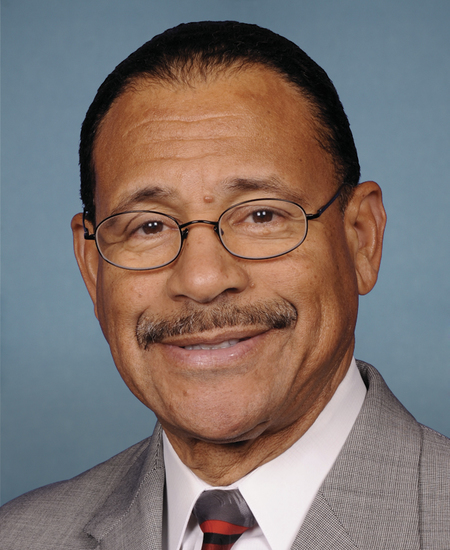
Rep. Sanford D. Bishop, Jr.
Sponsored bills
Maddy summaryThe American Family Act establishes a monthly child tax credit of $250 per month for each child under age 6 and $300 per month for each child aged 6-18, with income limits of $150,000 for joint filers and $112,500 for other filers. The credit is refundable, meaning it can be paid even if the taxpayer owes no income tax, and will be adjusted annually for inflation. The bill includes detailed rules for determining eligibility, including requirements that the child resides with the taxpayer for more than half the month and provisions to prevent fraud through recapture of improperly received payments. The credit will be paid monthly in advance rather than as a single annual payment, with specific mechanisms for calculating and distributing the payments.
Maddy summaryHR 3855 establishes the National Digital Reserve Corps within the General Services Administration to recruit digital and cybersecurity professionals for temporary assignments to federal agencies. It requires participants to commit to a 3-year service term (minimum 30 days annually) with annual compensation capped at $10,000, while agencies receive support for needs like cybersecurity, data management, and digital project development. The program authorizes $30 million for implementation, mandates GSA to manage recruitment and assignments, and requires annual congressional reports tracking reservist numbers, agency requests, and assignment outcomes. Covered agencies include major departments like the U.S. Postal Service and the Executive Office of the President.
Maddy summaryHR 3877, the Office of Small Farms Establishment Act of 2023, creates a new Office within the USDA to specifically support small farms, ranches, and forest operations. It defines "small" as operations under 180 acres (or meeting regional/production-based criteria) with less than $350,000 in annual gross cash income. The Office will coordinate USDA programs, review policies disadvantaging small operations, and provide direct grants of up to $25,000 for equipment repairs, land acquisition, conservation practices, and business planning. The bill authorizes $15 million annually for the Office's operations and $10 million for grants, with specific liaisons appointed from key USDA agencies.

Maddy summaryHR 3768, the Midwives for MOMS Act of 2023, provides federal grants to support midwifery education and increase access to midwifery services. It allocates $15 million annually (2024-2028) for accredited midwifery schools to directly support students, expand programs, and train clinical instructors, with 50% of funds dedicated to student support. The bill also authorizes $20 million annually for nurse-midwifery programs in nursing schools, prioritizing students who will work in underserved health professional shortage areas and increasing racial/ethnic minority representation. These provisions directly affect midwifery students, educational institutions, and communities with limited access to maternity care, aiming to expand the midwifery workforce through targeted funding.
This bill establishes a student loan deferment and forgiveness program for physicians who provide mental and behavioral health services (including substance abuse prevention and treatment services) to racial and ethnic minority groups and low-income individuals. To carry out the program, the Department of Health and Human Services must pay the outstanding principal and interest (up to a maximum limit) on specified federal student loans for eligible physicians who work in qualifying employment. While participating in the program, physicians do not need to pay the principal of their loans but must pay any interest that accrues. To be eligible, physicians must complete a mental or behavioral health professions degree or certificate at a minority-serving institution of higher education. Physicians must also provide mental and behavioral health services for five consecutive years while working either (1) as solo practitioners where at least 30% of patients receive Medicaid and at least 50% of patients are members of racial and ethnic minority groups; or (2) at institutions that accept Medicaid and where at least 50% of patients served by the institution are members of racial and ethnic minority groups.
Maddy summaryThis bill prohibits the Department of Veterans Affairs from changing its anesthesia care policies to allow nurse anesthetists (CRNAs) to provide anesthesia independently without a physician anesthesiologist. It specifically blocks implementation of a 2016 proposed rule that would have expanded CRNAs' authority in VA facilities. The law maintains current requirements that physician anesthesiologists must oversee or provide anesthesia care for veterans during surgical procedures. Emergency orders for veteran safety during surgery remain permitted under the bill's exception clause.
Maddy summaryHR 3792 extends U.S. security funding for Israel through 2028 (Section 3) and expands energy cooperation to include advanced nuclear technologies and carbon capture (Section 5). It requires annual reports on regional security partnerships involving Israel (Section 6) and ensures countries in the Abraham Accords can access U.S. development programs (Section 8). The bill also mandates reports on diplomatic efforts against ICC investigations targeting the U.S. and Israel (Section 10) and encourages people-to-people programs to strengthen the Abraham Accords (Sections 7, 9). These provisions directly affect Israel’s diplomatic engagement, security partnerships, and economic cooperation in the Middle East.
Maddy summaryHRES 455 is a symbolic House resolution expressing support for Black service members who died protecting the U.S. during military conflicts while facing racism in the Armed Forces and systemic inequities. It acknowledges their historical contributions and struggles, citing examples from the Revolutionary War through the Global War on Terror. The resolution has no legislative effect - it solely affirms recognition on Memorial Day without proposing policy changes or requiring action. As a non-binding resolution, it directly affects public acknowledgment of this group but does not alter military policies or address systemic issues.
Maddy summaryThis bill creates a new tax credit for expenses related to "qualified access technology for the blind" under the Internal Revenue Code. It allows taxpayers to claim a credit of up to $2,000 per year (adjusted for inflation) for costs paid for hardware, software, or IT that converts visual information into formats usable by blind individuals, covering the taxpayer, their spouse, or a dependent who is blind. The credit is limited to $2,000 over any three consecutive tax years per blind individual and expires after 2028. It directly affects blind individuals and their families who purchase qualifying assistive technology. The credit cannot be claimed for expenses already covered by other tax deductions or credits.