

This concurrent resolution declares that Congress should not impose any new performance fee, tax, royalty, or other charge relating to the public performance of sound recordings on a local radio station for broadcasting sound recordings over the air, or on any business for such public performance of sound recordings.
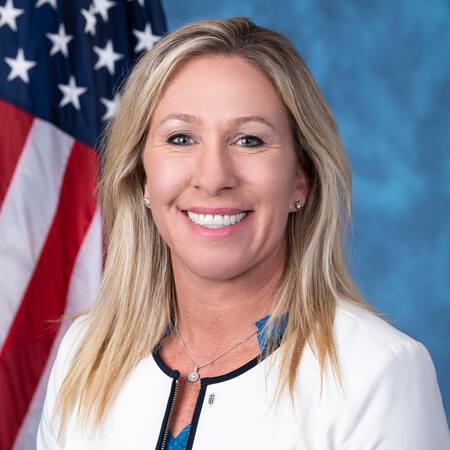
Rep. Marjorie Taylor Greene
Sponsored bills
Maddy summaryHR 1301, the Death Tax Repeal Act, would eliminate the federal estate tax and generation-skipping transfer tax for estates of individuals dying on or after its enactment date. It directly affects individuals inheriting significant assets, as it removes taxes on estates exceeding $10 million (adjusted for inflation) and repeals taxes on large transfers between generations. The bill modifies the gift tax by establishing a $10 million lifetime exemption with annual inflation adjustments, replacing previous tax brackets. It applies to estates, gifts, and transfers occurring on or after the bill's effective date.
Maddy summaryHR 1313, the "One Flag for All Act," prohibits displaying any flag other than the U.S. flag on the exterior or in publicly accessible areas (like lobbies or hallways) of covered public buildings, including government offices, military bases, and embassies. The bill allows specific exceptions, such as POW/MIA flags, state flags for congressional offices, historical U.S. flags (like the Betsy Ross flag), and flags representing military units or tribal governments. This law directly affects how flags are displayed in federal and public spaces, requiring exclusive use of the U.S. flag in those designated areas while preserving established exceptions.
Maddy summaryHR 1233 prohibits federal agencies from using taxpayer money to fund specific research programs. It bans spending on disinformation research grants, Secure and Trustworthy Cyberspace grants, and the National Science Foundation's Track F program focused on "Trust and Authenticity in Communications Systems." This directly affects federal departments and agencies that would otherwise allocate funds for these research areas, as well as researchers or institutions seeking such grants. The bill makes a concrete change by blocking federal funding for these particular research initiatives, without altering broader disinformation policies or creating new regulations.
This bill repeals the Impoundment Control Act of 1974 (ICA). The ICA generally limits the authority of the President to impound (i.e., withhold from obligation or expenditure) funds that have been appropriated by Congress and establishes related procedures. It also establishes expedited legislative procedures that Congress may use to consider legislation to enact rescissions proposed by the President.
Maddy summaryThe Laken Riley Act expands mandatory detention for immigrants convicted of certain property crimes like burglary, theft, or shoplifting by adding these offenses to existing immigration detention criteria. It requires the federal government to issue detainers for such individuals and take custody if not detained by local authorities. The bill also grants state attorneys general standing to sue federal officials in federal court if they believe immigration enforcement actions (like releasing detained immigrants) cause the state financial harm exceeding $100. This creates new legal pathways for states to challenge federal immigration decisions through expedited lawsuits.
Maddy summaryThis bill would abolish the United States Agency for International Development (USAID) by ending all federal funding for its operations. Starting on the bill's enactment date, no funds may be used for USAID's functions under the Foreign Assistance Act or other laws, and any unused funds as of the day before enactment would be rescinded. All remaining USAID assets and liabilities would be transferred to the Secretary of State. The bill directly affects USAID's ability to carry out international development and humanitarian assistance programs.
Maddy summaryThis bill would abolish the Fogarty International Center for Advanced Study in the Health Sciences. If enacted, it would end the center's operations and funding, directly affecting its staff and ongoing international health research programs. The legislation specifically targets the elimination of this National Institutes of Health division without altering broader health research policies.
Maddy summaryHR 1040, the Senior Citizens Tax Elimination Act, would stop taxing Social Security benefits for seniors by repealing the current tax rule that includes some benefits in gross income. It directly affects senior citizens who currently pay federal income tax on portions of their Social Security payments. The bill adds a provision stating Section 86 of the tax code (which taxes Social Security benefits) no longer applies after enactment. To offset the lost tax revenue, the bill requires the government to appropriate funds to the Social Security and Railroad Retirement trust funds, ensuring they remain fully funded without requiring tax increases.
Maddy summaryHR 1052, the UNPLUG EVs Act, rescinds unobligated federal funds from two electric vehicle infrastructure programs. It targets unused balances from the National Electric Vehicle Infrastructure Formula Program (established by the Infrastructure Investment and Jobs Act) and charging/fueling grant programs under federal highway law. These rescinded funds will be deposited into the U.S. Treasury's general fund to reduce the federal deficit. The bill does not alter existing program requirements or affect current EV infrastructure projects, only redirecting unspent allocated funds.