

Maddy summaryThe PRIME Act exempts custom slaughter facilities from federal meat inspection requirements when they follow state laws and sell meat exclusively within the same state. It specifically allows facilities to slaughter animals and prepare meat without federal oversight if the products go only to household consumers or local businesses (like restaurants, hotels, or grocery stores) serving consumers directly in that state. The bill clarifies that this exemption does not override stricter state regulations governing custom slaughter or meat sales. This primarily affects small-scale slaughter operations and local food businesses operating within a single state's borders.
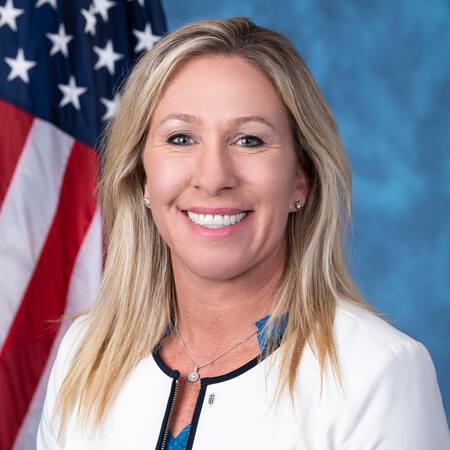
Rep. Marjorie Taylor Greene
Sponsored bills
Maddy summaryThe End the Vaccine Carveout Act changes the National Vaccine Injury Compensation Program (NVICP) to allow individuals to sue vaccine manufacturers or administrators directly in court for vaccine-related injuries or deaths, without first needing to file a claim under the NVICP. It removes time limits for filing NVICP claims and repeals rules that previously let people choose between the program and a lawsuit for the same injury. The bill also specifically excludes COVID-19 vaccines from the definition of "covered countermeasure," meaning they are no longer protected by the same emergency liability shield that applied to other pandemic vaccines. This affects vaccine manufacturers, providers, and individuals who experience vaccine-related harm, shifting liability from the NVICP to the court system for most cases.
Maddy summaryHR 1919, the "Anti-CBDC Surveillance State Act," prohibits the Federal Reserve from developing, testing, or issuing any central bank digital currency (CBDC) or similar digital assets. It specifically bans the Fed from offering direct financial products to individuals, maintaining individual accounts, or issuing CBDCs directly or indirectly through intermediaries like banks. The bill also blocks the Fed from using any digital asset for monetary policy and clarifies that physical currency's privacy protections remain intact. This policy directly affects the Federal Reserve System's ability to create or manage digital monetary tools.
Maddy summaryThis resolution (HRES 583) condemns the July 7, 2025, attack on a U.S. Border Patrol facility in McAllen, Texas, where Ryan Louis Mosqueda injured agents and police. It expresses support for the affected personnel, wishes them a full recovery, and reaffirms the House’s backing of Border Patrol officers in their border security mission. The resolution directly addresses the McAllen community and Border Patrol staff impacted by the violence, serving as a symbolic statement of solidarity without creating new laws or policies.
Maddy summaryHR 4403, the Clear Skies Act, prohibits intentional weather modification activities like cloud seeding or solar radiation management within the U.S. if they involve interstate commerce. It imposes criminal penalties of up to $100,000 and 5 years in prison for violations, plus civil penalties of $10,000 per violation. The bill establishes a public reporting system for suspected violations and requires EPA investigations, with referrals to the Justice Department for criminal cases. It also repeals all existing federal laws, regulations, or permits authorizing weather modification. This directly affects entities or individuals conducting such activities across state lines or using interstate systems.
Maddy summaryHR 275 requires the Department of Homeland Security (DHS) to publish monthly reports on individuals classified as "special interest aliens" who attempt unlawful entry into the U.S. These reports, due by the seventh day of each month, must include the total number, nationalities or countries of origin, geographic regions of encounters, and whether entries occurred at ports, between ports, or inland. The reports must also identify if encounters involve "covered nations" as defined under existing law. This bill directly affects DHS, which must implement the reporting, and Congress, which receives the data for oversight. The law focuses on transparency around national security-related immigration encounters without altering immigration policy.
Maddy summaryHR 4172, the OCED Elimination Act, abolishes the Office of Clean Energy Demonstrations (OCED) within the U.S. Department of Energy. It repeals Section 41201 of the Infrastructure Investment and Jobs Act (42 U.S.C. 18861), which previously authorized the OCED's operations. This bill directly affects the Department of Energy by eliminating a specific office and its associated funding mechanisms for clean energy demonstration projects. The change removes a dedicated structure for advancing clean energy demonstrations but does not alter broader clean energy funding programs. As a procedural bill, it focuses solely on the elimination of the office and its related statutory provision.
Maddy summaryThis bill prohibits abortion providers from disposing fetal remains (abortion waste) into publicly owned water systems, such as drains or pipes connected to municipal water infrastructure. Violations could result in fines, up to 5 years in prison, or both. It defines "fetal remains" as abortion waste and clarifies patients cannot be held liable for such disposal. The law does not override stricter state regulations on this practice.
Maddy summaryHR 589, the FACE Act Repeal Act of 2025, would repeal a federal law (Section 248 of Title 18, U.S. Code) that prohibited obstructing access to reproductive health care facilities through physical means, intimidation, or violence. This repeal would eliminate the federal criminal penalty for such conduct, meaning federal prosecutors could no longer charge individuals under this specific law. The bill applies to all pending or future federal prosecutions related to these actions. It does not affect state laws that may still regulate access to reproductive health care facilities.
Maddy summaryThis bill adds a death penalty option for individuals convicted of distributing, manufacturing, or possessing fentanyl with intent to distribute when their actions cause a death. It directly affects fentanyl traffickers and dealers found guilty under specific drug trafficking laws (sections 401(a)(1) or 416 of the Controlled Substances Act) if their distribution results in a fatality. The key provision allows courts to impose the death penalty, life imprisonment, or any term of years, along with fines under federal law. This policy change specifically targets fentanyl-related offenses causing death, not other drugs or non-fatal cases.