

Maddy summaryHRES 475 (June 4, 2025) is a non-binding resolution that formally recognizes "Family Month" and ends the House of Representatives' recognition of Pride Month. It directs the House to "recognize the benefit of marriage and family" while stating it "no longer recognizes Pride Month," citing the resolution's view that traditional nuclear families are essential to society. The resolution does not create new laws or policies but changes the House's official acknowledgment of months. It specifically targets the House's ceremonial recognition, not federal law or programs affecting citizens. This is a symbolic procedural action with no direct impact on legislation or constituents.
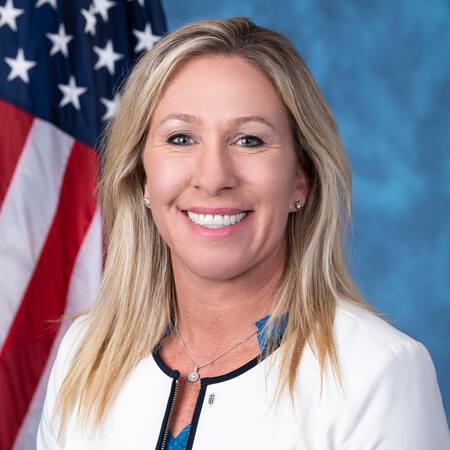
Rep. Marjorie Taylor Greene
Sponsored bills
Maddy summaryHR 3625 prohibits all federal agencies from allocating funds to the National Endowment for Democracy (NED). It requires every agency defined under federal law to cease providing financial support to NED. This directly affects NED’s funding stream, eliminating federal contributions to its operations. The bill mandates an immediate halt to any agency funding for NED upon enactment.
Maddy summaryHR 3493, the Global Fairness in Drug Pricing Act, requires the U.S. Health and Human Services Secretary to establish price targets for pharmaceutical manufacturers, ensuring U.S. drug prices align with those in comparable developed countries. It directs the HHS Secretary to certify safe importation of drugs from low-cost countries and facilitate direct-to-consumer purchasing programs at the set prices. The bill also authorizes antitrust enforcement against drug companies for anticompetitive practices and mandates a study on whether manufacturers engage in unfair pricing that forces U.S. patients to subsidize global drug research. This legislation directly affects pharmaceutical manufacturers and American patients seeking affordable prescription drugs.
Maddy summaryHR 3406, the "Readiness Over Wokeness Act," prohibits individuals with a current diagnosis, history, or symptoms of gender dysphoria, or a history of gender-affirming care (like hormone therapy or surgery), from serving in the U.S. Armed Forces. It requires the military to administratively discharge affected service members, with the key provision that they won’t need to repay educational benefits or fulfill remaining service obligations. The bill also mandates security clearance reinvestigations for those discharged who previously held access to classified information. This policy directly affects transgender and gender-diverse service members who have sought gender-affirming care or received a gender dysphoria diagnosis. The bill focuses on altering military medical standards for service eligibility, not on broader societal or policy changes.
Maddy summaryHR 276, the Gulf of America Act, would rename the Gulf of Mexico to the Gulf of America in all U.S. federal documents and maps. It requires all federal agencies to update their records, maps, and publications within 180 days of enactment to reflect this new name. The bill directly affects federal agencies responsible for geographic naming and documentation, such as the Department of the Interior and the Board on Geographic Names. This is a procedural change with no impact on policy, environmental regulations, or affected communities.
Maddy summaryThis resolution blocks a Department of Energy rule that would have set new energy efficiency standards for gas-fired instant water heaters. It prevents the rule from taking effect, meaning appliance manufacturers would not have to meet the proposed efficiency requirements. The rule, submitted in December 2024, directly affected manufacturers of these water heaters and consumers purchasing them. Congress approved this disapproval through a joint resolution passed on May 9, 2025.
Maddy summaryHR 2124 (LAND Act) restricts foreign purchases of U.S. agricultural land by requiring foreign buyers to follow the same rules as U.S. citizens would face in their home country, plus applicable state laws. It defines "home country" based on citizenship (using the most restrictive foreign law for dual nationals or companies) and mandates sellers to report sales to the USDA, which then notifies relevant lawmakers. A new U.S. Land Protection Task Force (including USDA, Justice, and State departments) will monitor compliance, track land sales data, and report to Congress every six months. The bill directly affects foreign individuals, companies, and governments purchasing agricultural land, with no changes to existing U.S. citizen purchasing rules.
Maddy summaryThe SHORT Act (HR 2395) redefines federal firearm definitions to exclude antique and collector firearms from being classified as firearms, and removes distinctions between short-barreled rifles and shotguns in federal regulations. It prevents state laws from imposing taxes or registration requirements on short-barreled rifles and shotguns, requiring state rules to align with federal compliance instead. The bill also mandates the federal government to destroy specific records related to these firearms within one year of enactment.
Maddy summaryHR 2443, the NPR and PBS Act, would ban all federal funding for National Public Radio (NPR) and the Public Broadcasting Service (PBS), including funds used indirectly by public broadcast stations. This bill directly affects NPR, PBS, and any future organizations replacing them, as it prohibits government money from supporting them through any channel - like station dues or programming purchases. The key provision blocks all federal funds, both direct and indirect, from flowing to these entities after the bill's enactment. This would require NPR and PBS to find new funding sources, as they currently rely on federal support. The bill does not change how public broadcasting operates but eliminates its primary government funding stream.
Maddy summaryThe Dual Loyalty Disclosure Act (HR 2356) requires candidates for federal office who are citizens of a country other than the United States to disclose their foreign citizenship in their official statement of candidacy. This applies specifically to candidates running for the U.S. House, Senate, or presidency who hold dual citizenship. The bill amends the Federal Election Campaign Act to mandate this disclosure, including the name of the foreign country, as part of the candidate's required filing with the Federal Election Commission. The provision would take effect upon the bill's enactment.