

Maddy summaryHR 4172, the Hate Crimes Commission Act of 2023, establishes a 12-member United States Commission on Hate Crimes to investigate trends and improve responses to hate crimes. The commission, appointed by Senate and House leaders plus the Attorney General and Secretary of Health and Human Services, will examine hate crime increases since 2015, factors driving them, and strategies to reduce underreporting to the FBI’s National Incident-Based Reporting System. It will also assess successful bias prevention efforts and online hate crime prevalence. Within one year of its formation, the commission must submit a report to Congress and the President with recommendations for federal agencies and community-based prevention programs. This bill directly affects local law enforcement agencies through reporting requirements and federal agencies through proposed policy changes.
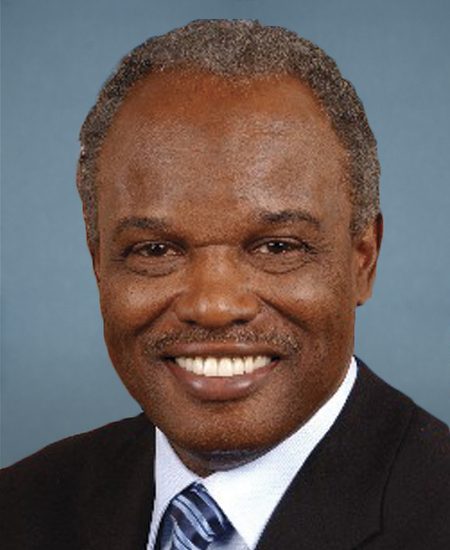
Rep. David Scott
Sponsored bills
Maddy summaryHR 4184 repeals legal protections for gun manufacturers and sellers under the Protection of Lawful Commerce in Arms Act. It allows victims of gun violence to use gun trace data from the ATF's Firearms Trace System in civil court cases. This data, previously protected from discovery, can now be subpoenaed, admitted as evidence, and relied upon in lawsuits against gun sellers or manufacturers. The bill directly affects victims seeking legal recourse and gun industry defendants in civil litigation.
Maddy summaryHR 4166, the Support UNFPA Funding Act, authorizes annual U.S. funding for the United Nations Population Fund (UNFPA) over five years. It directly supports UNFPA’s global programs serving women and girls in over 150 countries, particularly focusing on reducing preventable maternal deaths, expanding access to contraception, ending gender-based violence, and addressing harmful practices like female genital mutilation and child marriage. The bill specifically directs funding toward UNFPA’s core work in developing nations, humanitarian crises (such as in Ukraine and Yemen), and rebuilding health systems post-pandemic, without altering UNFPA’s existing operations or policies.
Maddy summaryThe American Dream and Promise Act of 2023 would create two pathways to permanent residency for certain immigrants. The "Dream Act" portion would provide conditional permanent resident status to individuals who entered the U.S. as children, have lived continuously in the U.S. since January 1, 2021, and meet educational requirements (such as completing high school, earning a degree, or enrolling in education programs). The "American Promise Act" portion would provide permanent residency to individuals eligible for Temporary Protected Status (TPS) or Deferred Enforced Departure (DED) as of specific dates (January 1, 2017, or January 20, 2021). The bill includes provisions for background checks, fee exemptions for low-income applicants, and processes for removing conditional status after meeting specific criteria like completing higher education or earning income.
Maddy summaryHJRES 72 proposes a constitutional amendment to remove the exception in the Thirteenth Amendment that allows slavery and involuntary servitude as punishment for a crime. If ratified, this amendment would ban the use of forced labor in prisons as a criminal penalty, directly affecting how the U.S. criminal justice system handles sentencing. The resolution clarifies it does not interfere with voluntary work programs in correctional facilities, existing employment protections for incarcerated people, or community service alternatives. This change aims to eliminate a historical loophole that has disproportionately impacted Black Americans since the 1860s.
Maddy summaryHR 4133, the Private Prison Information Act of 2023, requires federal agencies (covered agencies) using private or state/local facilities to house federal prisoners to treat related records as agency records under the Freedom of Information Act (FOIA). This means information about conditions, operations, or contracts at these non-Federal facilities must be disclosed to the public under FOIA rules, just as if held by a federal prison. Private prison operators (applicable entities) and state/local governments with federal contracts must maintain these records in searchable formats and include FOIA compliance as a binding term in all relevant contracts. The bill explicitly prohibits agencies from withholding such information unless specific FOIA exemptions apply or law forbids disclosure. It does not override state or local open records laws.
Maddy summaryHR 4122, the Henrietta Lacks Congressional Gold Medal Act, authorizes a posthumous Congressional Gold Medal to honor Henrietta Lacks for her contribution to medical science through the HeLa cell line. The bill directs the Treasury to strike the medal recognizing how her cells enabled major medical advances, including the polio vaccine and cancer treatments, without altering any laws or policies. The medal will be displayed at the Smithsonian Institution to commemorate her legacy in scientific research and bioethics. This is a purely commemorative measure with no direct effect on current legislation or affected individuals.
Maddy summaryHRES 508 is a resolution passed by the U.S. House of Representatives to honor the historical struggle, sacrifice, and achievements of the LGBTQ+ community in Georgia. It recognizes key milestones, including the first Atlanta Gay Pride Parade (1971), the founding of LGBTQ+-affirming organizations like AID Atlanta (1983), and Georgia’s role in national LGBTQ+ advocacy. The resolution also notes that Georgia currently lacks state laws protecting LGBTQ+ individuals from discrimination in housing, employment, public accommodations, and health care. As a symbolic gesture, it does not create new laws or policy changes.
Maddy summaryHR 4062, the Chief Risk Officer Enforcement and Accountability Act, requires large financial institutions (those with $50 billion or more in assets) to appoint a chief risk officer with specific risk management expertise. The bill mandates this officer to oversee enterprise-wide risk limits, implement risk-management systems, and report directly to both the company’s risk committee and CEO. It also requires companies to notify regulators within 24 hours of a vacancy, submit a hiring plan within 7 days, and publicly disclose if a vacancy persists beyond 60 days - during which time the company cannot grow its asset size. The law applies to both bank holding companies and large standalone banks without parent companies.
Maddy summaryThis bill requires federal agencies collecting demographic survey data to begin including questions on sexual orientation, gender identity, and variations in sex characteristics (intersex traits) within 360 days of enactment. Agencies must review existing surveys to identify gaps, develop privacy-protective methods for collecting this data (including anonymization and data destruction protocols), and incorporate it into relevant reports within three years. The law applies to all federal surveys that collect standard demographic data (like race, ethnicity, and age), such as the census or health surveys, but does not compel individuals to disclose their status. It emphasizes maintaining confidentiality, allows limited agency waivers if standards can't be met, and mandates a congressional report on implementation within two years.