

Maddy summaryThis bill authorizes $30 million annually (2024-2028) for the National Institutes of Health to expand research on uterine fibroids, including studies on racial disparities (noting Black women are 80% likely to develop fibroids by menopause versus 70% of White women). It also requires the creation of a Medicaid database to track treatment services for fibroids and mandates a congressional report on related costs and coverage. The bill directs the Department of Health and Human Services to develop public education materials about fibroid symptoms, treatment options (including non-hysterectomy care), and racial prevalence differences. It directly affects women with fibroids - particularly those from racial minority groups - and aims to improve data collection and awareness around a condition causing significant health burdens and healthcare costs.
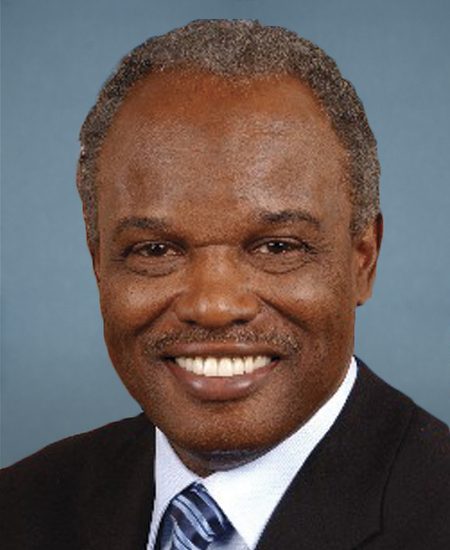
Rep. David Scott
Sponsored bills
Maddy summaryHR 4550 creates a federal grant program to help public elementary, secondary, and preschool schools recruit and retain paraprofessionals (school support staff like teaching assistants). The bill directs the Secretary of Education to fund state education agencies, which then distribute subgrants to schools - prioritizing those serving high numbers of low-income students - to support activities like mentoring programs, professional development, and wage increases or certification assistance (e.g., for special education or English learner support). States must report annually on wage baselines, paraprofessional numbers, and program outcomes. This bill directly affects schools and paraprofessionals, with funding authorized for fiscal years 2024-2028.
Maddy summaryThe DISCLOSE Act of 2023 would increase transparency in political spending by requiring organizations making campaign-related disbursements over $10,000 to disclose the names and addresses of their major donors, including the top five funders for political communications. It would close loopholes allowing foreign nationals to secretly fund election activities through corporations or other entities by expanding the definition of prohibited foreign contributions. The bill would mandate "stand by every ad" disclosure requirements for political communications across all media, including audio, video, and internet ads, requiring clear identification of funders. It would also require reporting of disbursements related to Federal judicial nominations, which currently aren't subject to disclosure requirements. These provisions would apply to corporations, labor organizations, and certain nonprofits that engage in political activity.
Maddy summaryThe IDEA Full Funding Act (HR 4519) mandates specific annual increases in federal funding for special education programs under the Individuals with Disabilities Education Act (IDEA). It requires Congress to appropriate increasing amounts each fiscal year - from $5.87 billion for 2024 up to $55.53 billion for 2033 - to reach 40% of the national average per-pupil expenditure for public schools by 2033. This directly affects all public school districts serving students with disabilities, as federal IDEA funding supports their special education services. The bill sets fixed dollar amounts or percentage targets (whichever is greater) for each fiscal year, aiming to gradually close the long-standing gap between promised and actual federal funding. It does not alter eligibility for services but mandates higher, phased funding levels to meet the 40% target.
Maddy summaryHR 4515, the PRIME Act, provides competitive federal grants to qualifying colleges and universities to improve athletic facilities and equipment. It directly affects small-endowment institutions (with endowments under $900 million) that generate less than $20 million annually from athletic programs. Grants of at least $250,000 can be used to build or upgrade stadiums, gyms, fields, or purchase event-related materials like uniforms and equipment, following NCAA/NAIA guidelines. The bill targets schools with limited athletic revenue, aiming to support infrastructure without funding staff salaries or general operations.
This resolution expresses the sense of the House of Representatives that (1) lesbian, gay, bisexual, transgender, queer, intersex, and asexual (LGBTQIA+) rights are human rights and protected by the U.S. Constitution; (2) LGBTQIA+ Pride Month should be celebrated; and (3) all Americans should be treated equally regardless of sexual orientation, sex characteristics, or gender identity.
Maddy summaryThis bill establishes a federal grant program to fund high-impact tutoring in K-12 schools, primarily targeting students in schools with high poverty (Title I schools) and those experiencing significant academic declines since the pandemic. It requires tutoring to meet specific standards: at least 30 minutes per student, three days per week, with a 3:1 student-to-tutor ratio, and alignment with classroom instruction. States receive 80% of funds to award subgrants to local schools, which must submit detailed plans, provide monthly progress reports, and partner with research organizations to evaluate program effectiveness. The program prioritizes schools with the greatest academic need and mandates accountability through annual reviews of student outcomes by state agencies and an independent Advisory Board.
Maddy summaryHR 4340, the Therapeutic Fraud Prevention Act of 2023, prohibits paid providers from offering conversion therapy - defined as any commercial service attempting to change a person's sexual orientation or gender identity - and bans advertising that claims such therapy is effective or harmless. It directly affects therapists, counselors, or organizations offering paid conversion therapy services, including those advertising such services. Key provisions make it unlawful to provide, advertise, or facilitate paid conversion therapy, with enforcement led by the Federal Trade Commission (FTC) under consumer protection laws and allowing states to pursue civil actions. The bill explicitly excludes supportive care for gender transition or identity exploration from its definition of prohibited therapy.
Maddy summaryHRES 545 is a symbolic resolution expressing the House's commitment to achieving zero traffic fatalities by 2050. It calls on Congress and the Department of Transportation to collaborate on policies, improve data collection on traffic safety disparities, and implement proven safety measures. The resolution also urges federal agencies to use "crash" instead of "accident" when describing traffic incidents and addresses inequities in traffic safety outcomes. As a non-binding resolution, it does not create new laws or allocate funds but sets a policy direction for future action.
Maddy summaryHouse Resolution 522 is a symbolic resolution recognizing that active father involvement during pregnancy, birth, and postpartum care improves health outcomes for both mothers and babies. It cites research showing fathers' engagement correlates with better prenatal care access, reduced maternal mental health risks, lower smoking/drinking during pregnancy, healthier birth weights, and improved child development. The resolution calls for addressing systemic barriers - such as workplace policies, cultural stigma, and healthcare access inequities - to support fathers as partners in maternal and infant health. It does not create new laws but formally acknowledges the role of fathers in reducing maternal mortality, infant health risks, and racial disparities in care.